All posts by butterfly

London: Hope to Nope – Graphics and Politics 2008-2018

Hope to Nope : Design & Politics 2008-18

We are pleased to be part of the latest exhibition at the London Design MuseumHope to Nope – Graphics and Politics 2008-18′.

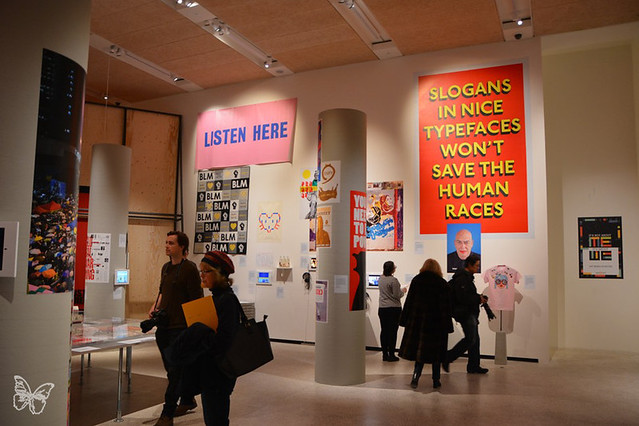
Design can influence public perception, but great design can change it. From campaign designs to protest symbols, ‘Hope to Nope: Graphics and Politics 2008-2018’ explores the impact of graphic design in political and social movements over the last ten years.

Alongside traditional posters and banners, the exhibition charts the rise of digital media and social networking, which have given graphic iconography an extraordinary new reach.  The political events featured include: the 2008 financial crash; the Barack Obama presidency; the Arab Spring; the Occupy movement; the Deepwater Horizon oil spill; the Charlie Hebdo attacks; Brexit and Donald Trump’s presidency.

The exhibition is structured in three distinct sections: power, protest and personality – which explore how design is used in politics to change public perceptions.

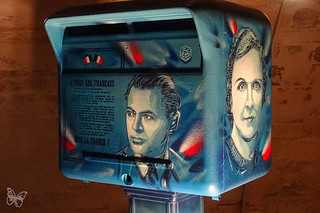
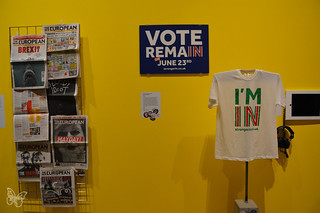
‘Power‘ starts off with the Obama campaign’s unofficial, but hugely popular, ‘Hope’ poster by Shepard Fairey, which is later compared to the failings in the design of the Remain campaign’s materials. It also features examples of Brandalism subverts advertising posters from 2015 Brandalism ad takeover in Paris (covered) with VW spoof ad by Barnbrook and Curfew Zone by Dr.D.

Hope to Nope : Design & Politics 2008-18

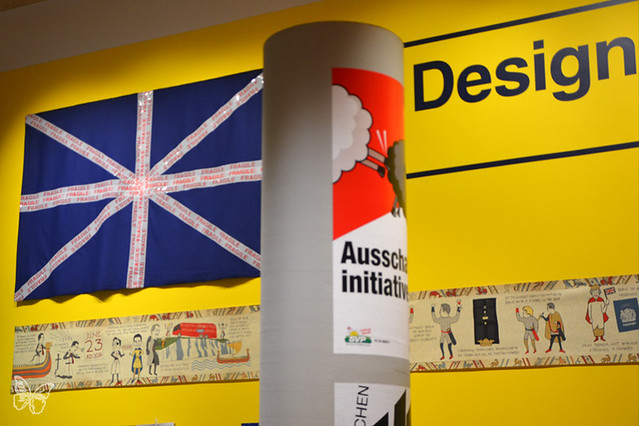
Regarding UK politics, the Power section highlights the Union Jack flag made with fragile tape by Sarah Boris, which was featured during several marches against Brexit in 2016 as well as designs from the RemaIN campaign.

Hope to Nope : Design & Politics 2008-18
Hope to Nope : Design & Politics 2008-18Hope to Nope : Design & Politics 2008-18

Examples show how graphic design is used by the establishment to assert national and political authority like the Hillary Clinton presidential campaign, or used by its opponents like Soviet posters which were turned into a gay rights campaign and Dread Scott’s flag in support of the Black Lives Matter movement.

Hope to Nope : Design & Politics 2008-18Hope to Nope : Design & Politics 2008-18Hope to Nope : Design & Politics 2008-18Hope to Nope : Design & Politics 2008-18

A large graphic timeline dissects the gallery, charting the role of new communication technologies such as Facebook and Twitter in global events of the last decade.

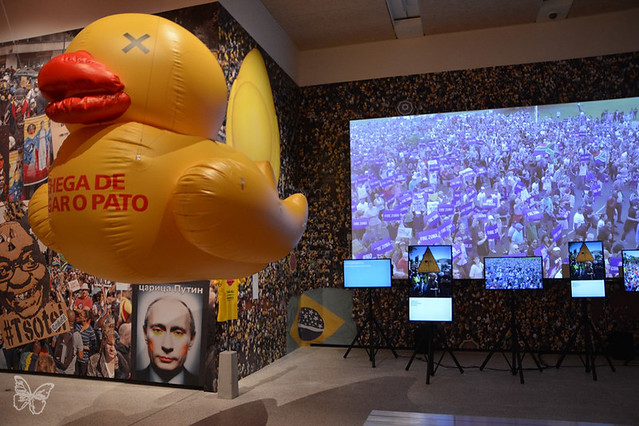
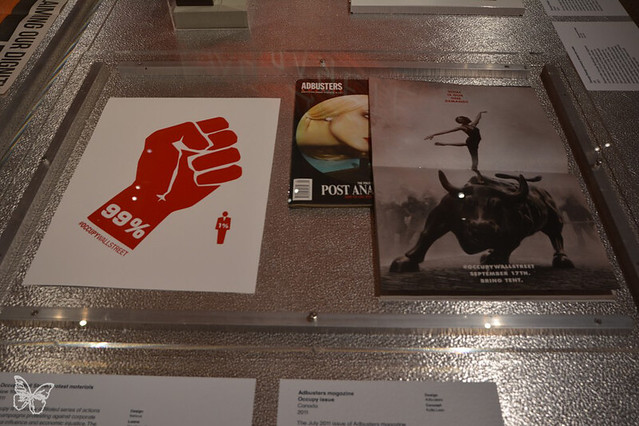
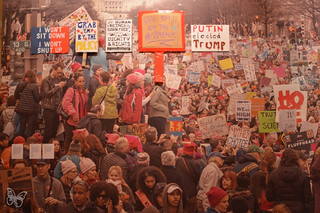
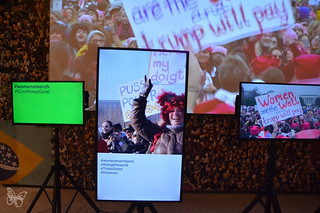
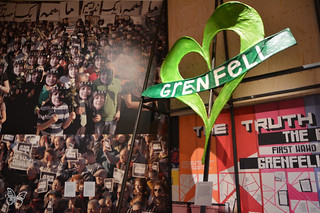
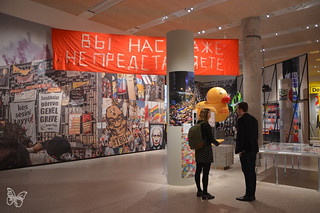
Protest displays graphic design by activists and demonstrators. The largest section in the exhibition, it includes newspapers from the 2011-12 Occupy London camp, an umbrella used during the 2014 Hong Kong ‘Umbrella Revolution’ and a 2m-high replica of the inflatable duck from the 2016 protests against Brazilian president Dilma Rousseff. This section also looks at the 2015 Je Suis Charlie and Peace for Paris marches, as well as responses to the 2017 Grenfell Tower disaster with the 24 hearts initiative by Sophie Lodge, demonstrating the important role played by graphic design in channelling anger and creating solidarity.

Hope to Nope : Design & Politics 2008-18Hope to Nope : Design & Politics 2008-18Hope to Nope : Design & Politics 2008-18
Hope to Nope : Design & Politics 2008-18Hope to Nope : Design & Politics 2008-18

An installation film by Paul Plowman evokes the experience of public protest, combining hastags, forage and images from five protests : #womensmarch,  #grenfell, #turkey, #catalonia, and #southafrica. These demonstrations cover diverse political viewpoints, from fighting for democracy to calling for justice, and emotions ranging from solidarity to fierce anger.

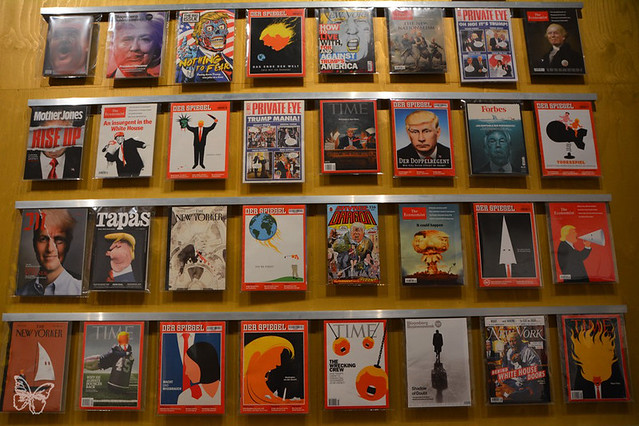
The final section, Personality, examines the graphic representation of leading political figures. Donald Trump’s trademark features are caricatured across the covers of more than 50 international magazines, including The Economist, TIME and Der Spiegel.

Hope to Nope : Design & Politics 2008-18

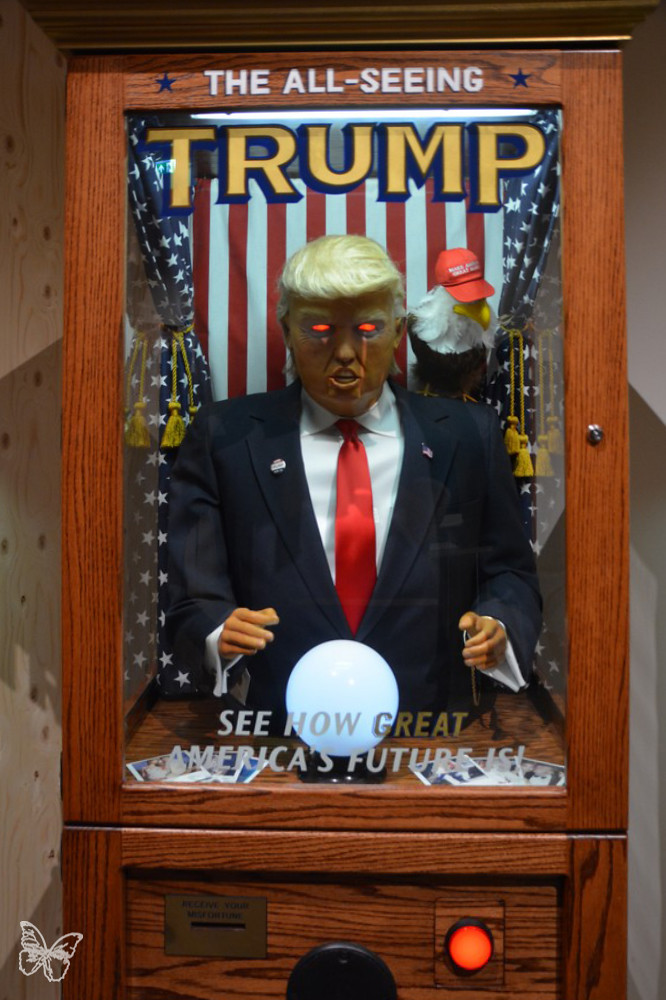
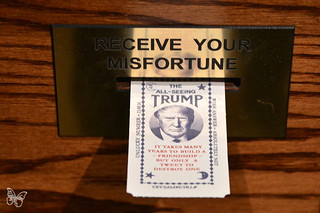
As we approach the ‘Nope’ of the exhibition we are faced with a scary and entertaining animation: an animatronic (mis)fortune telling machine tells and distributes messages by the new US President. This is the work by Nathaniel Lawlor, Andy Dao, Jon Barco and Bryan Denman.
‘With the over-saturation and bombardment of Trump in the news cycle, we saw how easy it was becoming for people to tune out the banter of these soundbites and Facebook headlines, so we thought—what better way to remind people of their gravitas than by showing them this could be their actual future?”

Hope to Nope : Design & Politics 2008-18Hope to Nope : Design & Politics 2008-18
Hope to Nope : Design & Politics 2008-18
Hope to Nope : Design & Politics 2008-18Hope to Nope : Design & Politics 2008-18

View the full set of pics here

Hope to Nope: Graphics and Politics 2008–18
Until 12 August 2018
Design Museum London

Paris: Banksy Bataclan Tribute

Continuing his Paris invasion, Banksy chose a poignant subject and spot on location.
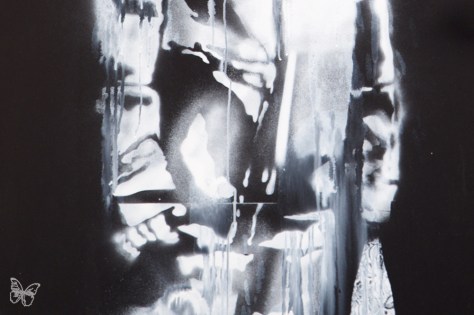
A new stencil appeared on the exit door of the Bataclan theatre in the 11th district of Paris.

Extremely strong symbolic as it is this exact exit door where victims of terrorist attacks tried to escaped during mass shooting on 13 November 2015, leaving 89 dead and over 300 injured.

Painted on the black background of the exit door, a white stencil features a woman with a lace veil, which gives a mystical and protective aura like a Madonna.

Her face is inspired by a marble sculpture by Italian artist Giovanni Battista Lombardi from 1869.
She is dressed in a uniform , reminiscent of the rescuers that did everything to save the victims that night.

The mourning woman is holding some files in one hand, maybe the victims reports and a delicate lace handkerchief on the other.

Using just a monochrome stencil, Banksy creates a strong moving memorial to the victims of terrorism in Paris, as well as a big up to the rescuer teams.

For further updates on Banksy in Paris check here

Paris: Artists and Robots at the Grand Palais

Artists & Robots - Patrick Tresset

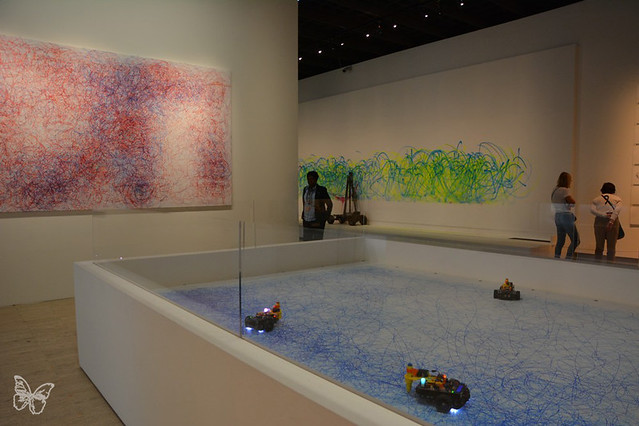
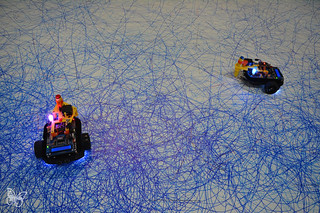
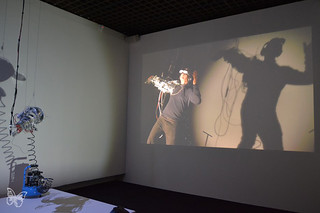
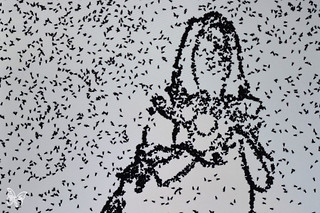
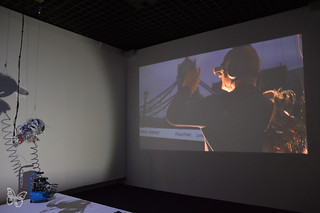
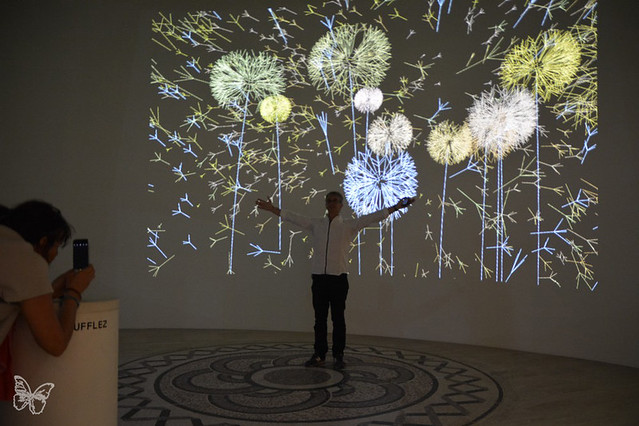
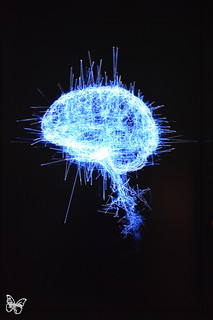
The Grand Palais (RMN) in Paris is currently showing an impressive exhibition ‘Artists and Robots’ dedicated to AI: artificial imagination, a common term to design robotic art, generative art and algorithmic art.

The exhibition invites audiences to experience works created by artists with the aid of ever more intelligent robots. Around thirty works offer visitors a glimpse into an immersive and interactive virtual world, a tangible experience of augmented reality, of space and time overturned.

Artificial intelligence is now transforming human existence and also affecting the very nature of the artist’s artwork , from its production, exhibition, to its distribution, conservation and reception.

Immersive works, paintings, sculptures, mobiles, cinema, design, and music: all the creations presented in this exhibition arise from artists working with robotic programs invented and provided for the purpose of art.

Artists & Robots - Leonel Moura

With the use of increasingly powerful software, artists gain a greater autonomy  and an infinite capacity to work with shapes and interactivity. The software programs employed are not only intelligent, but also generate new shapes and figures that allow to see and give pause for thought.

The exhibition is structured in three folds.
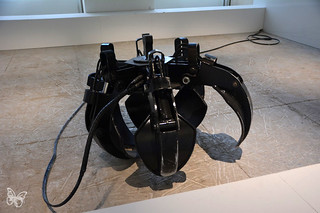
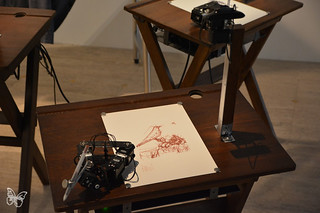
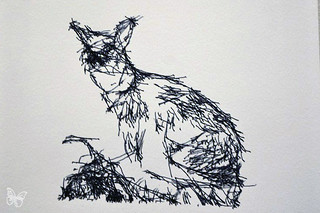
The first section present ‘The creative machine’. Robots are always on the move and their movements are sometimes so ‘physical’ and amusing that it is could be easy to give them an animal or human dimension, or even a ‘psychology’.
Featuring works by Jean Tinguely, Nam June Paik, Nicolas Schöffer, Leonel Moura, Patrick Tresset, So Kanno and Takahiro Yamaguchi, J. Lee Thompson, Arcangelo Sassolino.

Artists Robots - Jean TinguelyArtists & Robots - Leonel Moura Artists Robots - Arcangelo SassolinoArtists & Robots - So Kanno & Takahiro Yamaguchi 01Artists & Robots - Patrick TressetArtists & Robots - Patrick TressetArtists & Robots - Patrick Tresset

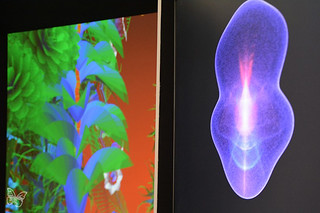
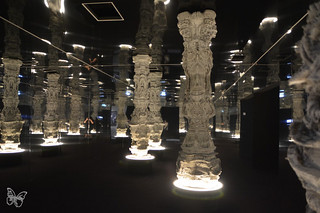
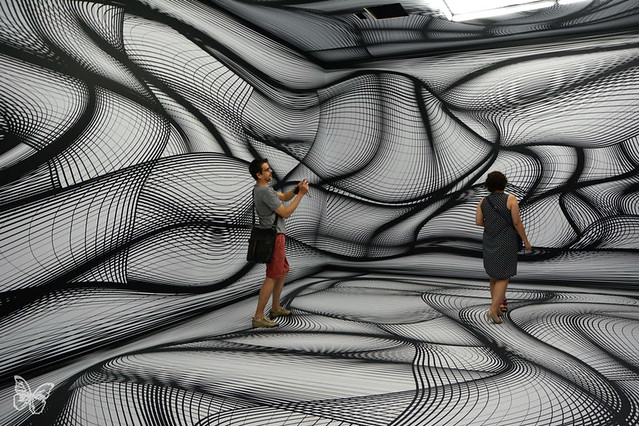
The second section is about ‘Programmed artwork’, where the robot is becoming invisible. Computing and algorithmic programmes infuse the artwork and technical expertise is set aside as we, the spectators, marvel at the majesty of infinite shapes that change according to the movements of our bodies.

Featuring works by Manfred Mohr, Vera Molnar, Iannis Xenakis, Demian Conrad, Raquel Kogan, Ryoji Ikeda, Pascal Dombis, Elias Crespin, Jacopo Baboni Schilingi, Edmond Couchot and Michel Bret, Miguel Chevalier, Joan Fontcuberta, Michael Hansmeyer and Peter Kogler.

Artists & Robots - StelarcArtists & Robots - StelarcArtists & Robots - Laurent Mignonneau & Christa Sommerer
Artists & Robots - RYOJI IKEDAArtists & Robots - Stelarc
Artists Robots - Edmond Couchot & Michel Bret
Artists & Robots - Miguel ChevalierArtists & Robots - Michael Hansmeyer
Artists & Robots - Peter Kogler

And lastly the space is dedicated to The robot frees itself’.
Deep Learning is making robots even more intelligent and active, to the point where they seem not only to rival humans, but to augment them, fuse with them, taunt them and possibly even duplicate them.

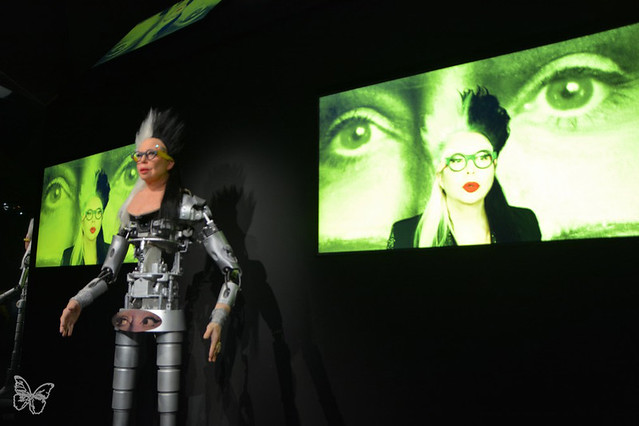
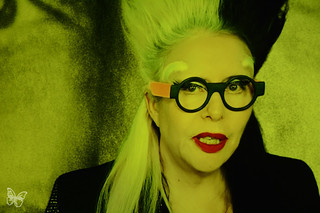
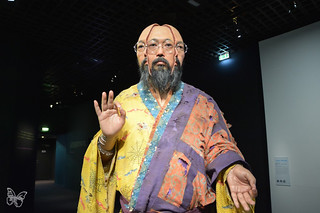
Featuring works by Christa Sommerer & Laurent Mignonneau, Catherine Ikam and Louis Fléri, Stelarc, Nicolas Darrot, Fabien Giraud and Raphaël Siboni, Koji Fukada, Oscar Sharp, Daft Punk, Pascal Haudressy, Memo Akten, ORLAN, Takashi Murakami.

Artists & Robots - OrlanArtists & Robots - Nam June PaikArtists & Robots - Tkashi MurakamiArtists & Robots
Artists & Robots - OrlanArtists & Robots - Tkashi Murakami

The contemporary works presented in this exhibition give us a good idea of the questions artists are asking, which mirror our own: What is an artist? What is an artwork? What can a robot achieve that an artist cannot? If it has artificial intelligence, does a robot have imagination? Who decides: the artist, the engineer, the spectator, all of us? Can we talk about a collective artwork?

View the full set of pics here

Artists & Robots
Le Grand Palais
Until 8 July 2018

Paris: Banksy joins the celebrations of Mai 68 riots

While Paris has been celebrating the 50th Anniversary of the May 68 Riots with multiple exhibitions, elusive artist Banksy has hit the streets of the French capital with a series of new artworks.

May 68 in France – Ten million workers on strike, young people in the streets, public services at a standstill, a paralysed economy: the state faced a major social crisis which threatened to shake its very foundations. The entire country was affected, including all sectors of activity.

Facing the entrance of La Sorbonne University, Banksy put up a dark stencil of a man hiding a saw behind his back while an amputated dog is salivating looking up at a bone. Could be a play on words ‘Saw Bone’ which sounds similar to ‘Sorbonne’, but also is a very cynical symbol of our society, raising questions of sacrifice and perceived rewards from the powers in place.

Placement and context are always very important. This is where the major student demonstrations took place. Interestingly, less than 10 meters away from this ‘Saw & Bone’ stencil, Invader placed a pixelated commemoration plaque on the Place de La Sorbonne earlier this May.

Click on the pics to enlarge

Banksy painted additional little rats characters, with the tag 1968 and the 8 falling apart and being transformed into the bow of the famous Minnie mouse, nod to Disneyland, symbolising with his stencils that the 1968 uprising has lost its luster and morphed into capitalism.

Next to the Centre Pompidou, which hosts Le Musee d’art Moderne, the largest museum of modern art in Europe, Banksy painted a mischief rat, which was later transformed into a bigger one holding a cutter. He posted the caption on his Instagram: ‘Fifty years since the uprising in Paris 1968. The birthplace of modern stencil art.’ 


The entire city is celebrating the 50th Anniversary, from the streets to institutions. For further historical context about the 1968 riots, the Hotel de Ville is presenting historical pictures by photograph Gilles Caron who documented the student revolts while the Archives Nationales are showing the events of May-June 1968 as seen by the authorities of the time. Earlier in May we also shared the intervention of Spanish artist ESCIF on the external walls ‘Open Borders’ of the modern art institution Palais de Tokyo ( see full coverage here).

This slideshow requires JavaScript.

Stay tuned as we continue our coverage of Banksy invasion of the French capital…

London: Banksy Vote Love

Banksy - Vote to Love

For the 250th Anniversary of the Summer Exhibiton at the Royal Academy in London, Banksy submitted an artwork under the pseudonym Bryan S Gaakman, anagram of ‘banksy anagram’ and it was refused. However when curator Grayson Perry contacted him to submit something, Banksy did it again and it is now displayed in the gallery 3.

The artwork features a heart shaped balloon with plaster over a political board that was used for the Brexit referendum vote. The initial board favoured the ‘Leave’ campaign.
With his humorous style, the ‘Leave’ campaign has been replaced by a ‘Love’ statement. To add further irony, the price tag on the artwork is £350 millions, a nod to the infamous ‘Leave bus’ claiming that Britain would save £350m a week after Brexit.

The heart shaped balloon is an image close to Banksy, starting with his iconic Girl with Balloon (2002) who was also used worldwide for the #withSyria campaign in 2014

#Syria - Banksy London

The first Love Heart Balloon with plaster appeared at the MOCA exhibition ‘Arts in the Streets’ in Los Angeles in 2011.

Banksy
Pic by BirdMan

A Heart Balloon mural was painted in the streets of New York in 2013 during his artistic residency Better Out than In.

And a painted canvas  with the Heart Balloon was then sold in 2014 to support the Haitian Charity Auction for $650K.


Pic by Banksy

Throughout the years, Banksy expressed his views on political issues, and specially the Brexit.  We recall the mural in Dover in May 2017 featuring a worker chiselling away a star from the European Flag (see our previous coverage here).

Banksy in DoverBanksy in Dover

This was followed by the release of a revisited version of the Girl With Balloon featuring a heart with the Union Jack flag  for the UK Elections  in June 2017, which was later recalled due to criminal offence (covered)


Pic by Banksy

Banksy - Vote to Love

The 250th Summer Exhibition of the Royal Academy features 1300 artworks from internationally renowned artists and exciting new talents.

Come back again soon for our full coverage on the exhibition.

250th Summer Exhibition
Royal Academy
Until 19 August 2018
Burlington House, Piccadilly,
London, W1J 0BD