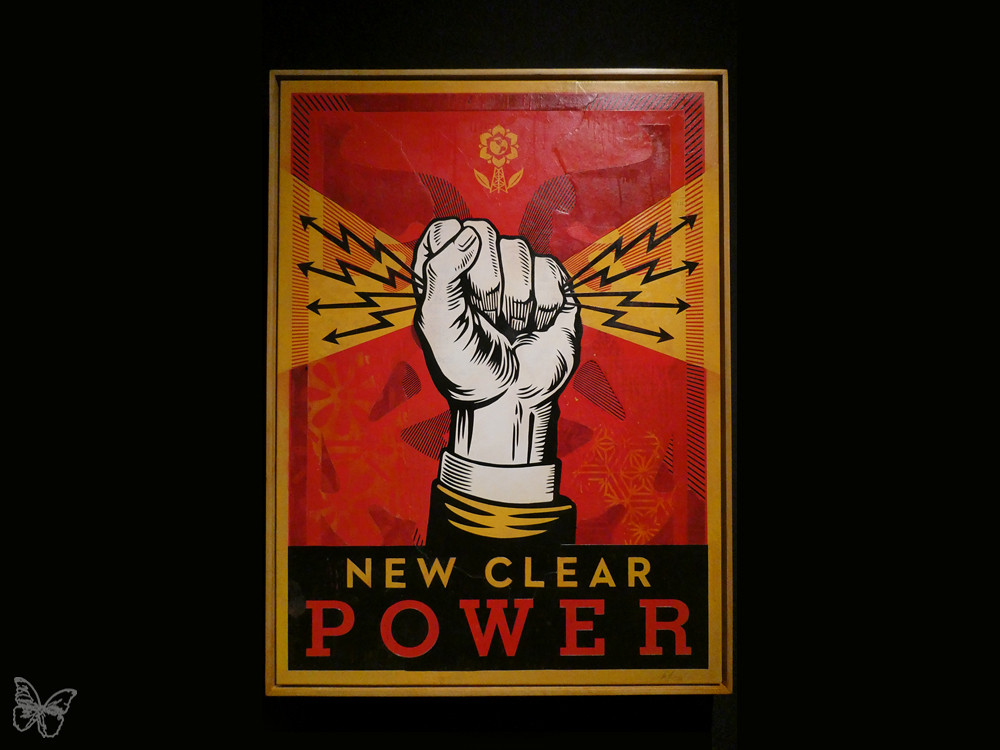
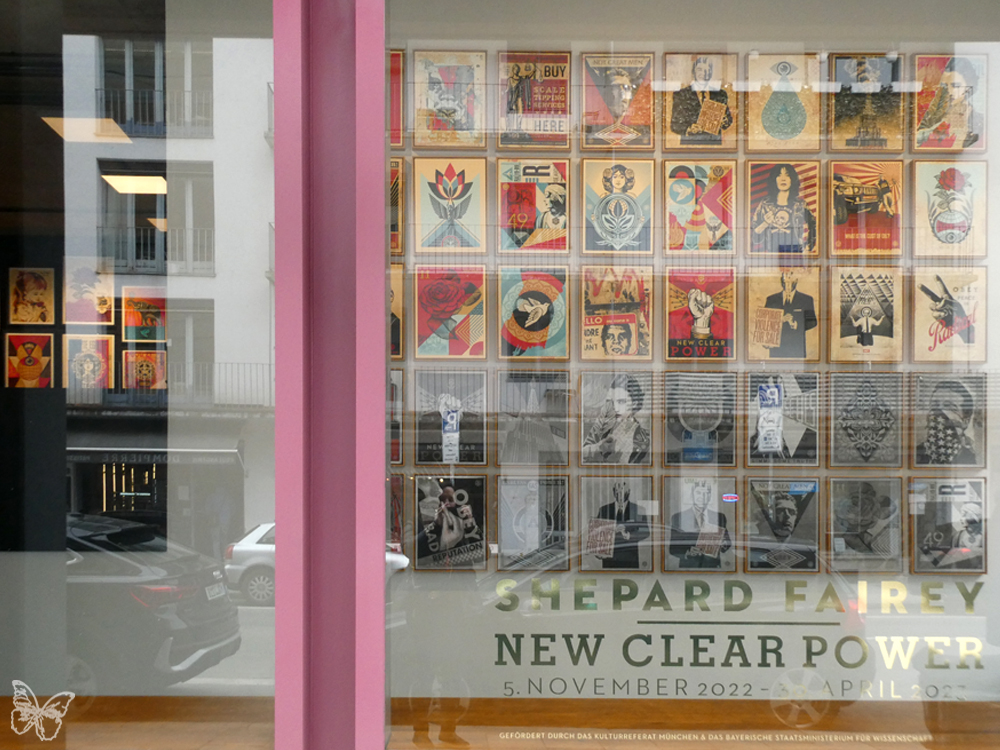
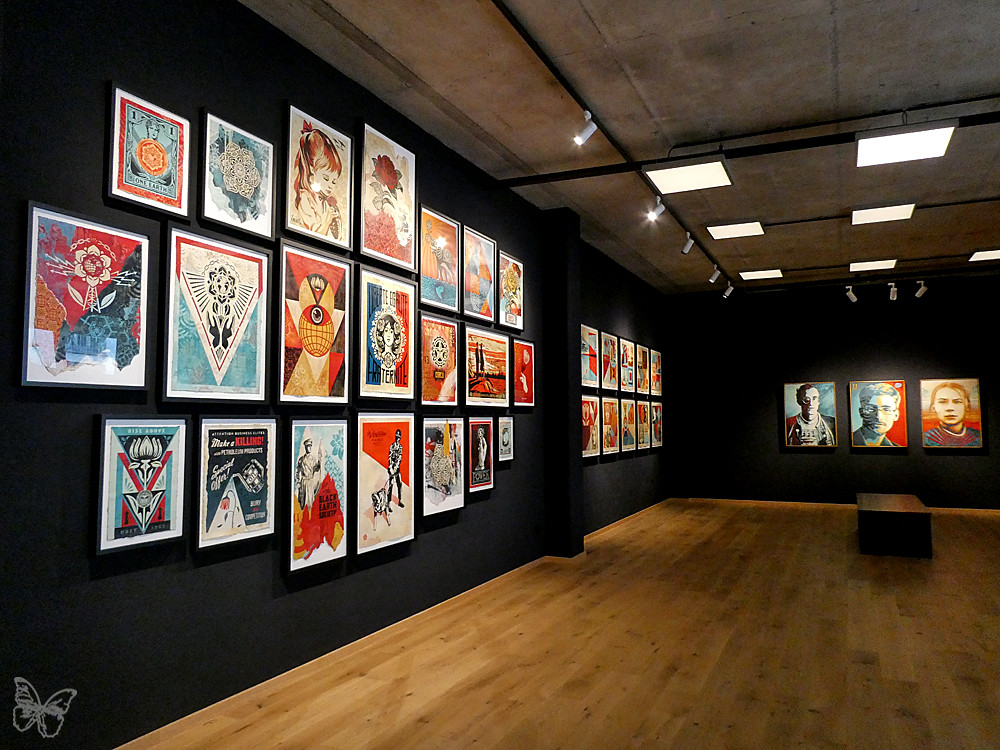
New Clear Power, Shepard Fairey’s first solo exhibition in Germany addresses systems, forms, and notions of power in at the newly opened AMuseum , dedicated to the street art movement. The Amuseum was initiated by the artistic group Positive Propaganda, led by Sebastian Pohl and Overrated Art Inc.
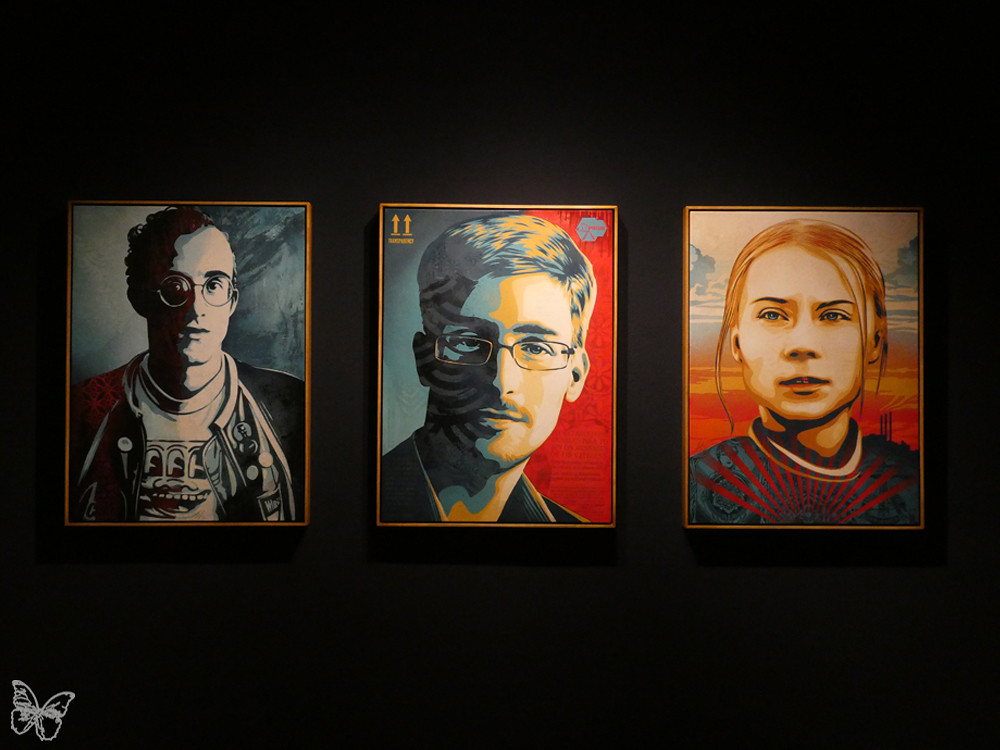
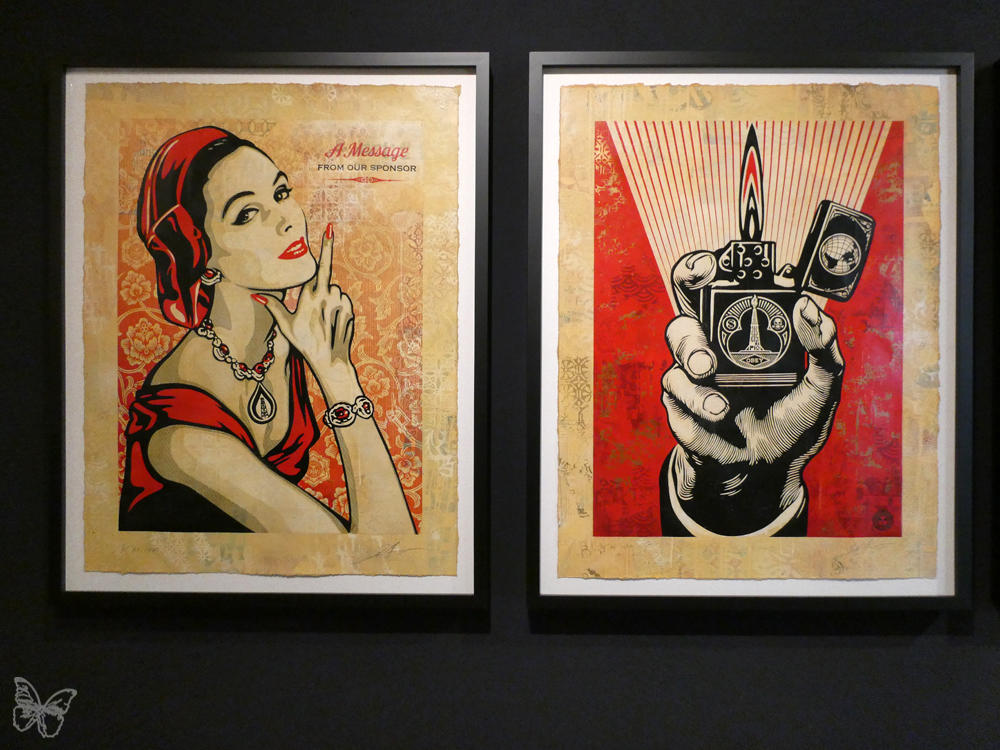
For this exhibition Shepard Fairey decided to use a wide range of mediums (from mixed-media paintings on canvas, stencils, collage, illustrations, and prints) and juxtaposes colours with images, patterns and text, and feature icons like Keith Haring, Greta Thunberg and Edward Snowden to convey clear messages and raise questions as well as voice concerns about various notions of power.
The concepts of power represented in the subject matter of New Clear Power include abuse of power, power concentrated under capitalism, renewable power, political power, the power of creativity, power over information, and the power of controlling narrative. A primary focus of the work is a critique of fossil fuel industries and their contribution to climate change and environmental decline.
In parallel to the exhibition Shepard Fairey and his team with the help of Positive Propaganda, painted a 115 meters wide mural along a stretch of Munich’s city highway, featuring images relating to the oil industry and the urgency of transitioning to renewable sources of power.
Photo: Positive Propaganda e.V.
Until 30 April 2023
AMUSEUM of Contemporary Art, Schellingstrasse 3, 80799 München
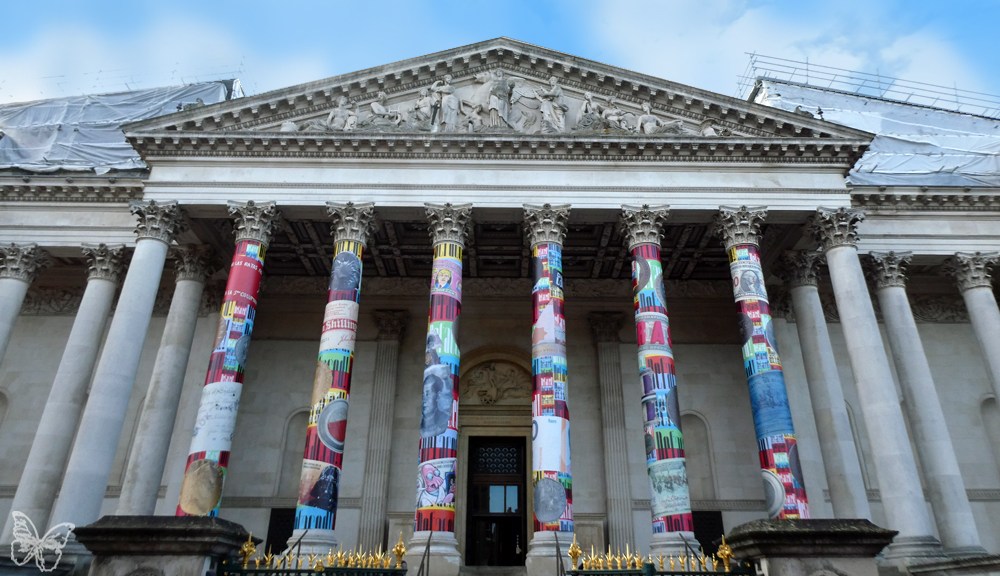
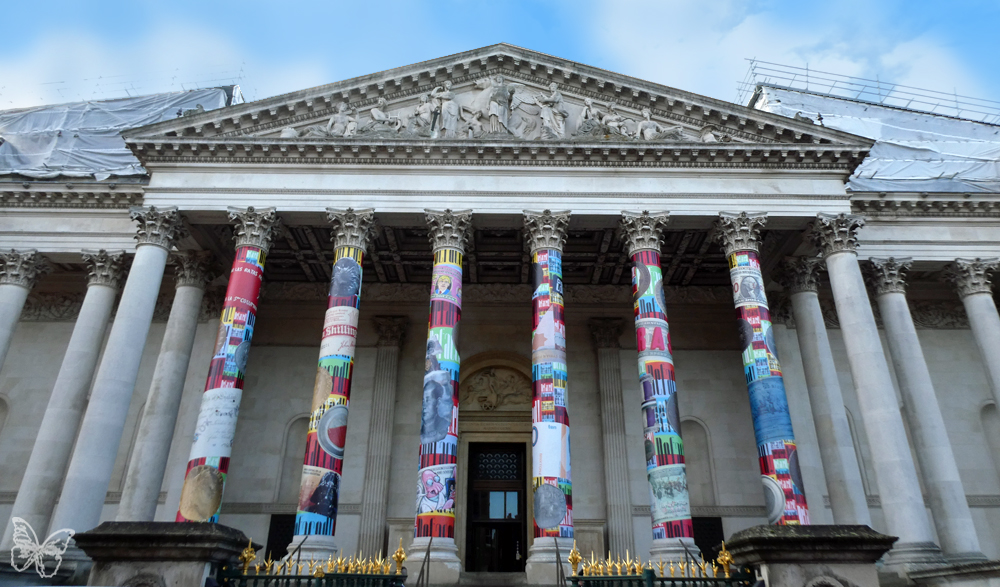
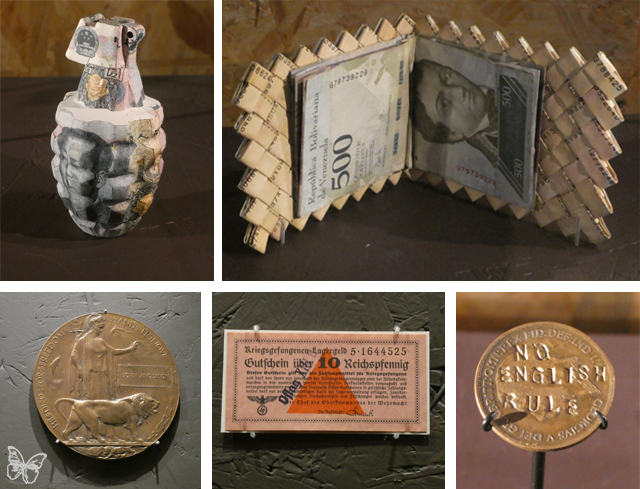
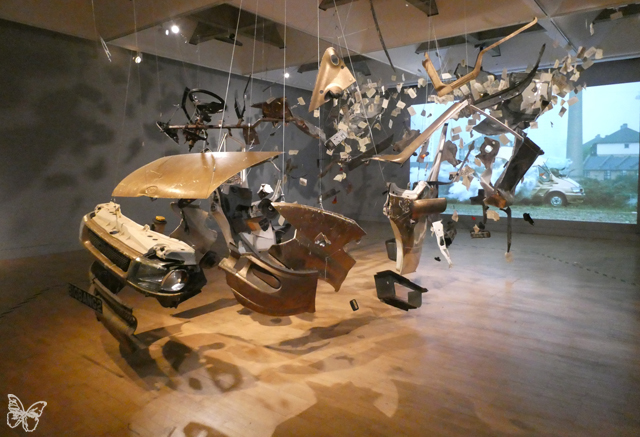
The Fitzwilliam Museum in Cambridge presents ‘Defaced!‘, the first major exhibition to explore a 250-year history of protest, using currency as a canvas and a vehicle for rebellion. Passed through many hands, cash is the ideal way to circulate a message while having a go or poking fun at those in power. Curated by Richard Kelleher, Defaced! takes a deep dive into a world of counterculture and protest.
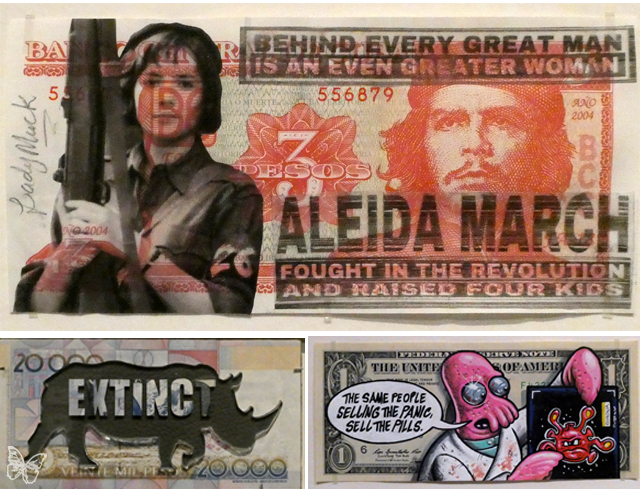
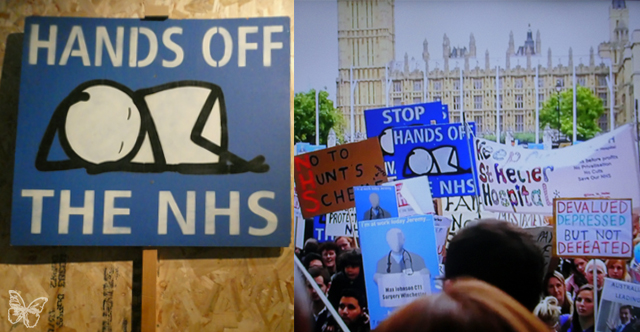
Objects of rebellion made by the radicals of the nineteenth and early twentieth century, like Thomas Spence and the Suffragettes are shown alongside works by contemporary artists and activists including Banksy, Aida Wilde, Hilary Powell, Lady Muck, kennardphillips, J.S.G Boggs, Stik and more.
People deface money to battle oppression or to express their support for often bitter and violent struggles. Coins and banknotes represent the state’s authority in widely available, portable and hand-held form, making them ripe for attack. By defacing money, even the least powerful in society can have a go at the head of state or circulate their urgent cries of protest to others. For artists and satirists, money’s iconic imagery and wealth of associations makes it a powerful medium to address issues of social, political and racial justice.
The exhibition seeks out the stories behind the damage, which reveal some of the personal and hidden struggles experienced during major world events – from the French and American Revolutions to the First World War and the Nazi concentration camp system to the Troubles in Northern Ireland and the Black Lives Matter movement.
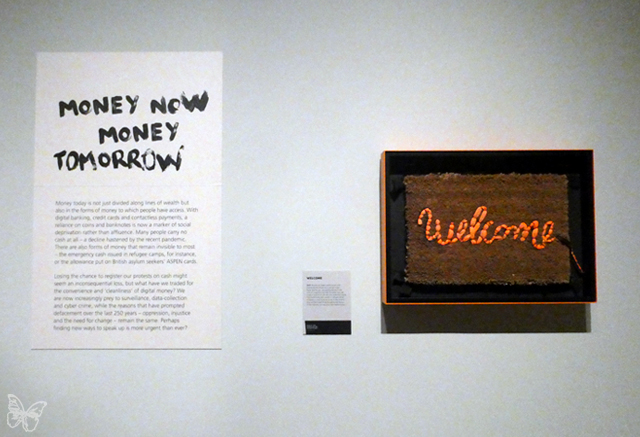
A last section titled Money Now / Money Tomorrow mentions the development of money and its impact on our right to protest.
Money today is not just divided along lines of wealth but also in the forms of money to which people have access. With digital banking, credit cards and contactless payments, a reliance on coins and banknotes is now a marker of social deprivation rather than affluence.
Many people carry no cash at all – a decline hastened by the recent pandemic. There are also forms of money that remain invisible to most like the emergency cash issued in refugee camps.
In today’s world where the use of coins and notes are increasingly being replaced by digital payments, and against the backdrop of the cost-of-living crisis and current debates about personal freedoms, this exhibition is urgently relevant.
Losing the chance to register our protests on cash might seem an inconsequential loss, but what have we traded for the convenience and ‘cleanliness’ of digital money?
We are now increasingly prey to surveillance, data-collection and cyber crime, while the reasons that have prompted defacement over the last 250 years – oppression, injustice and the need for change – remain the same. Perhaps finding new ways to speak up is more urgent than ever?
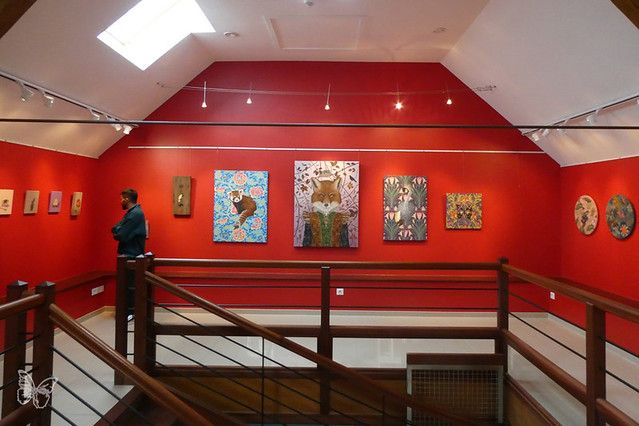
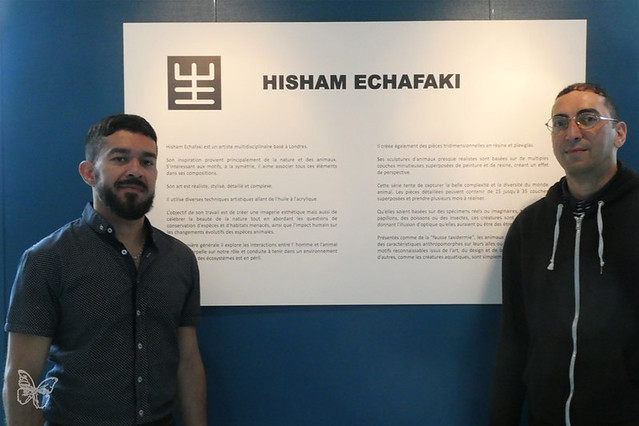
The Museum Jean Larcena, in Val d’Ocre, Burgundy, France, is pleased to open an exhibition of works by London based artist Hisham Echafaki entitled Mirabilia Naturae ( Wonders of Nature), curated by Butterfly Art News. The exhibition runs until 19 June 2022.
Hisham Echafaki is a self-taught multidisciplinary artist who has been exhibiting internationally for over fifteen years. The artist’s style is a mix between realism and surrealism and sometimes uses the trompe-l’oeil technique.
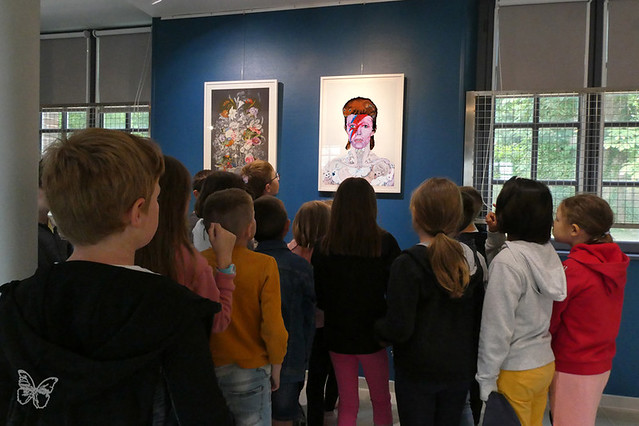
In 2013, for the David Bowie exhibition at the Victoria & Albert Museum in London, Hisham Echafaki produced an anthropomorphic portrait of the singer composed entirely of 66 animals with a surprising trompe-l’oeil effect to celebrate the 66th Birthday of the singer.
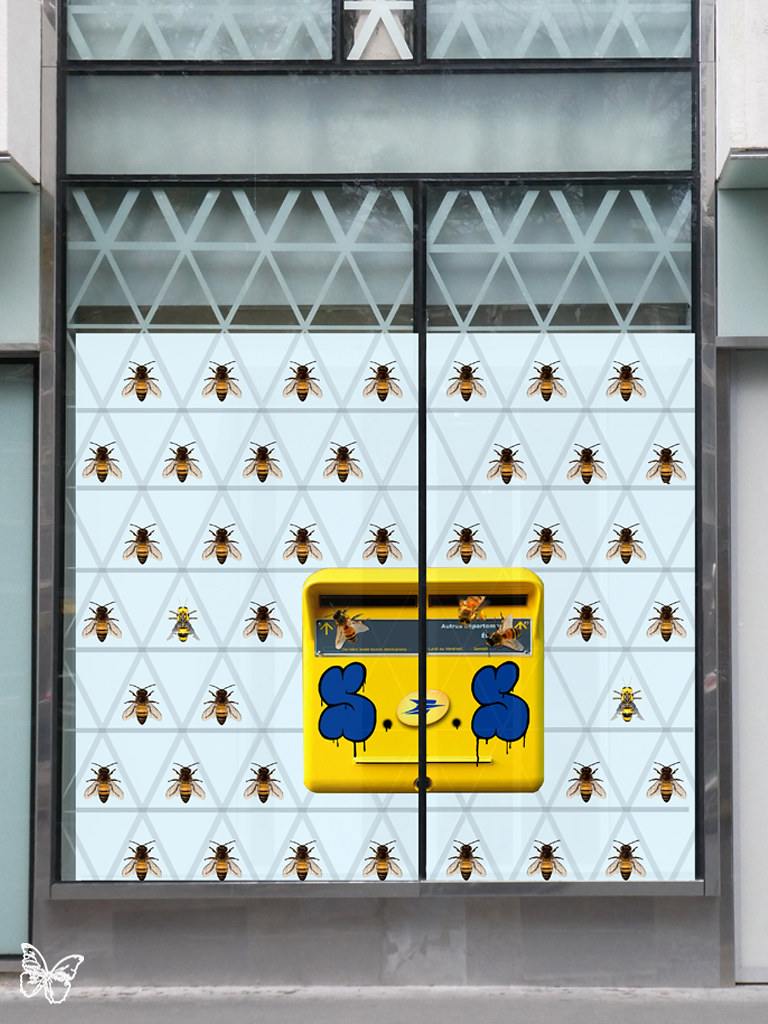
In 2019 Hisham Echafaki was invited by the Musée de la Poste in Paris to illustrate the facade with a 13-meter fresco retracing the history of mailboxes and artistic movements.
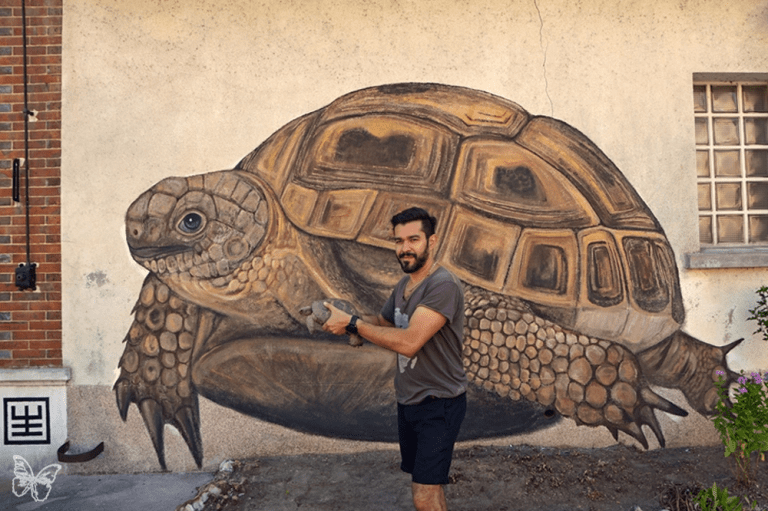
The artist will well appreciated with the local residents of Val d’Ocre as in 2018 he painted a giant fresco featuring an Iberian tortoise to warn about this endangered species. The mural has been the mascot of Val d’Ocre since.
MIRABILIA NATURAE – Wonders of Nature
From the end of the XVII th Century, explorers illustrated their discoveries of new animal and plant species and named them in Latin.
With the exhibition ‘Mirabilia Naturae’, Hisham Echafaki pays tribute to these ancient explorers who show us the wonders of nature, and transports us to a universe where the beauty and diversity of fauna and flora are celebrated in all their patterns and colours.
The series on display includes works on canvas, works on paper and multi-dimensional paintings on resin or plexiglass.
Beyond aesthetic imagery and the celebration of the beauty of nature, the themes of the exhibition highlight issues of biodiversity, the conservation of threatened species and habitats, and the impact of Man on the evolutionary changes of animal species.
In parallel with his paintings, Hisham Echafaki has also created a particular and very meticulous technique of painting on resin and plexiglass whose rendering is three-dimensional. His almost realistic animal works are based on multiple superimposed and meticulous layers of paint, resin, creating an effect of perspective.
This series of multi-dimensional works attempts to capture the beautiful complexity and diversity of the animal world. Detailed pieces can take up to 15-30 layers and several months to complete.
Whether based on real or imaginary specimens, butterflies, fishes or bees are immortalized giving the optical illusion that they could have been living creatures. Presented as “faux taxidermy”, animals often have anthropomorphic features on their wings or bodies with recognizable patterns from art, design, science while others, such as aquatic creatures, are just more realistic.
Hisham Echafaki would like to thank all the people that helped him on this exhibition: local residents of Val d’Ocre, the core team of the Museum with Francoise Richez, Patrice Lagrange, Sylvie Marchand, Bernard Curnier, and also Bassim, David Chaumet and Butterfly who worked on the preparation of the exhibition.
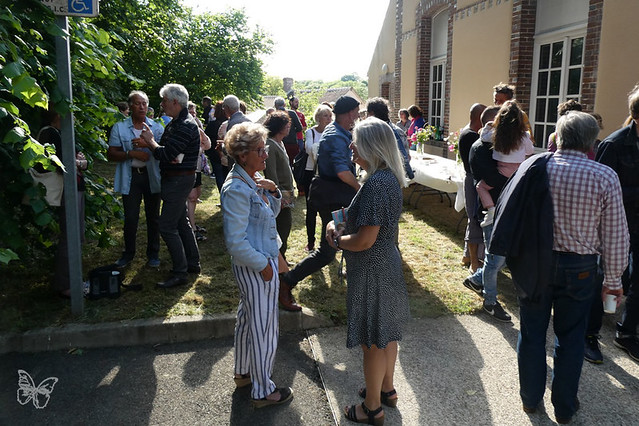
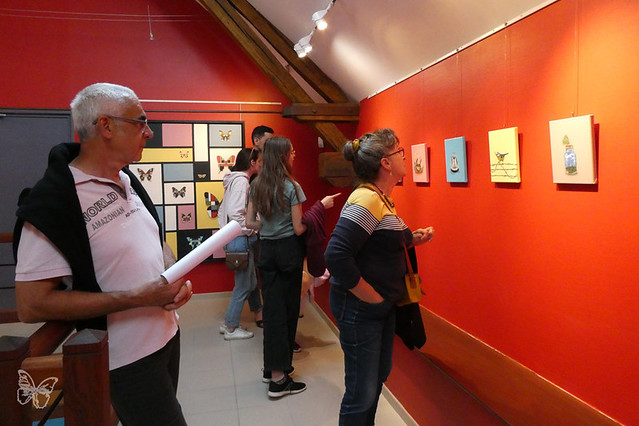
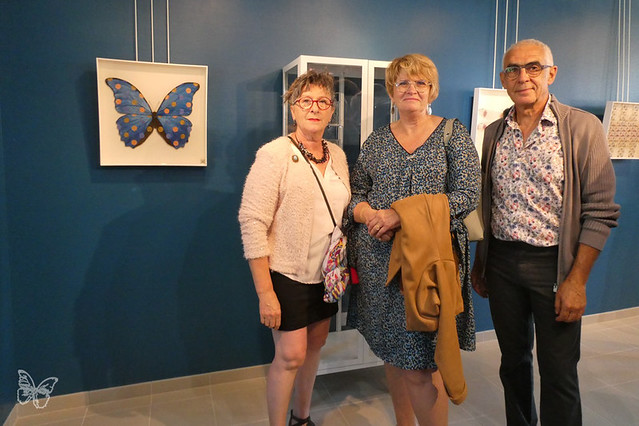
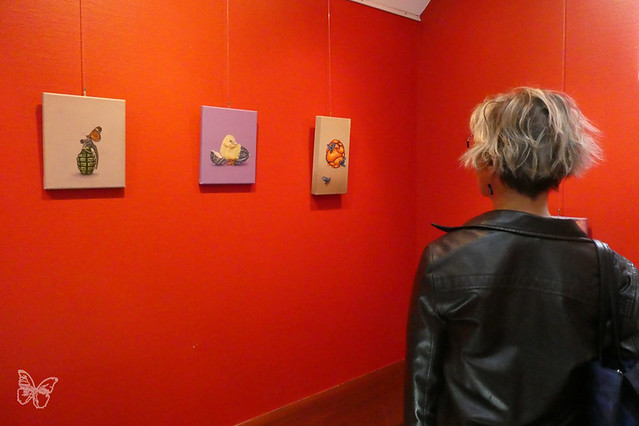
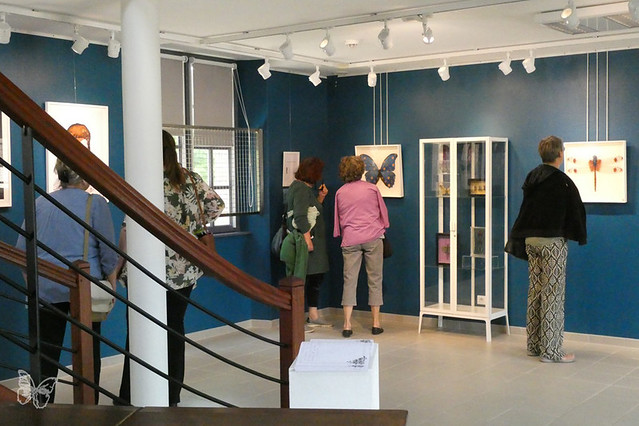
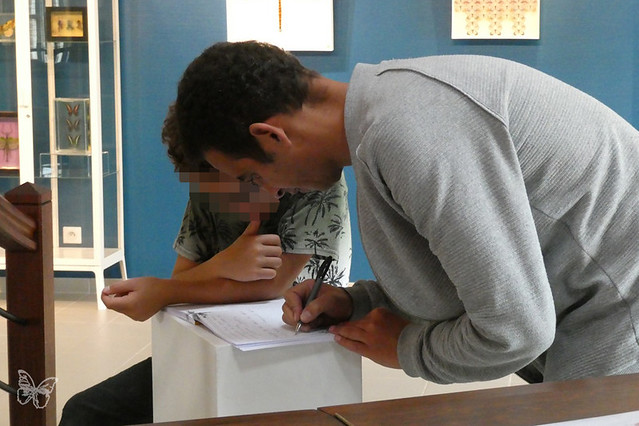
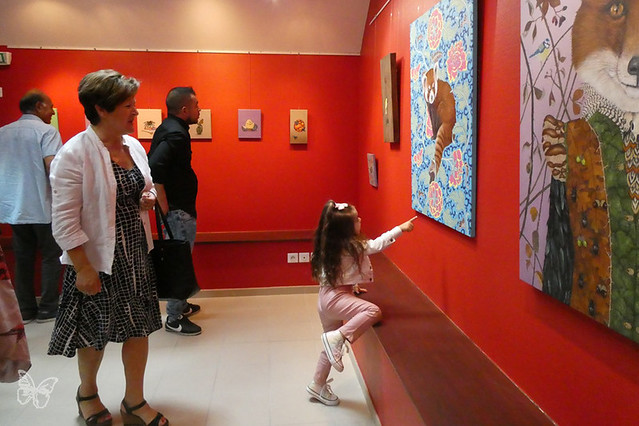
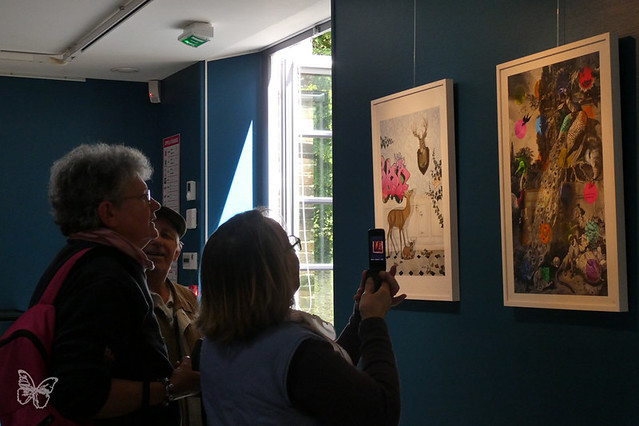
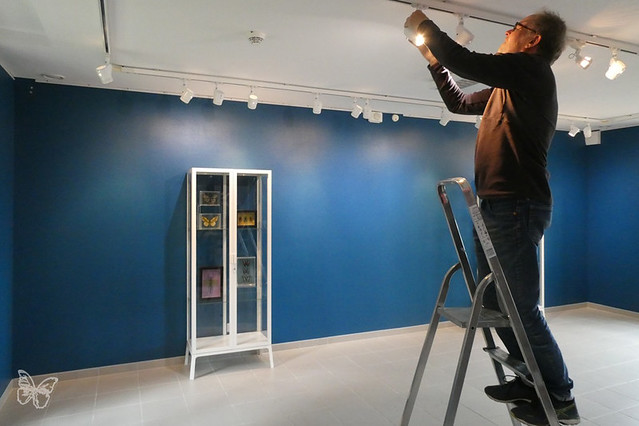
Here are some pictures from the set up and the opening:
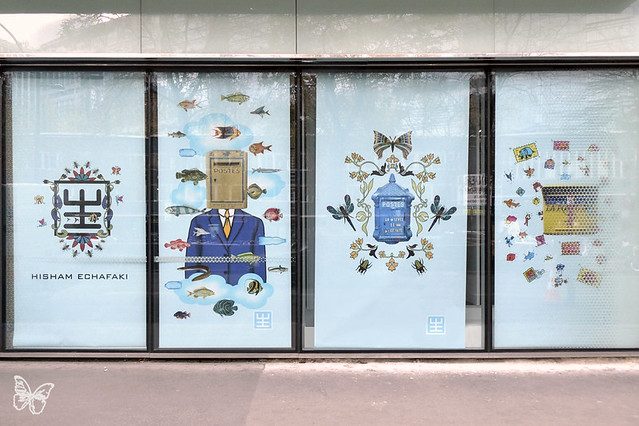
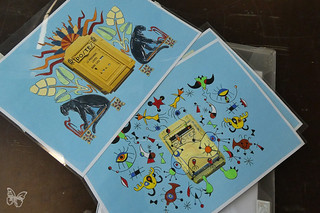
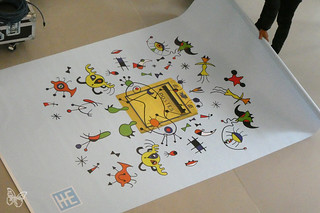
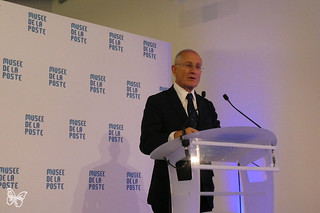
The Musee de la Poste has been undergoing massive transformation and architectural refurbishing during the past 6 years. To celebrate its reopening, we have collaborated with artist Hisham Echafaki to create specific artworks for the facade of the new building.
A series of festive panels illustrate different postal boxes through the years and pays tribute to many art movements from Art Nouveau, Art Deco to Pop Art and more.
In parallel, Hisham Echafaki integrated messages about the acceleration of the fauna extinction ( from trophy hunting to the increased plastic pollution).
The last panel represents bees taking over a postal box and launching an S.O.S.
The Musee de la Poste will open to the public on 23 November.
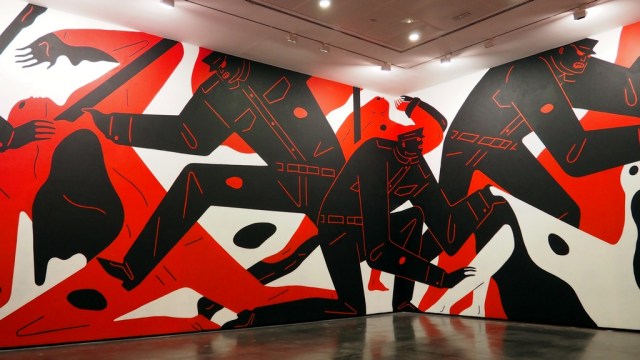
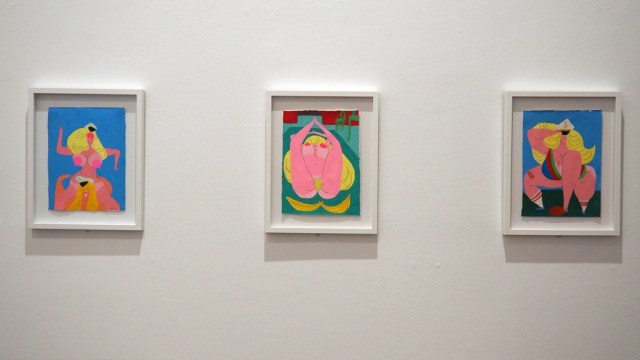
We continue our coverage of the Rose Beton Biennale in Toulouse ( check our previous report here). In parallel to the open air gallery, with street walls being painted throughout the city, the Museum of contemporary art, Les Abattoirs is hosting an exhibition featuring three international artists: Tania Mouraud, Todd James and Cleon Peterson.
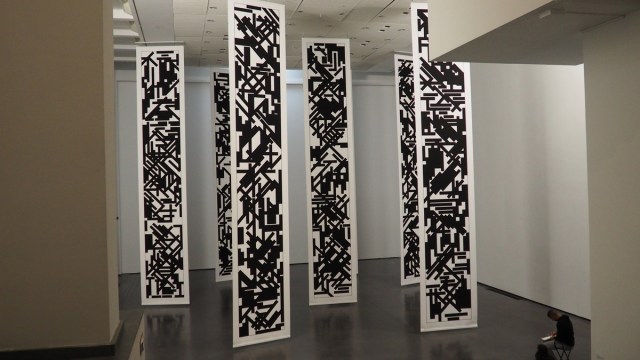
Patron of the Biennale, Tania Mouraud (b.1942) is a French multidisciplinary artist whose practice has been deployed since the late 1960s through paintings, installations, performances and videos. Her distinctive calligraphic style is highlighted by seven kakemonos from the series Mots-Mêlés surrounded by a large mural ‘Only the sound remains’, playing between letters, barcodes and graphic design.
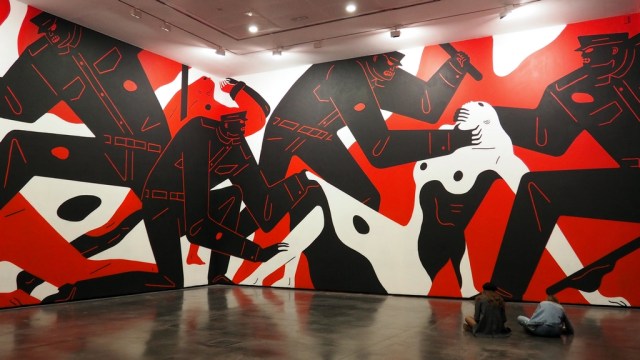
Los Angeles based artist Cleon Peterson (b. 1973) painted a monumental and dystopic mural. Using a restricted colour palette, Cleon Peterson depicts a violent and chaotic world, inspired by mythological tales, historical facts as well as the current reality of our world.
New York based graffiti artist Todd James (b. 1969) showcases a series of fierce and acidulous paintings. Inspired by pop culture and action painting, his sexy curvaceous blonde character is playful, and grin in the face of machines and destruction.
Pictures by Prune Mahe for Butterfly Art News
Rose Beton – Les Abattoirs
Until 5 January 2020
Toulouse





































 butterflyartnews.com