Interview: Zoer (FR)

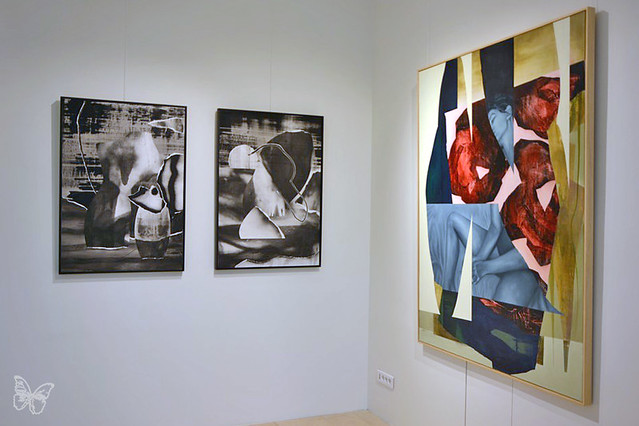
We wanted to find out more about French artist Frederic Battle aka Zoer, as he painted a mural together with Velvet at the Crystal Ship Festival in Ostende.

He accepted to answer a few questions:

Can you tell us more about your background?

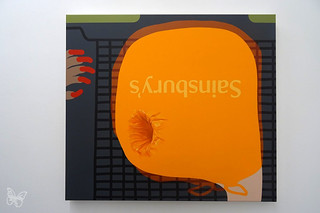
Graduated from an industrial design school, I have been drawing since I know how to hold a pencil. Kid, I used to break my car toys myself to create new forms then draw car crashes or trafic jam. I started to write by scratching, tagging with a maker without any idea of what was happening then my best friend came and said “hey, why don’t you try to make some drawing on walls” and I start to write ZOER. Where I come from, at that time they were no so much graffity for this reason my letter was quickly combined to figurative elements inspired by comics, architecture and automobile with my drawing style. Then, I moved to Paris and met Velvet (Kryo) and get a stronger interest in graffity. In 2011, the association “Sans pression” from Nantes invited me to take part of “Voyage à Nantes” first edition. This invitation was the starting point of painting murals.

What / who are your sources of inspirations?

Comics, architecture and automobile.
Gerard Richter and Ron van der Ende
Sonic PNC
Electronic music which is really important for me, the first musical emotions, I’ve felt was with Daft Punk ep ” Musique” in 1993. Laurent Garnier is certainly the artist I listen the most.


You are a multidisciplinary artist, so what is your creative process and your preferred medium?

Painting is my favorite medium but I like challenge so I can not stop to explore and explore by combining different technics, mediums and styles.
Object are the key element of my creating process, I focus on it, try to extract the abstract part of it to make growing up a subject from realistic object but not used in a realistic way.

Can you tell us more about your artworks and how you would define your style? You seem to incorporate a lot of vehicules /cars in your artworks. Is there a specific meaning behind it?

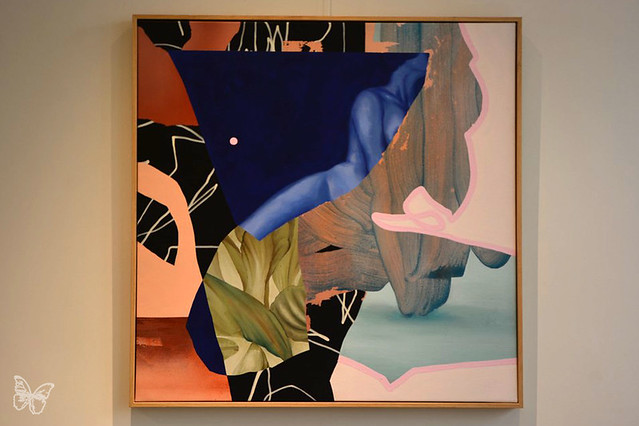
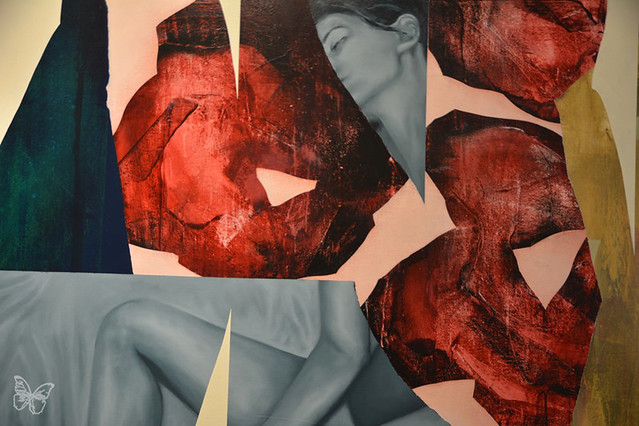
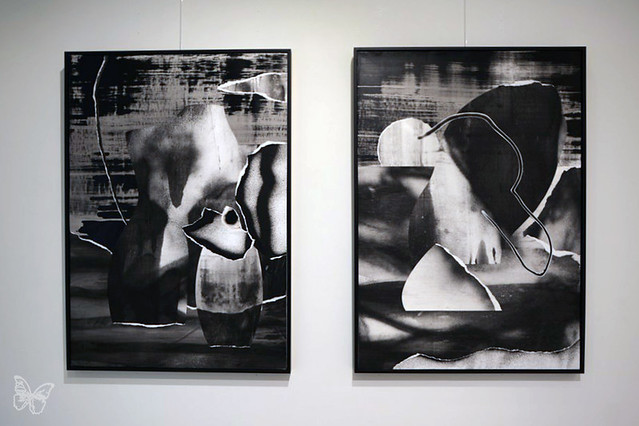
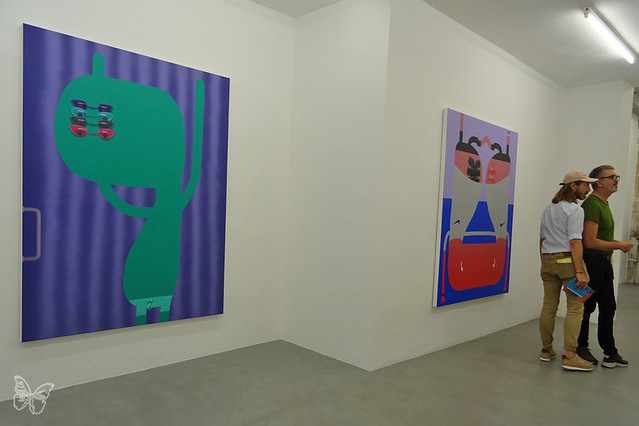
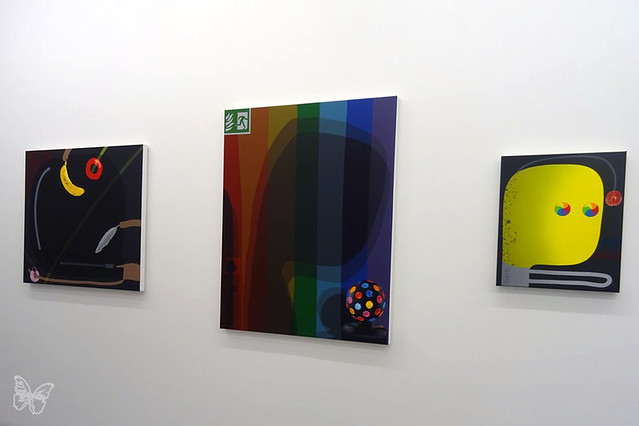
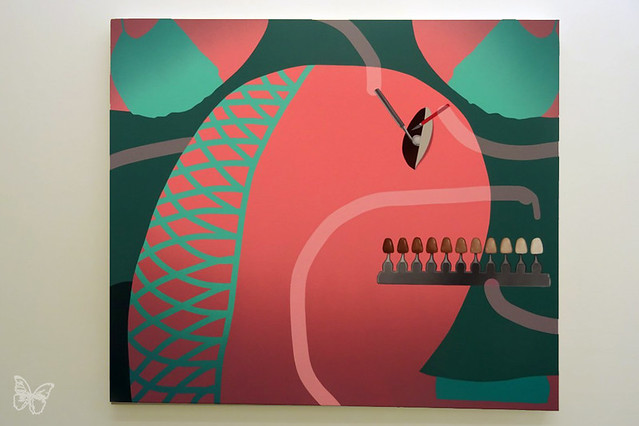
My style is definitely figurative, generally in my painting, the chaos of the pictured scene is paradoxically balanced by the accurate depiction of the objects.
Automobile is the most complicated invention of the XX century in its technological contraints as much its social impacts. Whether it’s the subject or the support, cars, from a toy to an industrial shape, embodies the culture, aspirations and desires of succeeding generations. I tried to express this ideas in my painting.

How did you end up with Kaikaikiki and Takashi Murakami?
Can you tell us about your experience in Japan?

I was in a middle of the Mercantour (French Alpes) when I received this email from Takashi Murakami saying “I love you work, I would like to make an exhibition”. Few months after, I was in Tokyo.
Work with Kaikai Kiki gallery is a great opportunity, really inspiring. It is an incredible possibility of creation. Japan is mesmerizing

You are doing a collaboration with DrColors and Velvet for the Crystal Ship? Can you tell us more?
We were invited with Velvet to paint this mural and Dr Colors, old friend, came very nicely to give us a hand.
I met Velvet at design school we paint and make most of the projects together, we have created DIE_CAST_STUDIO.

What are your next projects as well?
My opening of my next show, La Forme, will be on April 7th at SC Gallery in Bilbao. Then I will go to Rabat / Morocco for a mural and in Saint-Gervais les Bains for the second edition of 2KM3, an innovative cultural project started last year, 11 artists was invited to paint an interior car park.

Photos courtesy of the artist

Zoer
More on http://www.zoerism.com

Paris: D*Face – ‘Fornever’

D*Face Fornever

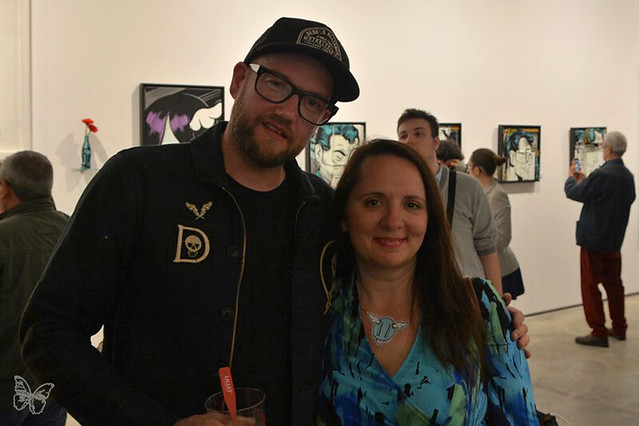
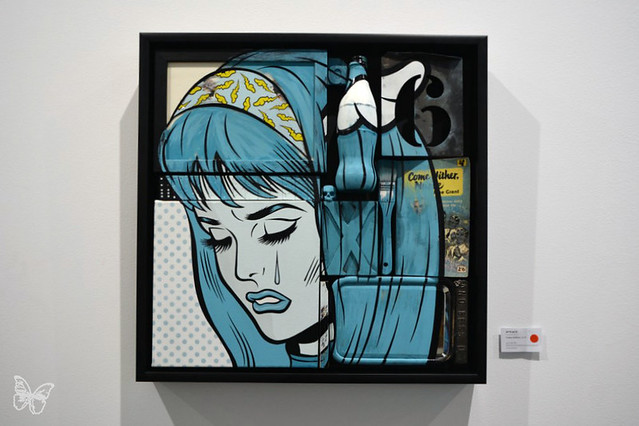
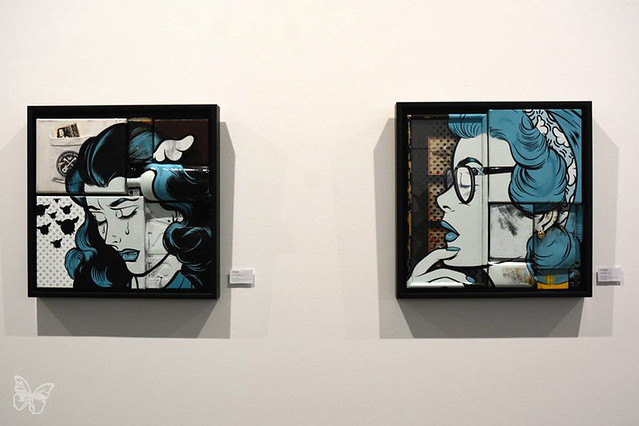
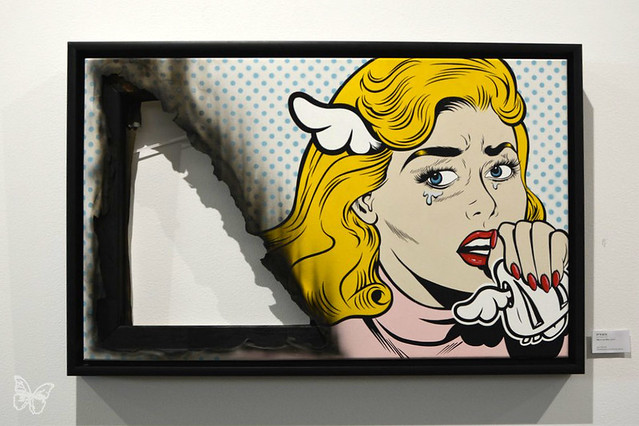
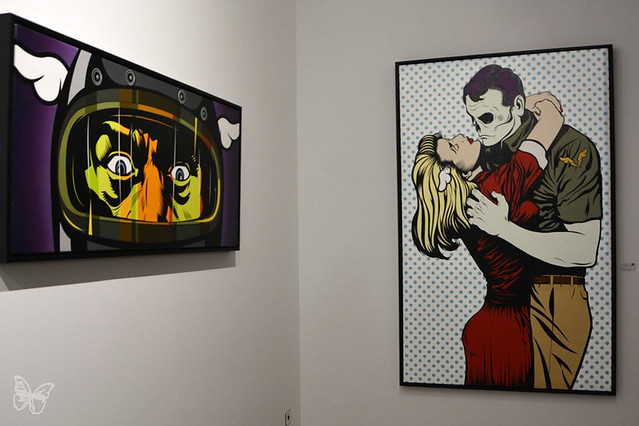
After painting a large new mural Turn Coat (covered) in the 13th District of Paris, D*Face unveiled his first solo show in France at Galerie Itinerrance. Entitled FORNEVER, the exhibition presented canvasses, sculptures, installations, HPMs, prints, and more. The British artist also experimented with a new medium – ‘Memory Trays’ – assemblages of found objects to bring a narrative dimension to his portraits. Thus, his subjects are plunged into the past as if they were nothing but an accumulation of memories, a discrete stencil is hidden inside a old novel, the faded picture of a pin-up comes out of a small pocket, or a key floats inside a glass bottle. The new imagery deals with how nothing is forever, with the old replaced with the new and the tensions that come with it.

D*Face Fornever

The first wall of the showing presented a ‘blue period’ with a multitude of formats from sculptures, such as ‘Riot Bottles’ and ‘Memory Trays’. This section featured sad characters, with an omnipresent blue colour palette, bringing out melancholy and the souvenir of lost time.

D*Face Fornever
D*Face ForneverD*Face ForneverD*Face Fornever

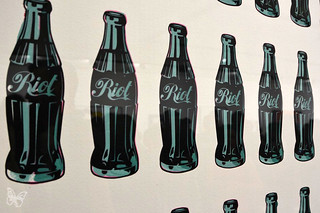
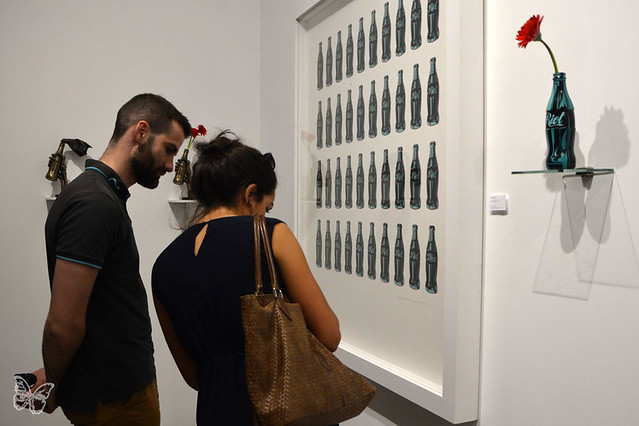
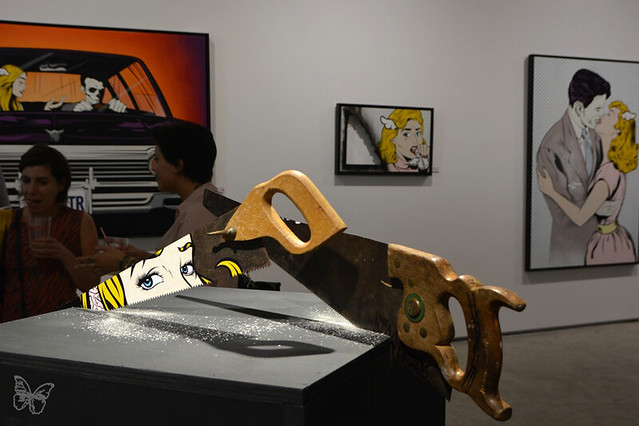
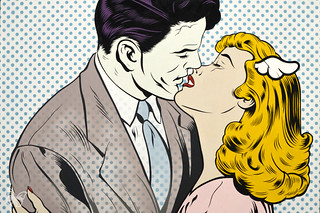
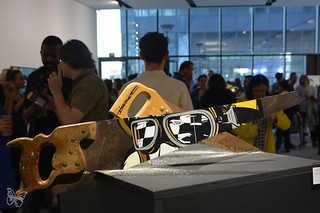
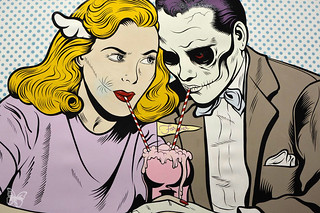
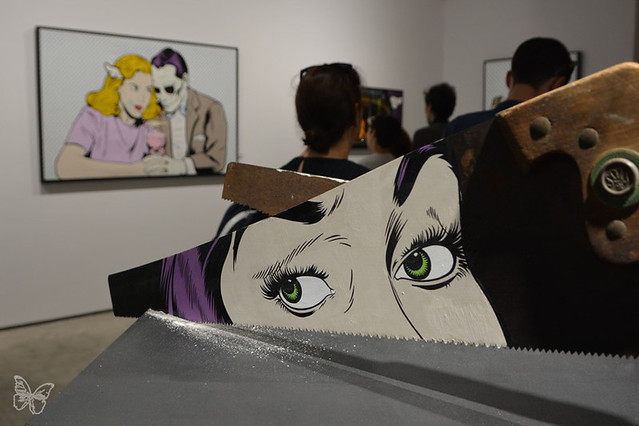
Opposite these lonely characters, a series of colourful canvasses focused on love relationships through different stages, and also echoed some of D’s monumental murals and album cover for the music band Blink-182. The themes of duality, love and violence appeared throughout the exhibition, from the Coke bottles transformed into Riot motolov cocktails or rose vases, to the rusted and painted saws featuring the male and female gaze.

D*Face ForneverD*Face ForneverD*Face Fornever
D*Face ForneverD*Face ForneverD*Face ForneverD*Face Fornever

To describe the exhibition, D*Face mentions – ”From London to Los Angeles, Tokyo to Paris, I’ve lived and worked in cities my entire life, and if there’s one thing that all have had in common, it’s a tension between the old and the new. Progress seems inevitable, yet history and tradition remain treasured commodities – hard to let go. Likewise, artists throughout history, including myself, have faced the same obstacle – how do we evolve without abandoning what distinguished us in the first place? As the rate of change increases exponentially, so too does the value of society’s collective memory, along with the few relics which remain to uphold the past. It was my ambition with the Fornever show to set past and future in dialogue with one another.
To initiate this project, I chose to revisit the image of the Riot Coke Bottle, but this time as an imitation of the iconic petrol bomb – the poor man’s grenade. A familiar yet daunting object, it’s been used to spark the fire of countless revolutions throughout history, so for me it was an irresistible symbol for change – an incineration of the old in sight of the new. What remains then are vestiges of the past, salvaged, repurposed and marvellously outdated, they remind us that no matter how hard we may fight the wheel of change, nothing can last forever – there is only Fornever.”

D*Face ForneverD*Face Fornever
D*Face Fornever
D*Face Fornever

View the full set of pics here

D*Face – Fornever
Galerie Itinerrance
Paris

Paris: Lee Bae ‘ Black Mapping’

Lee Bae - Black Mapping

Perrotin Gallery in Paris is currently showing “Black Mapping” by Korean contemporary artist Lee Bae and looks back to the creative period of Lee Bae marked by the work of charcoal, in the form of paintings, sculptures and installations.

Since the early 2000’s Lee Bae is best known for his acrylic paintings associating a thousand variations of black and creamy white. Perrotin Gallery has chosen to highlight a lesser known creative aspect from the late 1990s to the early 2000s, which focused on the use of charcoal.

Lee Bae - Black Mapping

Lee Bae’s charcoal achievements are a crucial moment in the Korean artist’s career when he arrived in Paris in 1990, and the discovery of this new material is a turning point in his practice.

The choice of charcoal is due to several reasons: references to the China ink and calligraphy, but is also deeply rooted in the Korean tradition and reminded him of its origins.

Charcoal would allow Lee Bae to combine and align the two subjects that had always motivated him: a reflection on the material and a quest for blackness. In other words, on one hand the material in itself, for its sculptural qualities, and on the other hand, the material as a means of achieving tonality.

Lee Bae - Black Mapping

The installations of the Fire series are juxtaposed elements of raw material, burned and glued on canvas. Working the surface and revealing shadows, gradients and highlights, charcoal is a powerful creative element both literally and figuratively.

Lee Bae - Black MappingLee Bae - Black MappingLee Bae - Black MappingLee Bae - Black Mapping
Lee Bae - Black MappingLee Bae - Black Mapping

Check a video by Simone Hoffman for Arte Metropolis that looks behind the scenes.

Lee Bae – Black Mapping
Until 26 May 2018
Galerie Perrotin
76 rue de Turenne
75003 Paris

London: Mai 68 Posters from the Revolution

Lazinc - Mai 68 Posters

This May marks the 50th anniversary of the Mai 68 riots; a revolutionary string of student protests in Paris. Art was truly embedded in this revolution, with unique screen-printed posters being plastered along the walls of France.

Lazinc Sackville is currently exhibiting in London its own collection of these original posters for all to see. This unique collection of posters was last exhibited at The Hayward Gallery in 2008 and now forms part of Lazinc’s permanent collection of counter culture and propaganda works.

Lazinc - Mai 68 Posters

The 50 works are original, screen-printed posters produced during May and June in 1968 and plastered over the walls of Paris. The posters became the visual symbols of the revolution and they depict solidarity between France’s students and workers; opposition to De Gaulle and parliament; and the denouncement of a fascist regime.
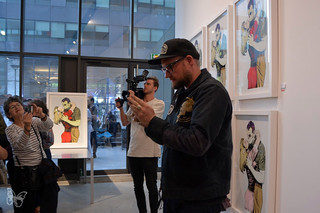
One of the largest collections of this nature, the Lazinc Propaganda Collection includes Chinese Maoist posters dating back to early 1900’s, Black Panther posters, Russian Communist Posters from the 1970’s & 80’s, Cuban Revolutionary posters as well as British counter-culture posters from the 1960’s – 1980’s. These iconic works have been cited as the forerunners of today’s street art movement, and have been an inspiration to many of the contemporary artists Lazinc has worked with, including Banksy, Vhils and JR.

In addition films, imagery and memorabilia from the Mai 68 riots help contextualise the artworks in a historic setting, including archival photography, memorabilia and film footage captured during the riots.

Lazinc - Mai 68 PostersLazinc - Mai 68 PostersLazinc - Mai 68 Posters

The gallery is also recreating a screen-printing room from one of the Atelier Populaire studios, the infamous workshop created in the occupied lithography studios of the École des Beaux-Arts set up by artists and students, .showing the working space in which the posters were created. Screen-printing was used due to the opportunity of mass-production and none of the posters were signed by individual artists.

Lazinc - Mai 68 PostersLazinc - Mai 68 Posters
Lazinc - Mai 68 Posters

“I love posters and their inherent power. They have been used as a tool of control or rebellion by everyone from counter-cultural groups to communist regimes, to subjugate billions of people. I still feel that they have their place in today’s society, take something like Shepard Fairey’s HOPE poster for the Obama campaign. A poster that in its own small way helped a black man to be voted as president of the USA, something no-one thought possible. The posters here were made by “Atelier Populaire”…
The whole idea was that anyone and everyone could contribute to the content of the posters, students, fishermen, postmen, factory workers etc. There would be assemblies where the poster choice would be made. These would invairably be printed through the day and night and then pasted up on the night-time, for the city of Paris to see what the issues at hand were. This was a pretty risky business due to the heavy-handed tactics of the French riot squad. This is a classic example of the disposed and dis-enfranchised using the poster to give voice to their concerns. The fact that time has not diminished them or their sentiment is a testimony to their power.” – Steve Lazarides, Co-Founder, Lazinc

Lazinc - Mai 68 PostersLazinc - Mai 68 Posters

The installation is left as if interrupted, posing the question of what the Mai 68 riots achieved and what is their contribution to art and history, the place of art within revolution?

Lazinc - Mai 68 Posters

View the full set of pics here

Lazinc Sackville
29 Sackville Street
London W1S 3DX


Paris: D*Face ‘Turncoat’ Mural

D*Face Turncoat

British artist D*Face (covered) has just completed his second mural in Paris, at 155 boulevard Vincent Auriol, part of the ongoing open air museum in the 13th District with Street Art 13 Mural program.

This is the mural version of his painting ‘Turncoat‘, here on 25 meters high and 15 meters wide. This monumental work marks a departure in D*Face’s work. The portrait is made from a blue colour palette, while most of its pieces are based on a plurality of colors.

D*Face Turncoat

The artist, explained it as follows: “The colour scheme is new to me, it’s a new direction, each artist goes through his blue period, at the moment it must be my turn. . ” This palette represents a certain melancholy in his view of the world. The woman lips are tinted with a vibrant electric red, highlighting her power of seduction while her frowning brows and rebellious hair show her strong temperament. D*Face also added his signature wings and pop imagery to the mural.

D*Face TurncoatD*Face TurncoatD*Face TurncoatD*Face TurncoatD*Face TurncoatD*Face TurncoatD*Face TurncoatD*Face TurncoatD*Face Turncoat
D*Face Turncoat

In parallel, the original painting ‘Turncoat’ is currently visible at the new solo exhibition ‘Fornever‘ at Galerie Itinerrance until 19 May.

View the full set of pics here