The Crystal Ship 2018 in Ostend (BE)

The Crystal Ship is a contemporary art festival bringing art to the seaside in Ostend, Belgium.
For its third edition over fifteen international artists will create large scale murals and art installations using the City by the Sea as their canvas. The new artworks will be added to the existing fifty murals and interventions visible through the city, making it the biggest mural festival in Europe.

The official opening will take place on 7th April 2018 in Monacoplein, Ostend

2018 Participating artists include:
A Squid Called Sebastian (B) – Ben Slow (UK) – Colectivo Licuado (URU) – Dourone (FR) – Etam Cru (PL) – Gaia (US) – Icy & Sot (IR) – Jaune (B) – Joachim (B) – Johannes Verschaeve (B) – Matthew Dawn (B) – Milu Correch (AR) – Oak Oak (FR) – Telmo & Miel (NL) – Wasp Elder (UK) – Zoer x Velvet (FR)

Here are some pics of the 2018 invited artists we’ve met across our travels:


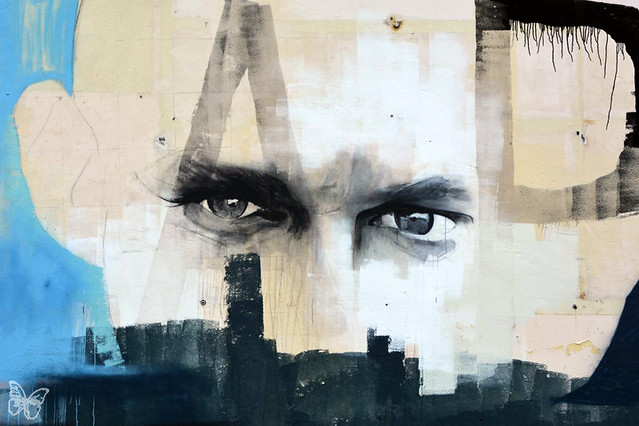
Gaia

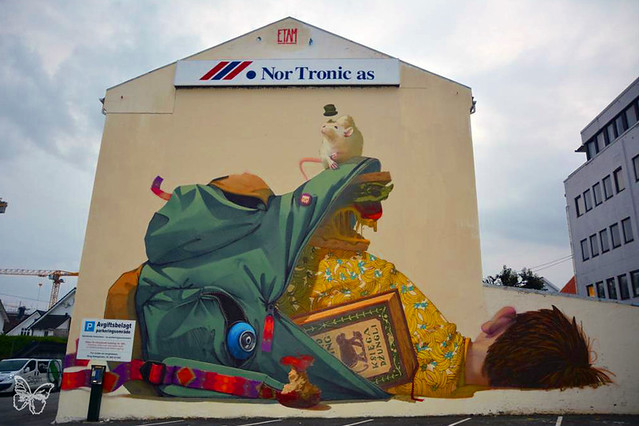
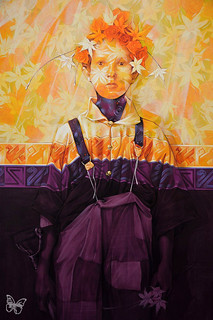
Etam Cru - NuArt
Etam Cru

Crimes of Minds - Ben Slow
Ben Slow

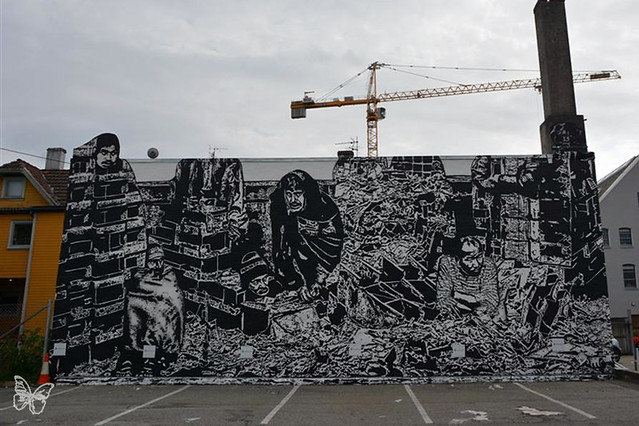
Icy & Sot - NuArt
Icy & Sot


Jaune
Wasp Elder
Wasp Elder


Butterfly Art News
will be reporting live from Ostend in Belgium on the new murals and present exclusive interviews from participating artists.

So stay tuned for more details coming soon…

The Crystal Ship
7-8 April 2018
Monacoplein
8400 Ostend, Belgium

London: Fourth Plinth by Michael Rakowitz

Michael Rakowitz

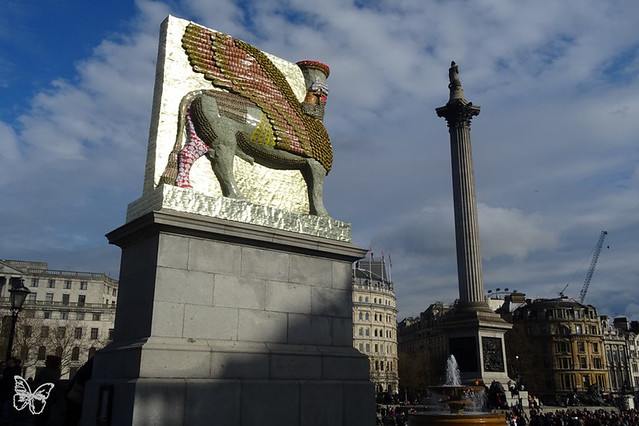
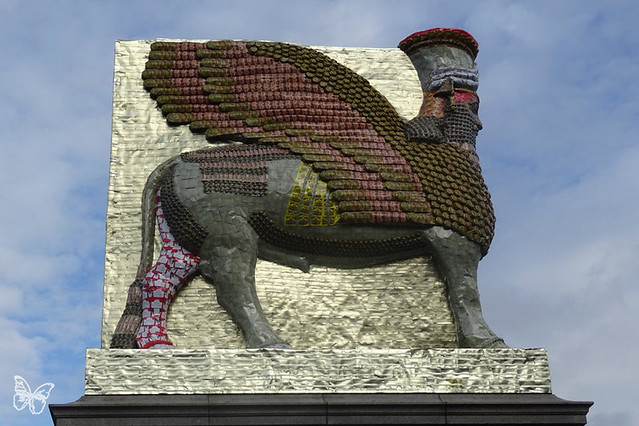
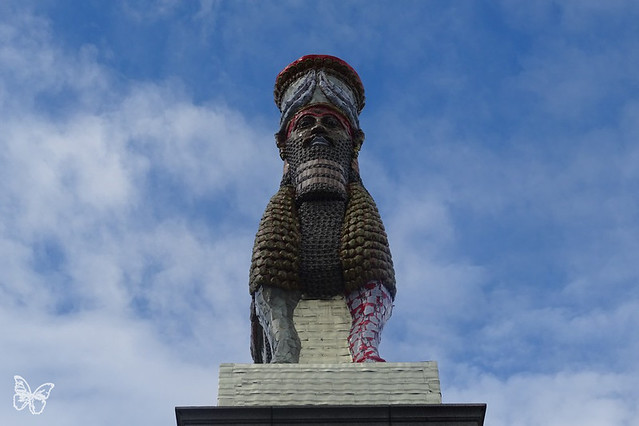
Following David Shrigley ‘ Really Good’ sculpture,  Iraqi-American artist Michael Rakowitz, has been selected to create the latest sculpture for the Fourth Plinth in Trafalgar Square using 9,000 tin cans of date syrup made in Iraq. The artwork is a reconstruction of the lamassu, a winged bull created around 700BC at the Nergal Gate of Ninevah, Iraq, nearMosul vandalised by Isis in 2015.

Michael Rakowitz has built an international art-world reputation over the past 15 years, fusing his autobiography as an American with an Iraqi-Jewish background with social and political observation and activism, as well as the odd absurdist link to pop culture.

During a family visit to the British Museum when he was aged 10, he recalls his first encounter with an Assyrian lamassu, like the winged bull only with a lion’s body. “Suddenly I found myself immersed in this space that was unlike any I had seen before,” Rakowitz recalls, “which was going past those lamassu and going into the throne room reconstruction from Nineveh and seeing the lion hunt of Ashurbanipal.”
Michael Rakowitz

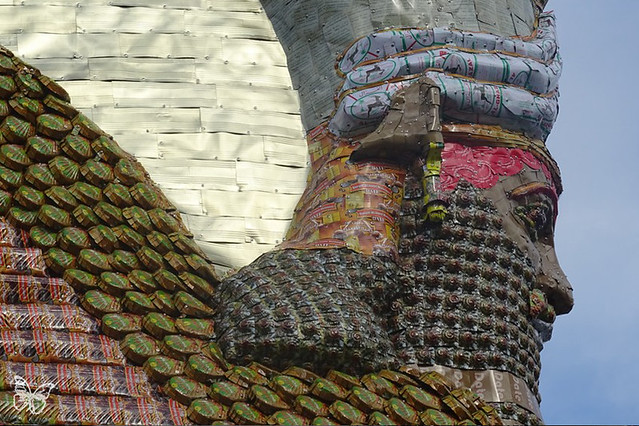
The lamassu on the plinth is not a one-off but part of another long-term project, also called The Invisible Enemy Should Not Exist. For this, Rakowitz is reconstructing the entire database of 7,000 works looted from the National Museum of Iraq in the aftermath of the US and UK’s 2003 invasion. All of the reconstructions are made from Middle Eastern foodstuff packaging and local Arabic newspapers.

The project grew from Rakowitz’s observation that the sack of the museum was the first event of the war about which there was a consensus. “It didn’t matter if you were for the war or against the war, this was a catastrophe,” he explains. “But that outrage about lost artefacts didn’t turn into an outrage about lost lives.”

He noted that many looted artefacts were votive statues. “One of the interpretations of those artefacts is that those were statues that the ancient Babylonians, the Mesopotamians, would bring with them to the temple of the god, and the idea was that you would leave the sanctuary at a certain point but you left that statue in your stead, as a surrogate for you, to continue praying. And when I saw the artefacts being looted, I said, ‘Well, now we have another surrogate: a lost artefact for the lost bodies’. All those things loop back into the human and environmental catastrophe.”
Michael Rakowitz
Michael Rakowitz

Rakowitz was already thinking about reconstructing the lamassu after seeing the footage of it being destroyed by IS. He had discovered its measurements by referring to the sketches of Austen Henry Lanyard, the British archaeologist who discovered the lamassu and brought two others to the British Museum — the ones Rakowitz had seen as a child. He was invited by the Fourth Plinth organisers to submit a proposal and remarkably, the plinth was the same length as the lamassu — 14ft. “I was like, ‘This is it!’ What else would I do?”
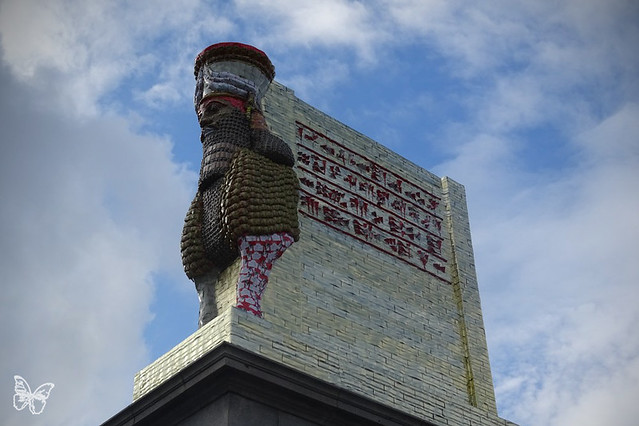
Michael Rakowitz

Instead of merely recreating the sculpture, the artist wanted to recreate the DNA of Iraki people who got killed as well, so he decided to use date syrup cans.

So why date syrup cans? Rakowitz first began working with them in a New York project in 2006, Return, in which he reprised his grandfather’s import/export business but attempted to deal only in Iraqi goods. He had found the date syrup in a grocery store in Brooklyn but it was labelled “product of Lebanon”. In fact, the syrup was made in Baghdad, put into large plastic vats, driven to Syria and canned there before moving over the border into Lebanon, where it was labelled and sold globally. That way, sanctions were circumvented and, post-2003, security tariffs avoided. But for Rakowitz the journey was another metaphor, of course: the dates travelled “the same exact path as Iraqi refugees”.
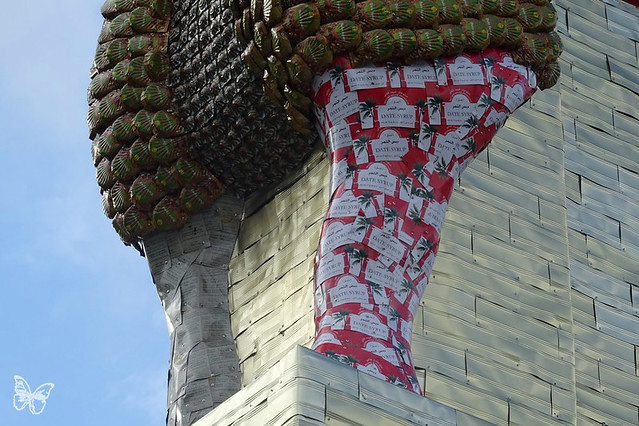
Michael Rakowitz

Iraqi dates “were considered the best in the world; what the cigar is to Cuba”, he says. But their demise reflects the tragedy of Iraq’s recent history. Date palm trees disappeared, “from 30 million in the Seventies, when Iraq was the chief exporter of dates in the world, to 16 million at the end of the Iran-Iraq war [1980-88], to three million at the end of the 2003 invasion,” he says.
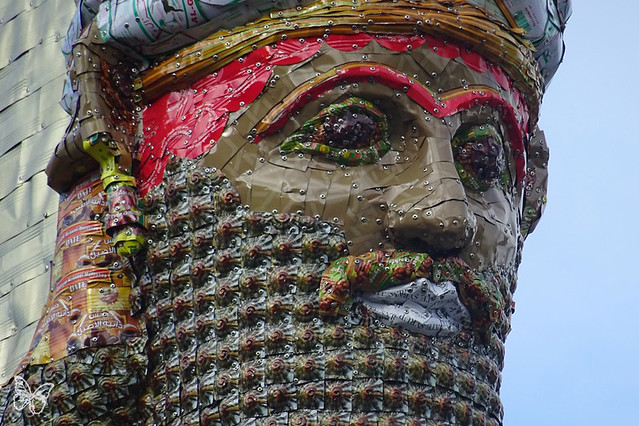
Michael Rakowitz

So the plinth sculpture reflects a huge sweep through Iraqi history. “It’s telling the story of a destroyed Iraqi artefact, and what it’s made from is telling the story of a destroyed land, destroyed nature, destroyed ecology,” he says. “And the destruction of a symbol that was so elemental to the Iraqi people. Dates are the harbinger of good things to come: you put a date into the mouth of a baby in some places in Iraq so its first taste of life is sweet. And when you have the erosion of that sweetness, it’s not a good omen.”

This is the genius of Rakowitz’s sculpture: it is history, art history, social history and current affairs. Rich knowledge and impassioned polemic all bundled into a single, glorious yet poignant symbol looking over Trafalgar Square.
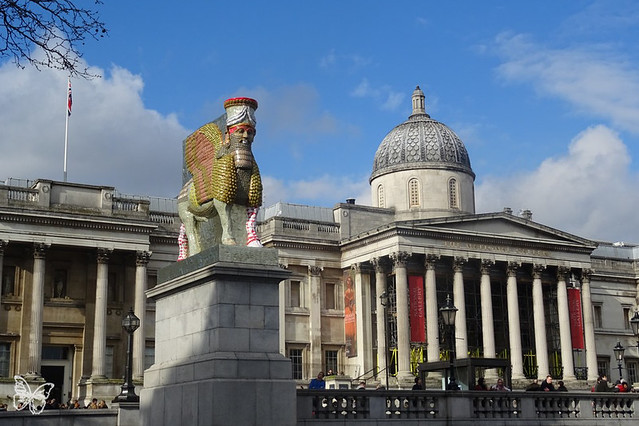
Michael Rakowitz

View the full set of pics here

Michael Rakowitz
The Invisible Enemy Should Not Exist
from 28 March 2018
Fourth Plinth
Trafalgar Square,London

Paris: INTI ‘Profane’ at Galerie Itinerrance

Inti - Profane

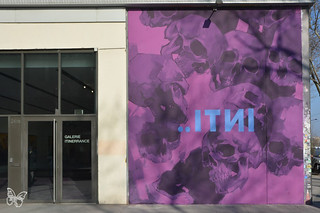
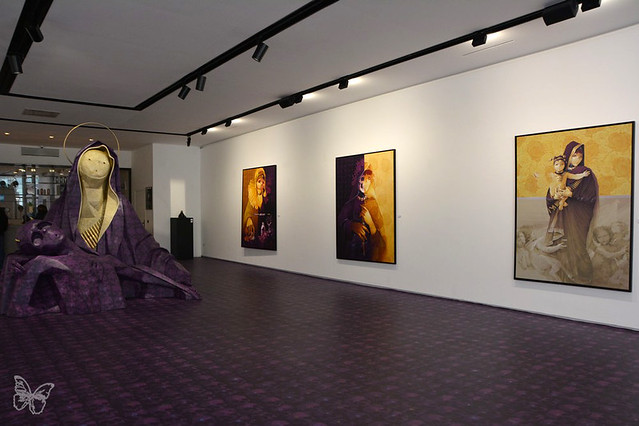
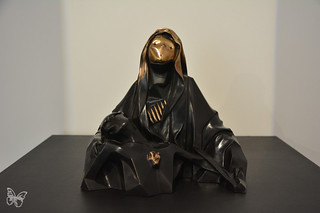
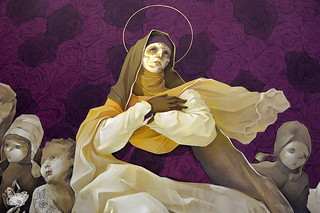
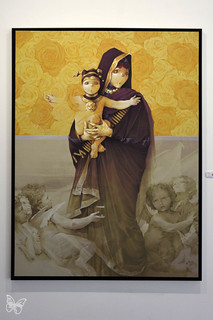
Chilean artist INTI retuns to Paris for a third solo show called ‘Profane’ at Galerie Itinerrance, featuring new paintings and an impressive site specific installation.

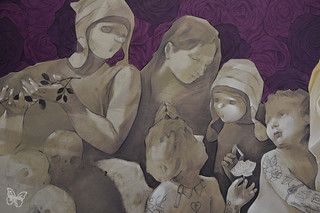
For years Inti kept on traveling all around the world to paint murals . His wall paintings often show the Kusillo, a character originated from the south-american carnival, or figures coming from religious imagery. These intense creations organized through rich and meaningful compositions allow him to approach social issues. The artist draws symbols from different cultures and various fields, he takes them out of their context to give them a new meaning by juxtaposition.

For «Profane», Inti selected a dozen of his murals he recently executed across the world from Lisbon to Miami and China. Based on the subjects represented on each of them, he adapted his artistic practice to the size of the canvas and changed some elements to better clarify his intention.

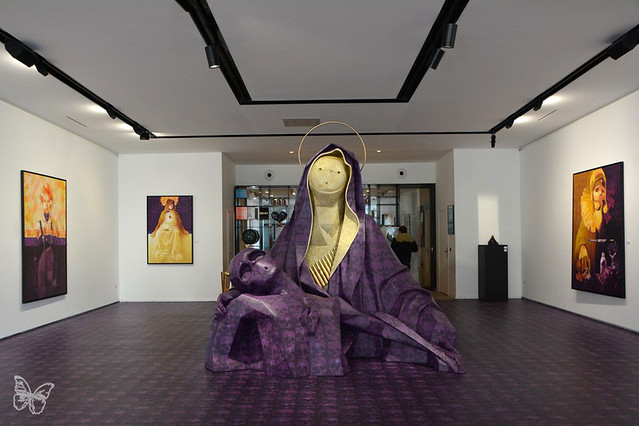
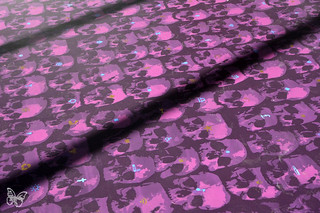
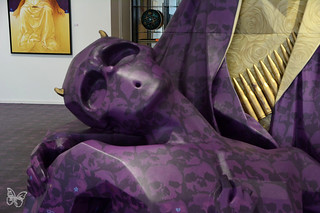
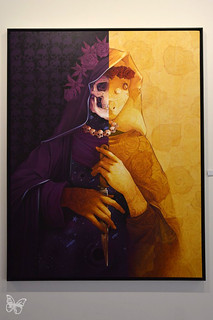
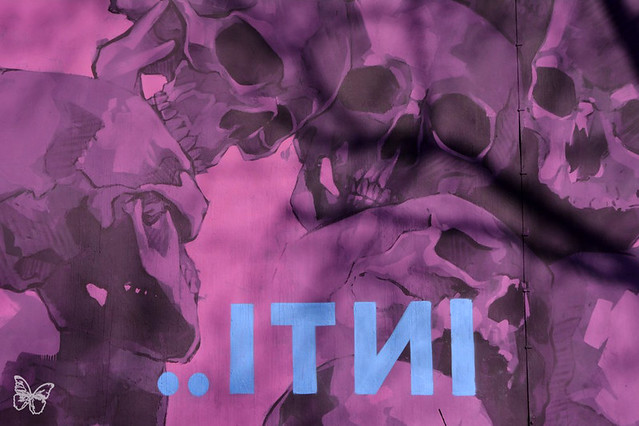
Inti also created an immersive installation by covering the floor with stencilled skulls while a spectacular Pietà sit prominently in the center of the gallery space.

Inti - ProfaneInti - Profane
Inti - Profane
Inti - ProfaneInti - Profane

This 8.5 feet high installation is the result of a long work for Inti who experimented with a new medium. It took him 6 months of work and 12 hours a day to finish it. Beyond a technical challenge, Inti managed to represent in volume a traditional figure of religious iconography and reappropriated it with his own codes.

Inti - ProfaneInti - Profane
Inti - Profane

Through this new body of work, Inti addresses various issues , like the conflicts between science and religion, with a critical eye without expressing a definitive answer. The same way he spreads numerous iconography and symbols in each of his paintings, he injects in his compositions a multitude of elements and leave the spectator free to interpret them. «Profane» transcribe very well the journey Inti experienced since his last exhibition. His numerous travels can be felt through his openness to the world and his sensitivity.


Inti - ProfaneInti - ProfaneInti - Profane
Inti - Profane

«Profane» challenges us to reflect on the banality of our beliefs and dogmas, as opposed to the delicate, ephemeral and natural beauty of life.‘ – Inti

Inti - Profane

View the full set of pics here

Inti – ‘Profane’
Until 31 March 2018
Galerie Itinerrance
24bis boulevard du Général Jean Simon
75013 Paris

The Other Art Fair London: Hisham Echafaki

The Other Art Fair - Hisham Echafaki

The new edition of the Other Art Fair London curated by Saatchi Art features 130 international emerging and established artists from 22-25 March 2018 at Victoria House London WC1. Here is a selection of our highlights from the Fair.
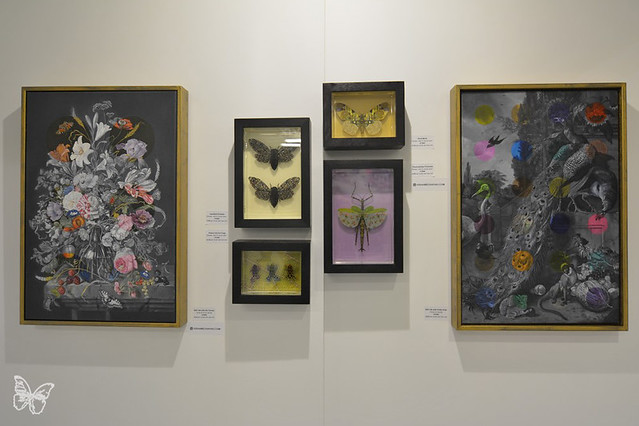
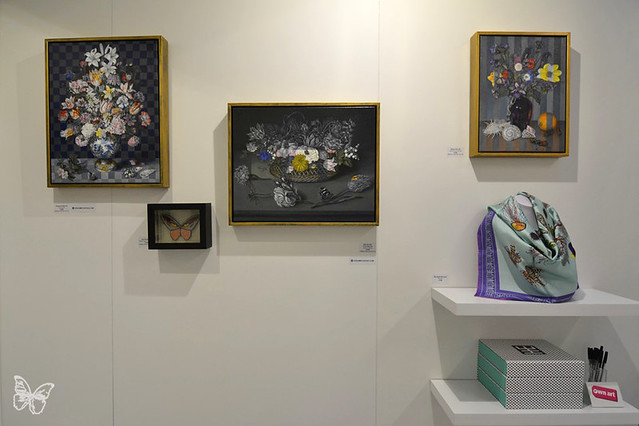
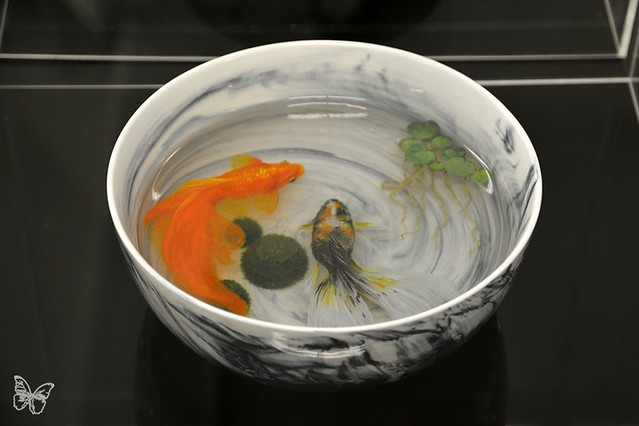
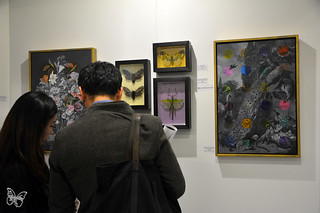
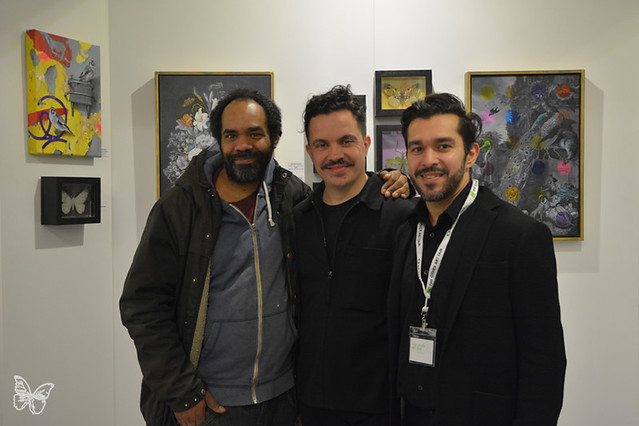
French artist Hisham Echafaki(covered) returns to London with a new solo exhibition.  Presenting a new body of works including his signature three dimensional paintings that look like real animals, insects and fishes.

The Other Art Fair - Hisham Echafaki

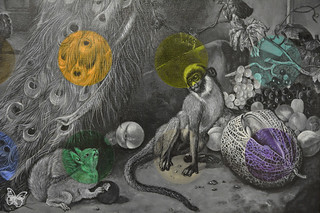
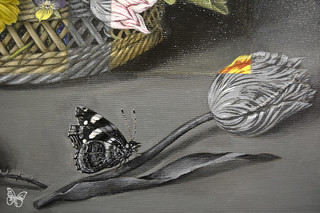
In parallel Hisham Echafaki also created new paintings inspired by Dutch masters and gave them a modern twist using optical black and white and colourful effects, from circles, squares and stripes.

The Other Art Fair - Hisham Echafaki
The Other Art Fair - Hisham EchafakiThe Other Art Fair - Hisham Echafaki
The Other Art Fair - Hisham EchafakiThe Other Art Fair - Hisham EchafakiThe Other Art Fair - Hisham Echafaki
The Other Art Fair - Hisham Echafaki

View the full set of pics here

This slideshow requires JavaScript.

The Other Art Fair
London 22-25 March 2018 
Victoria House
London WC1
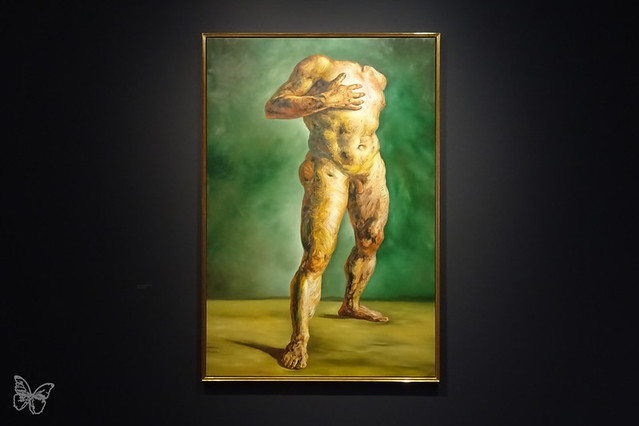
London: Glenn Brown – ‘Come to Dust’ at Gagosian Gallery


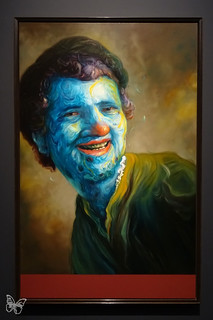
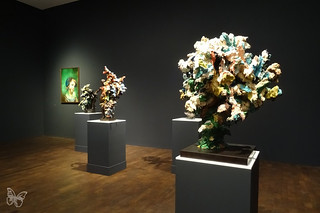
Glenn Brown - Come to dust

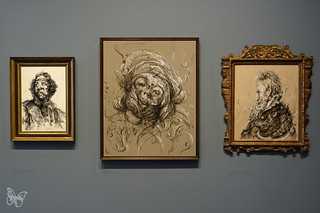
The Gagosian Gallery is currently showing “Come to Dust,” the first major exhibition by British contemporary artist Glenn Brown in London since 2009.

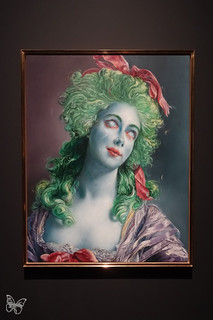
For Brown, the past and present are treasuries of raw material, offering countless images, titles, and techniques to be combined, appropriated, and deconstructed. Based on art history, as well as of literature, music, and popular culture, Brown creates complex and sensuous works of art that are resolutely of our time.

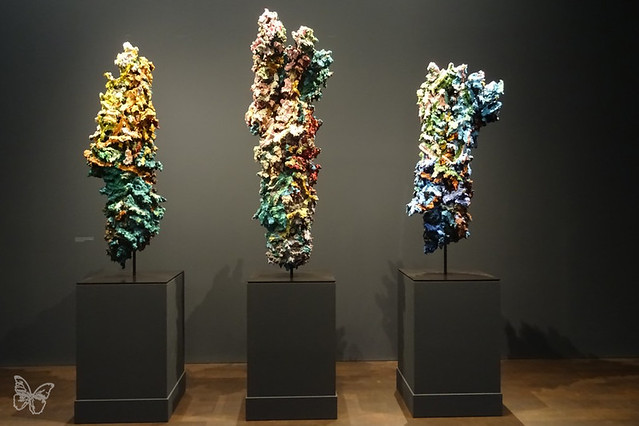
The title of exhibition, is inspired by a song in Shakespeare’s play Cymbeline, which evokes the ineluctability of death. Multidisciplinary artist, the exhibition features oil paintings, drawings in period frames, grisaille panel works, etchings, and sculptures.

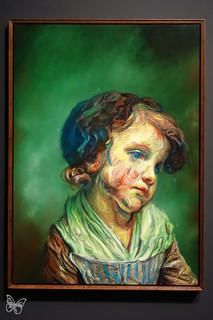
Sources include Rembrandt, Delacroix, Greuze, and Raphael, as well as Abraham Bloemaert, Francesco Mancini, Gaetano Gandolfi, Elisabeth Le Brun, and Bernardo Cavallino.

Glenn Brown - Come to dust

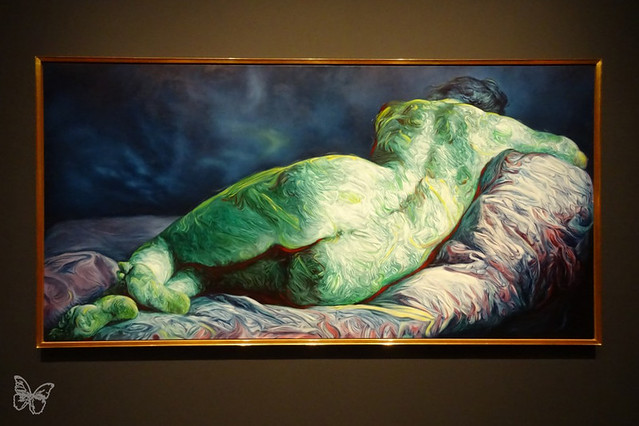
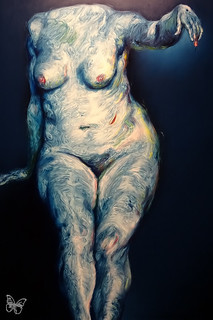
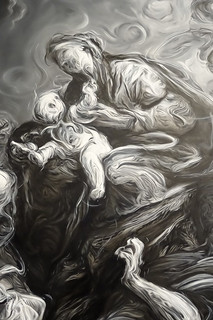
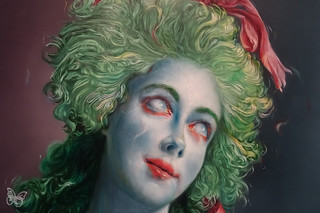
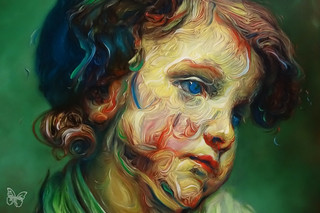
In Brown’s oil paintings, hybrid figures painted in intricate swirls reveal the sumptuous potential of oil paint. While these paintings give the illusion of corporeal volume and fullness, closer scrutiny reveals the surfaces to be smooth and flat.

Rather than using paint to depict skin with observational exactitude, Brown presents translucent brushstrokes revealing the flesh and muscles  beneath the surface.

Glenn Brown - Come to dustGlenn Brown - Come to dust Glenn Brown - Come to dustGlenn Brown - Come to dustGlenn Brown - Come to dustGlenn Brown - Come to dustGlenn Brown - Come to dustGlenn Brown - Come to dust

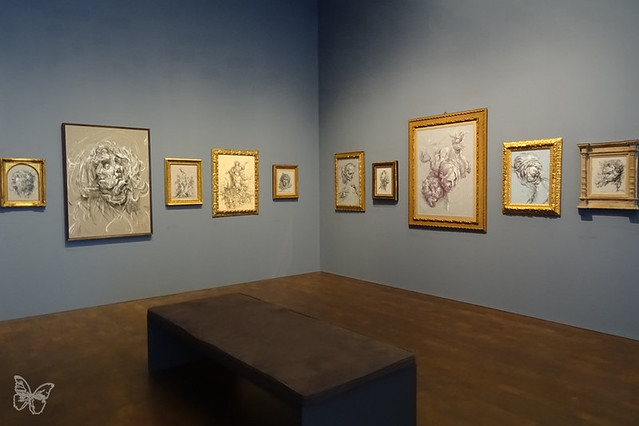
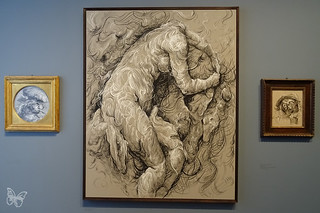
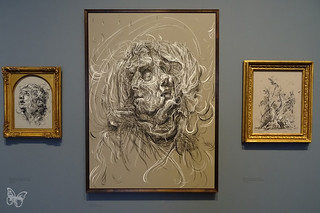
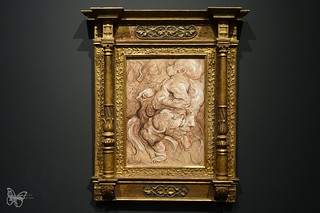
The choice of picture frames adds an additional layer to the richly layered visual anachronism. Inverting the normal order of image-making and framing, Brown treats the frames as readymades, creating drawings in response to the particular colour, size, design, and narrative detail of each. Thus, the drawings and the frames are integral to each other.

In the exhibition, an entire room of recent drawings is hung salon-style, some mounted in elaborate Renaissance gilt and carved wooden frames.

Glenn Brown - Come to dust
Glenn Brown - Come to dustGlenn Brown - Come to dust

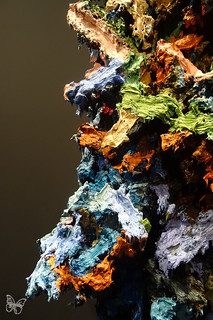
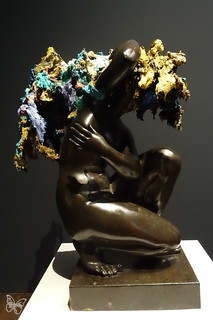
The sculptures are very impressive, elaborate masses built from precisely placed strokes of very thick oil paint. In some of them, the cold, sensuous curves of nineteenth-century bronze statues are still visible but engulfed by growths of pulsating, gravity-defying oil paint. The contrast between the cold, hard metal with  the soft, luscious paint is highly captivating.

Glenn Brown - Come to dust
Glenn Brown - Come to dustGlenn Brown - Come to dustGlenn Brown - Come to dust Glenn Brown - Come to dustGlenn Brown - Come to dust

“Come to Dust” immerses the viewer in Brown’s enigmatic world. The figures and forms of history mutate, overtaken by hypnotic  colours and light. Transforming the allure of Old Master paintings and drawings, bordering on profanity, Brown tells a much darker and more complicated story, fit for our times.

Glenn Brown - Come to dustGlenn Brown - Come to dustGlenn Brown - Come to dust

View the full set of pics here

Glenn Brown – Come to Dust
Until 17 March 2018
Gagosian Gallery
20 Grosvenor Hill
London W1K 3QD