Tag Archives: Gagosian

Takashi Murakami – Understanding the New Cognitive Domain at Gagosian Le Bourget

Understanding the New Cognitive Domain, is the first exhibition of work by Japanese artist Takashi Murakami at the Gagosian Gallery in Le Bourget, main private air hub on the outskirts of Paris, France.
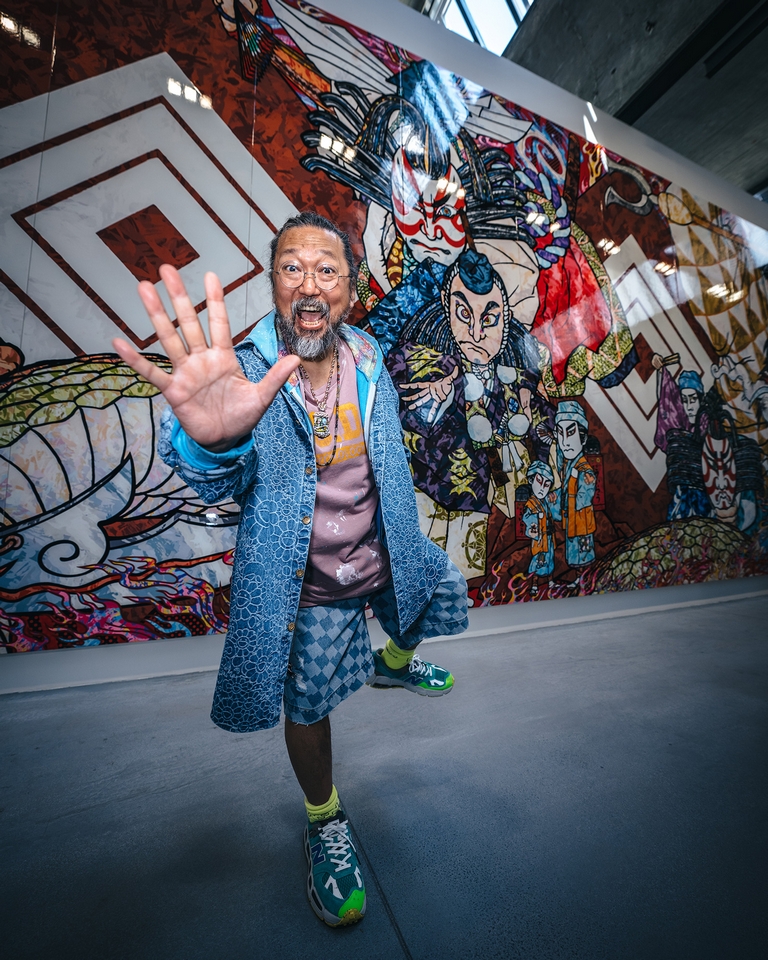
Focused on his monumental paintings. The exhibition features five such works plus others in smaller formats and several sculptures.

Murakami wanted to offer the French public a window on Japanese history, the history of Asia, creating bridges between Western culture and Eastern culture, the digital world and the real world, abstract art and figurative art.

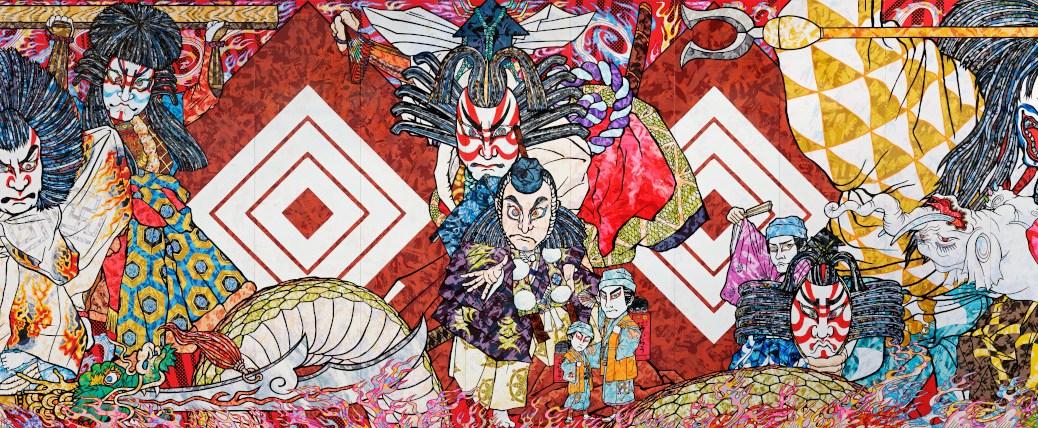
Two monumental frescoes welcome the visitors upon entering the gigantic warehouse gallery space. A new 5 x 23-meter painting by Murakami is based on the iwai-maku, or stage curtain, that he produced for the Kabuki-za theater in Ginza, Tokyo.

The frescoe titled  ‘The Name Succession of Ichikawa Danjūrō XIII, Hakuen, Kabuki Jūhachiban (2023) pays tribute to traditional Japanese Kabuki theater, and specially the stage name Ichikawa Danjūrō XIII, Hakuen  by Japanese Kabuki actor and producer Ichikawa Ebizō XI. 

Stage names, which specify an actor’s style and lineage, are passed down through generations and the Ichikawa family has a roughly 350-year history.  Murakami’s design, which was commissioned by film director Takashi Miike,  was unveiled during the first performance of Ichikawa Shinnosuke VIII at the November Kichirei Kaomise Grand Kabuki Theater program earlier in November 2022.

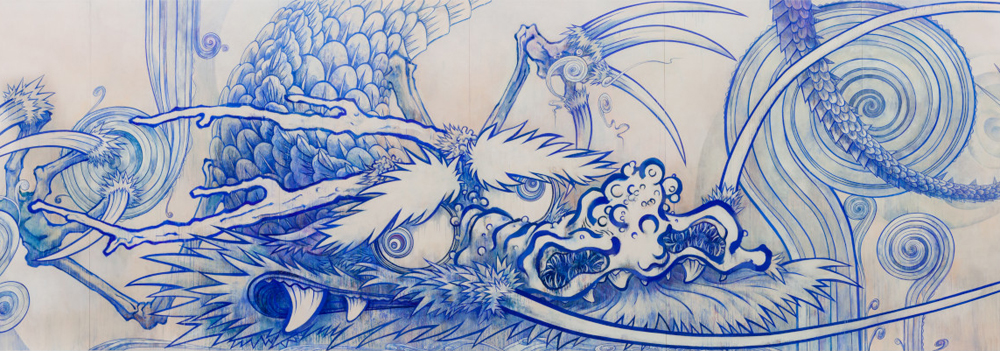
The second monumental painting, Dragon in Clouds – Indigo Blue (2010), is a reference to eccentric Japanese artist Soga Shōhaku’s Dragon and Clouds (1763). Shōhaku’s work is a multi-panel Unryūzu (cloud-and-dragon) painting in which the creature appears as a Buddhist symbol of optimism and good fortune. Murakami’s painting resonates with contemporary Japanese visual culture, particularly the video game Blue Dragon, while its vast scale revives the visceral and psychological impact of Shōhaku’s masterpiece.
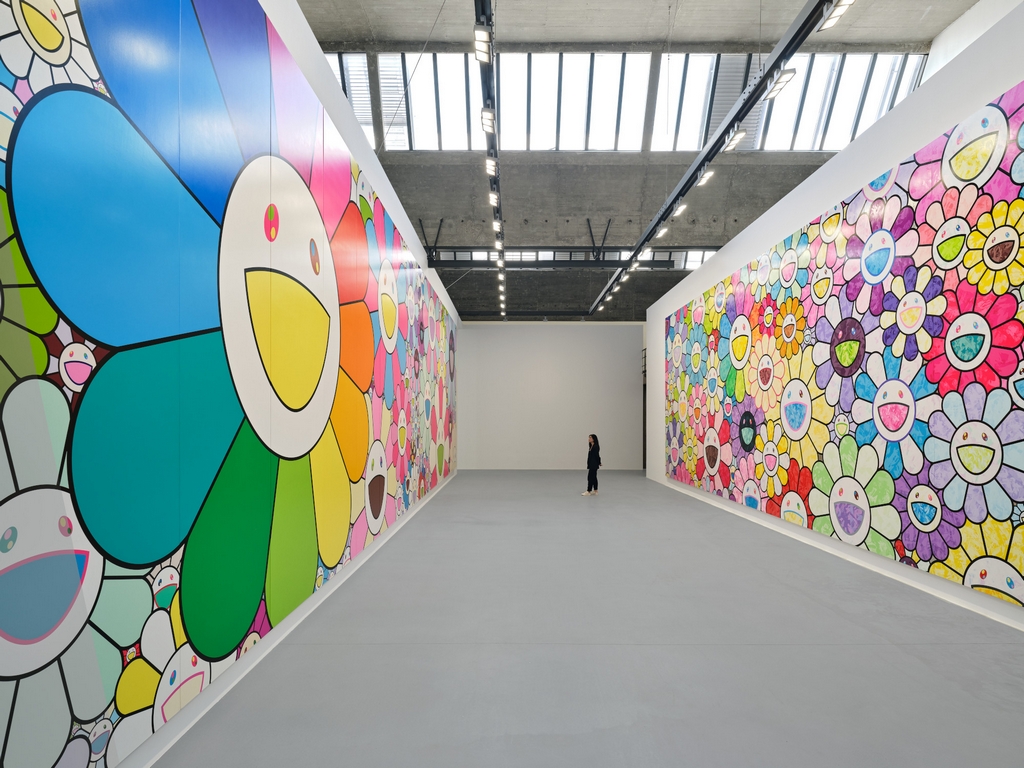
In the second space, two frescoes respond to each other, like a distorting mirror: one is the perfect illustration of the Superflat style (a movement halfway between pop art and Japanese kawaii culture invented by Murakami in the 2000s), and the other features sunflowers in a marbled effect.
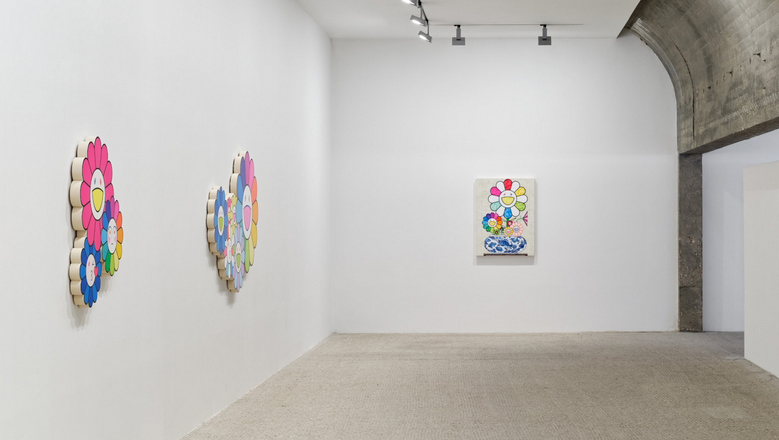
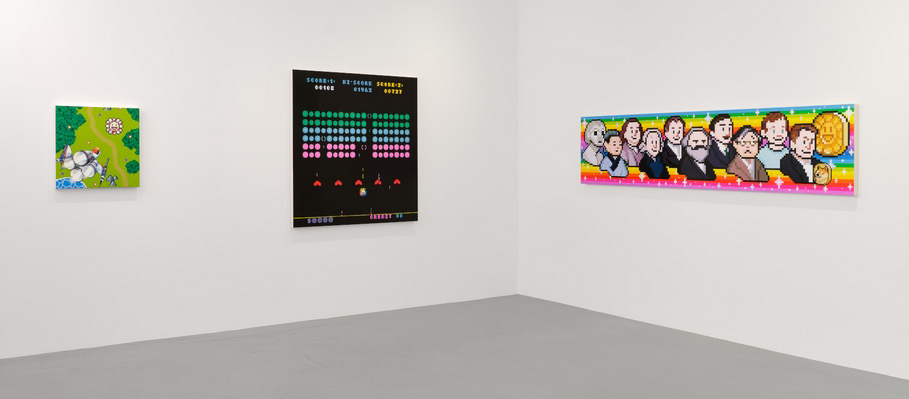
Between traditional art and contemporary art, Murakami’s heart swings. He recently became interested in cryptoart, and he even launched his own NFT project, Murakami Flowers, last year. “During the pandemic, I really felt that the line between the real and digital world was becoming more and more blurred, and I think NFTs are the artistic expression of this permeability. I create NFTs to insert myself into this metaverse and then make real paintings to explain the world of NFTs to people in the real world . ”
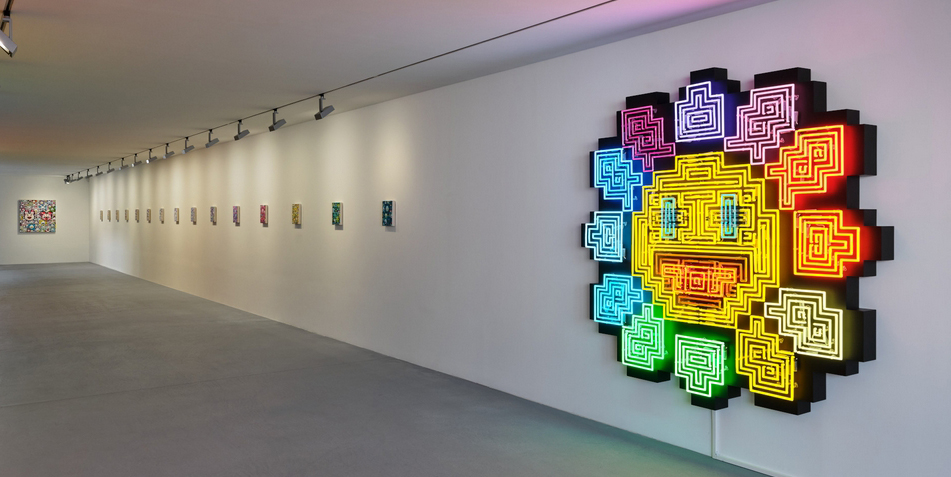
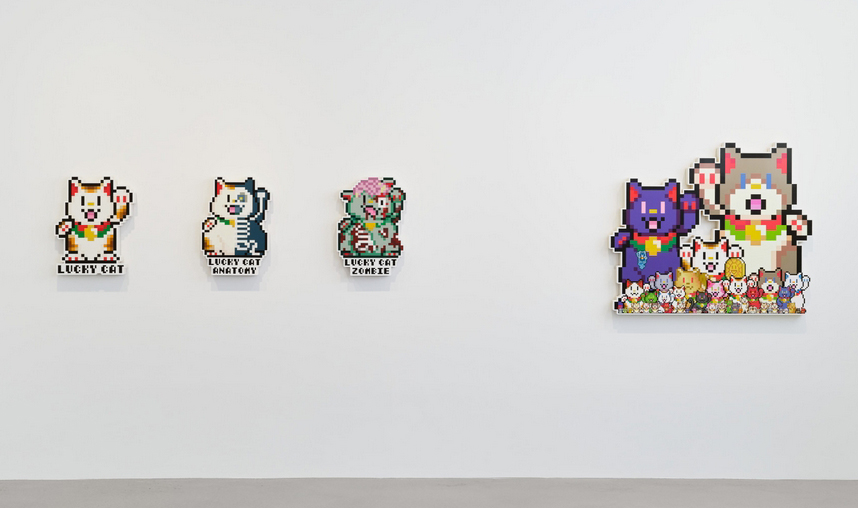
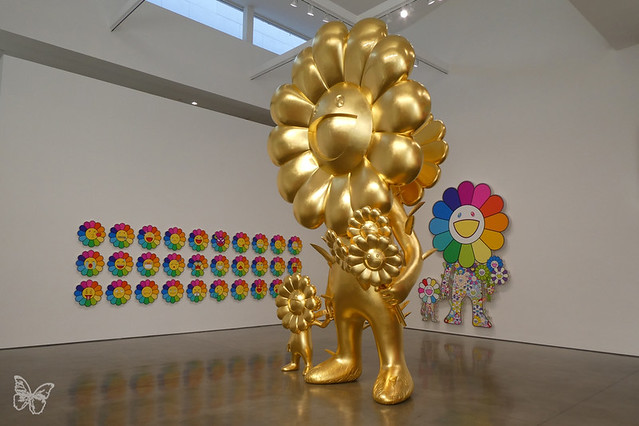
Also on view are several “lucky cat” paintings that reference the artist’s recent NFT projects, and other works featuring Murakami’s iconic smiling flower motif—including a two-meter rainbow neon sign—in which the artist again employs a retro-digital variant on his influential Superflat aesthetic.

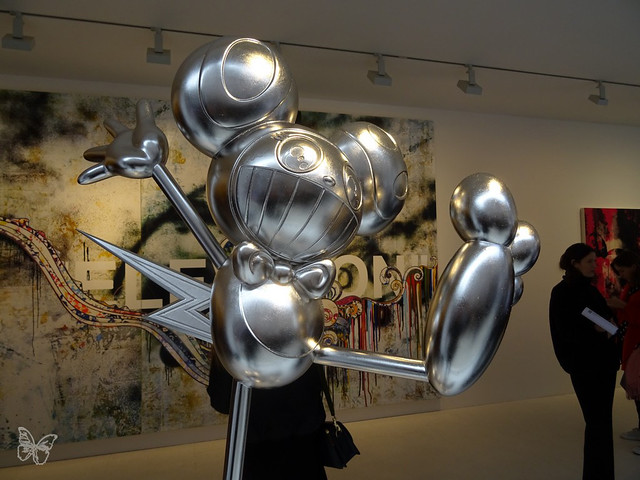
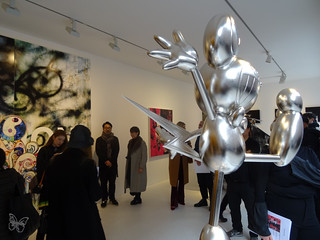
Two mirror-plated figures representing futuristic anime-style avatars reinvest the Clone X NFTs (2021) that Murakami developed in collaboration with RTFKT Studios with physical presence, reflecting his fascination with the metaverse and his sensitivity to the hybrid nature of agency in today’s world.

His ever-proliferating cartoonlike blossoms function as immediately recognizable and infinitely flexible icons that may be at once ornamental and symbolic, directing the viewer toward intertwined themes of identity, representation, and technology.

The exhibition shows the full extent of Murakami’s talent and his artistic references, ranging from the masters of the Edo period (1603-1867) to the aesthetics of video games through American abstract artists. 

Understanding the New Cognitive Domain is on view through December 22 @ Gagosian Le Bourget

Pictures courtesy the artist and Gagosian

Los Angeles: Takashi Murakami – GYATEI2

Takashi Murakami - GYATEI2

Japanese artist Takashi Murakami is currently showing a new exhibition entitled GYATEI² at the Gagosian Gallery in Los Angeles.

The exhibition title comes from the Buddhist Hannya Shingyo (Heart Sutra), an incantation often chanted by Zen groups before or after a meditation and translates roughly to “gone, gone, gone beyond, gone completely beyond, enlightenment, svāhā.”

GYATEI² reveals myriad variations of interconnected imagery, each permutation and combination generating new meaning.

Takashi Murakami - GYATEI2

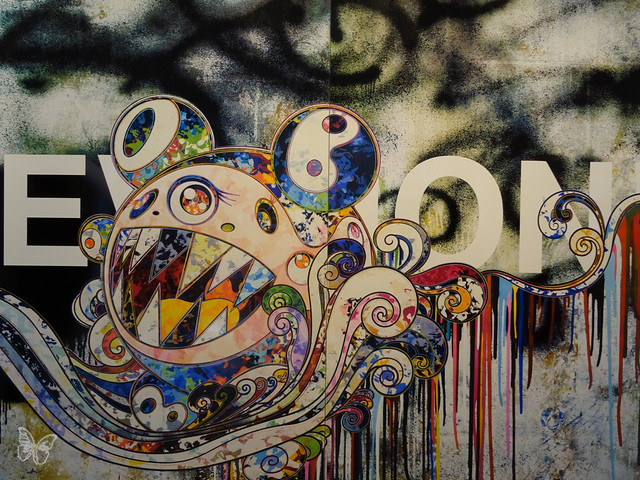
Murakami’s first character, Mr. DOB—a whimsical, sharp-toothed Mickey Mouse–like character—reappears in different forms, as does the ubiquitous rainbow flower.

Takashi Murakami - GYATEI2

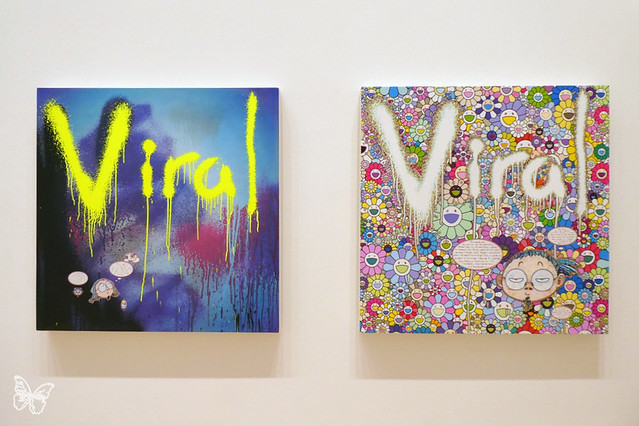
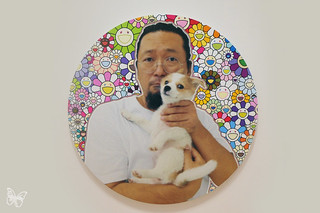
Elsewhere, images of doorways, graffiti of the word “viral,” and a self-portrait of the artist and his dog are overlaid onto dense graphic patterns.

Takashi Murakami - GYATEI2Takashi Murakami - GYATEI2
Takashi Murakami - GYATEI2

A Statue of Flower Parent and Child (2019), cast in bronze and covered in gold leaf, stands sixteen feet tall and shows an enormous flower character with its flower offspring. Similarly, the rabbit like Kaikai and three-eyed, smiling Kiki (both 2019) are rendered in cast bronze covered in platinum leaf, the cute yet imposing characters illustrating Murakami’s interest in paradox, as kikikaikai describes something that is dangerous yet appealing.

Takashi Murakami - GYATEI2Takashi Murakami - GYATEI2Takashi Murakami - GYATEI2

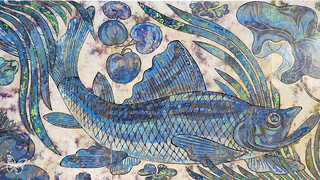
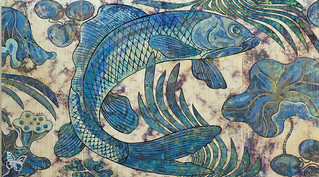
The seventeen-panel Qinghua (2019) reinterprets a motif originally painted on a vase from the Chinese Yuan Dynasty (c. 1206–1368), whose imagery mingled in Murakami’s memory with childhood trips to the riverside with his father, where fishers would haul enormous carp. At almost eight feet high and fifty-eight feet wide, the image proceeds panel by panel, like an enormous storyboard, or a vase that has been unrolled like a long scroll along the gallery’s walls.

Takashi Murakami - GYATEI2Takashi Murakami - GYATEI2

View the full set of pics here

Takashi Murakami – GYATEI²
Gagosian Gallery
456 North Camden Drive
Beverly Hills, CA 90210

London: Glenn Brown – ‘Come to Dust’ at Gagosian Gallery
 

Glenn Brown - Come to dust

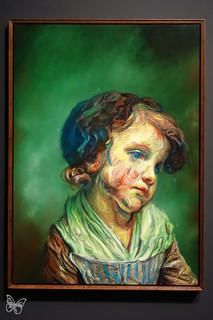
The Gagosian Gallery is currently showing “Come to Dust,” the first major exhibition by British contemporary artist Glenn Brown in London since 2009.
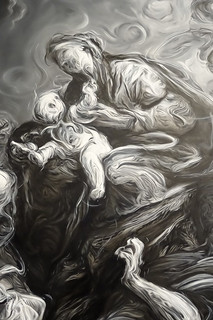
For Brown, the past and present are treasuries of raw material, offering countless images, titles, and techniques to be combined, appropriated, and deconstructed. Based on art history, as well as of literature, music, and popular culture, Brown creates complex and sensuous works of art that are resolutely of our time.

The title of exhibition, is inspired by a song in Shakespeare’s play Cymbeline, which evokes the ineluctability of death. Multidisciplinary artist, the exhibition features oil paintings, drawings in period frames, grisaille panel works, etchings, and sculptures.

Sources include Rembrandt, Delacroix, Greuze, and Raphael, as well as Abraham Bloemaert, Francesco Mancini, Gaetano Gandolfi, Elisabeth Le Brun, and Bernardo Cavallino.

Glenn Brown - Come to dust

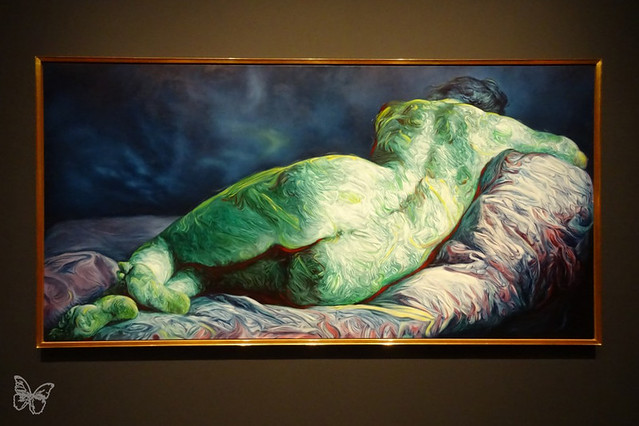
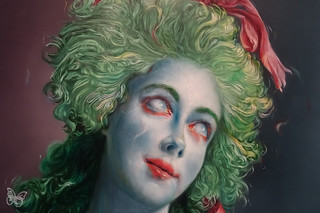
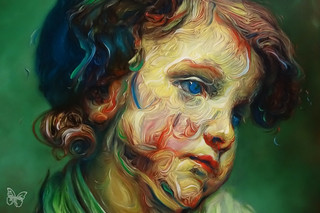
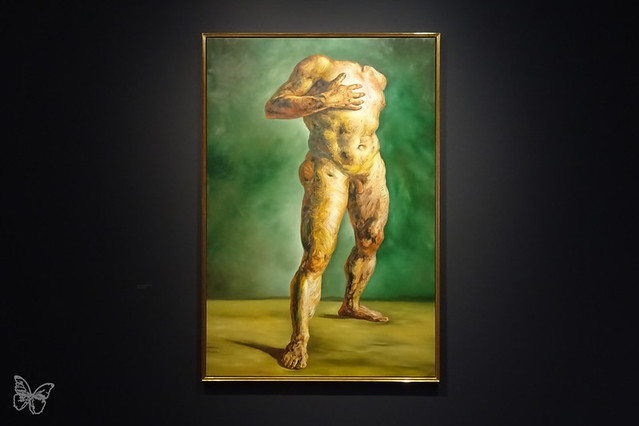
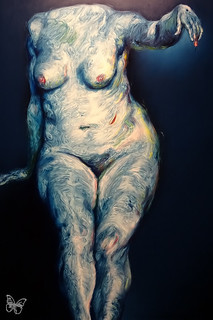
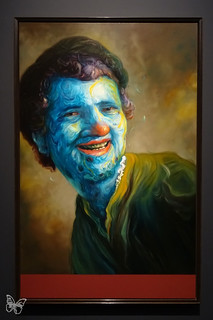
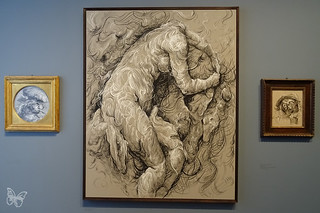
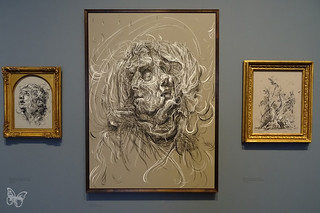
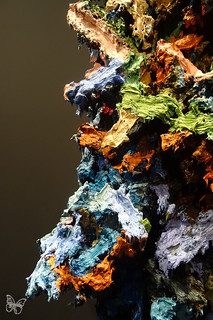
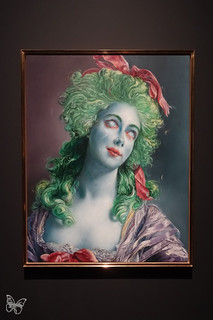
In Brown’s oil paintings, hybrid figures painted in intricate swirls reveal the sumptuous potential of oil paint. While these paintings give the illusion of corporeal volume and fullness, closer scrutiny reveals the surfaces to be smooth and flat.

Rather than using paint to depict skin with observational exactitude, Brown presents translucent brushstrokes revealing the flesh and muscles  beneath the surface.

Glenn Brown - Come to dustGlenn Brown - Come to dust Glenn Brown - Come to dustGlenn Brown - Come to dustGlenn Brown - Come to dustGlenn Brown - Come to dustGlenn Brown - Come to dustGlenn Brown - Come to dust

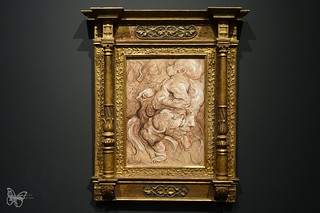
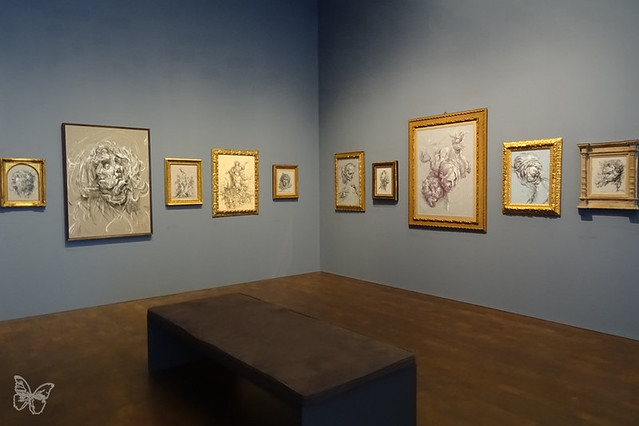
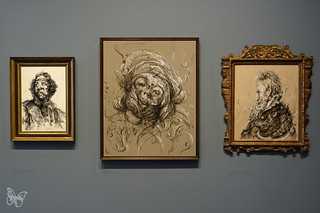
The choice of picture frames adds an additional layer to the richly layered visual anachronism. Inverting the normal order of image-making and framing, Brown treats the frames as readymades, creating drawings in response to the particular colour, size, design, and narrative detail of each. Thus, the drawings and the frames are integral to each other.

In the exhibition, an entire room of recent drawings is hung salon-style, some mounted in elaborate Renaissance gilt and carved wooden frames.

Glenn Brown - Come to dust
Glenn Brown - Come to dustGlenn Brown - Come to dust

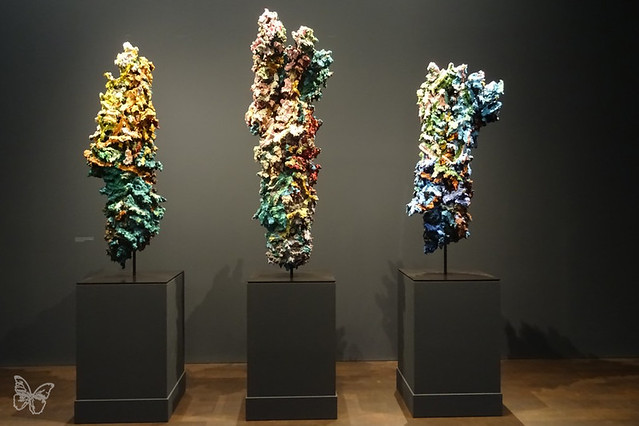
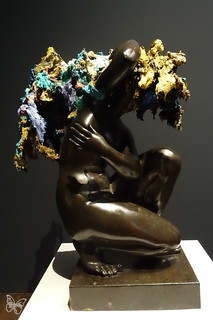
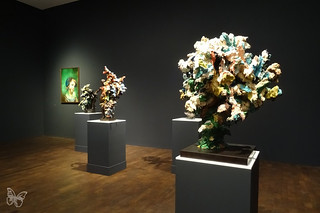
The sculptures are very impressive, elaborate masses built from precisely placed strokes of very thick oil paint. In some of them, the cold, sensuous curves of nineteenth-century bronze statues are still visible but engulfed by growths of pulsating, gravity-defying oil paint. The contrast between the cold, hard metal with  the soft, luscious paint is highly captivating.

Glenn Brown - Come to dust
Glenn Brown - Come to dustGlenn Brown - Come to dustGlenn Brown - Come to dust Glenn Brown - Come to dustGlenn Brown - Come to dust

“Come to Dust” immerses the viewer in Brown’s enigmatic world. The figures and forms of history mutate, overtaken by hypnotic  colours and light. Transforming the allure of Old Master paintings and drawings, bordering on profanity, Brown tells a much darker and more complicated story, fit for our times.

Glenn Brown - Come to dustGlenn Brown - Come to dustGlenn Brown - Come to dust

View the full set of pics here

Glenn Brown – Come to Dust
Until 17 March 2018
Gagosian Gallery
20 Grosvenor Hill
London W1K 3QD

London: Marakami & Abloh Future History at Gagosian

Murakami & Abloh - Future History

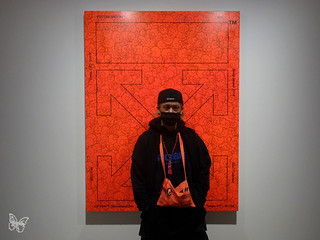
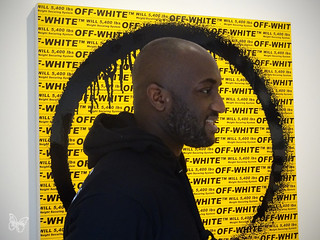
Coinciding with London Fashion Week 2018, Superflat Master Japanese artist Takashi Murakami is partnering with American Creative Designer Virgil Abloh and presenting a series of collaborative works “Future History” at the Gagosian Gallery in London.
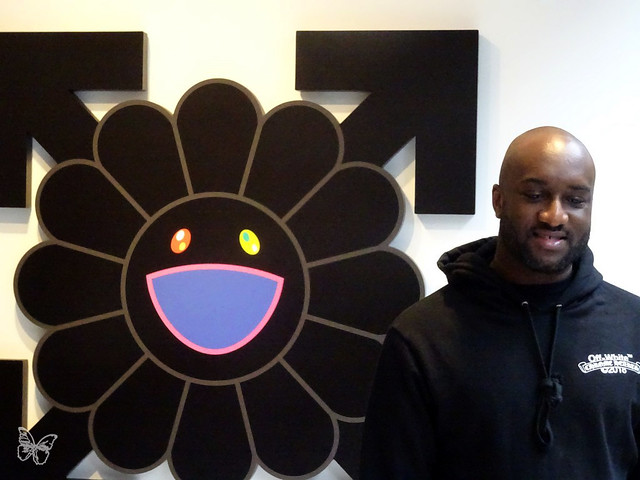
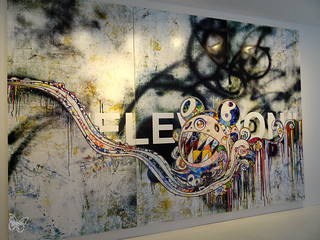
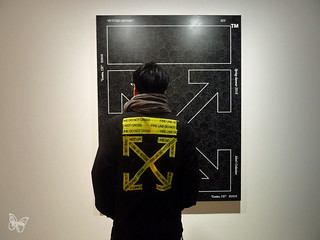
The exhibition features large-scale paintings, sculptures and an installation drawing references to signature Off-White™ motifs alongside Murakami’s iconic cast of anime characters, reflecting incisively on the signs of the current times.
Murakami & Abloh - Future HistoryMurakami & Abloh - Future HistoryMurakami & Abloh - Future History

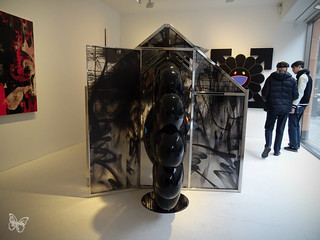
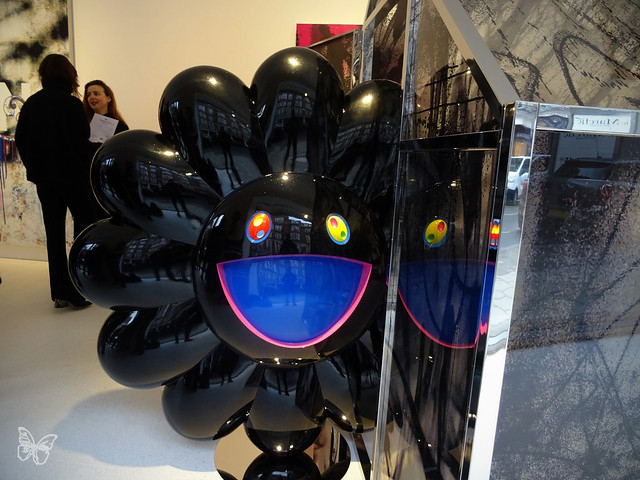
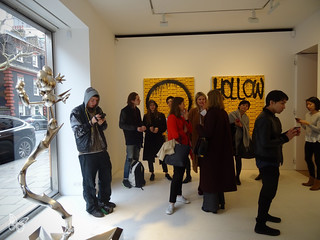
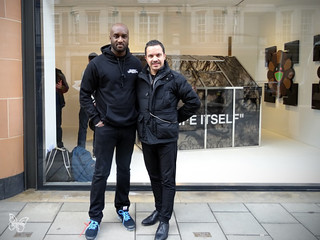
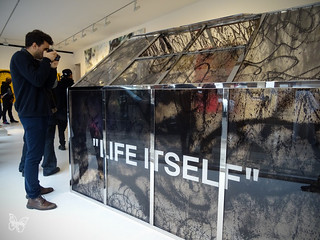
Amongst the works, visitors can enjoy The sculpture Life itself (2018), a kind of architectural carapace designed by Abloh to house one of Murakami’s brightly sinister flower sculptures; a pair of paintings embellished with yellow Off-White™ branding and a spray-painted “O” as well as “HOLLOW” lettering on each one; black Flowers sculptures, and a glass house installation completely covered with black spray-paint and “LIFE ITSELF” on one side panel in white.

Murakami & Abloh - Future History
Murakami & Abloh - Future HistoryMurakami & Abloh - Future History
Murakami & Abloh - Future History

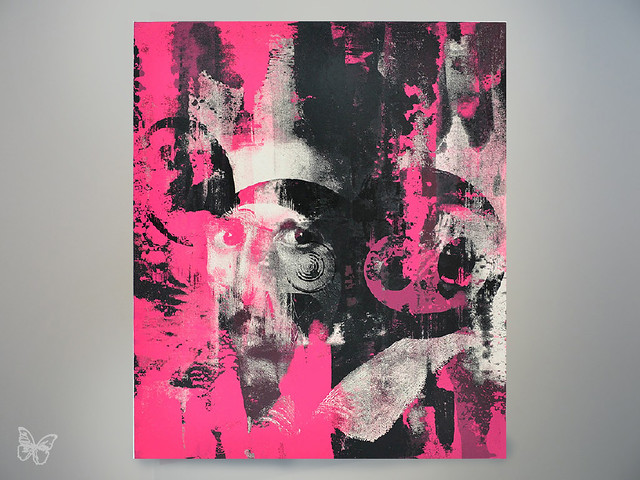
In another instance, for Glance past the future (2018), the duo transformed Gian Lorenzo Bernini’s 1623 self-portrait by superimposing Murakami’s character Mr. DOB to affect a graphic blur of pink and black.

Murakami & Abloh - Future History
Murakami & Abloh - Future HistoryMurakami & Abloh - Future History
Murakami & Abloh - Future History
Murakami & Abloh - Future HistoryMurakami & Abloh - Future History

View the full set of pics here

Takashi Murakami & Virgil Abloh
Future History
Until 7 April
Gagosian Gallery
17–19 Davies Street
London W1K 3DE

London: A. Giacometti and Yves Klein at the Gagosian

A. Giacometti & Yves Klein

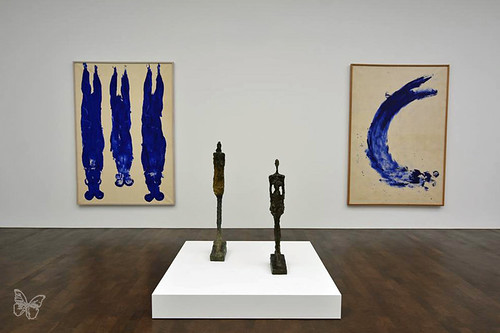
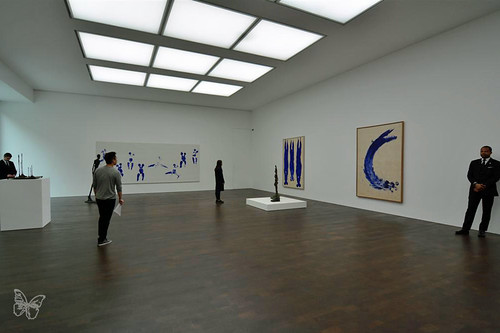
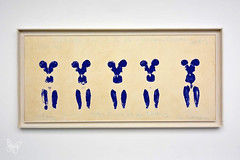
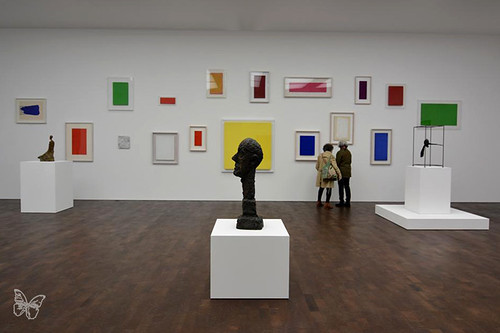
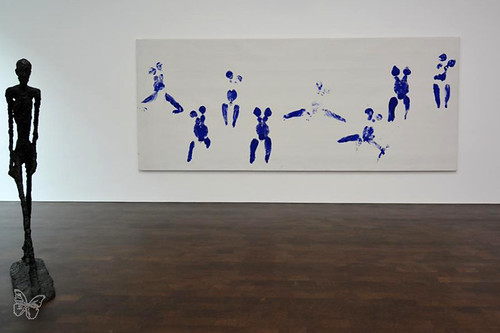
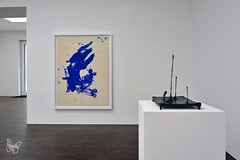
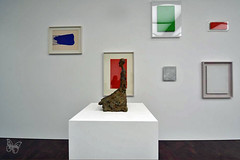
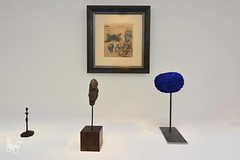
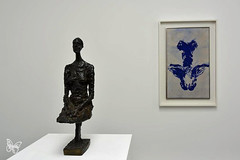
Gagosian Gallery in London is currently presenting the first-ever exhibition to pair key works by Alberto Giacometti (1901–1966) and Yves Klein (1928–1962).

At first glance, Giacometti and Klein, artists born a generation apart, could not be more different: Giacometti was a master of material form, and of the representation of the figure; Klein was an influential theorist whose art married the conceptual with the cosmic. In the 1950s and early 1960s, the two artists lived and worked within a mile of each other, in Montparnasse, Paris, but there are few clues in their work to suggest that they shared the same artistic milieu. What they did have in common was an acute consciousness of the catastrophic effects of the Second World War and its aftermath on European culture. Each dealt with it in his own way: in his sculptures, Giacometti struggled to evince a vital human presence from nothing; Klein shunned the personal, autobiographical mark, attempting to dematerialise painting to the point of pure saturated colour.

Curated by Joachim Pissarro, Giacometti’s nervously modelled figures and heads are confronted by Klein’s intense and expansive colours. Each artist is generously represented by works on loan from the Fondation Alberto Giacometti, the Yves Klein Archives, the Beyeler Foundation, and distinguished private collections.

A. Giacometti & Yves KleinA. Giacometti & Yves Klein     A. Giacometti & Yves KleinA. Giacometti & Yves KleinA. Giacometti & Yves Klein A. Giacometti & Yves Klein     A. Giacometti & Yves Klein     A. Giacometti & Yves Klein     A. Giacometti & Yves Klein
A. Giacometti & Yves Klein

View the full set of pics here

Alberto Giacometti and Yves Klein
In Search of the Absolute
Gagosian Gallery
20 Grosvenor Hill
London W1K 3QD