Category Archives: London

London: Sandra Chevrier – Les Cages: We Can’t Be Tamed

Sandra Chevrier

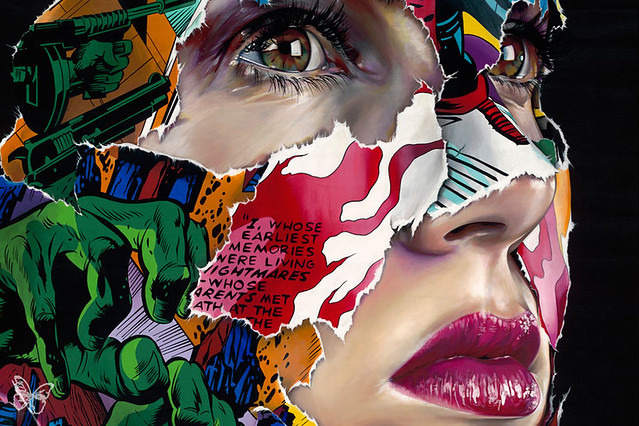
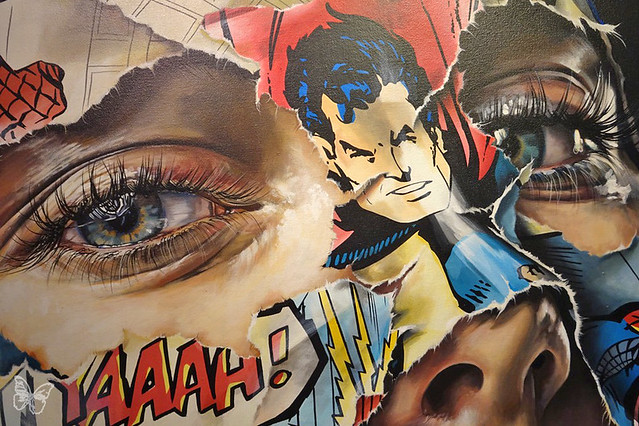
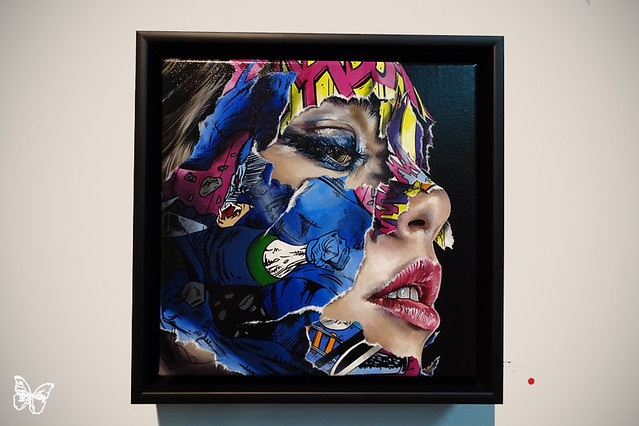
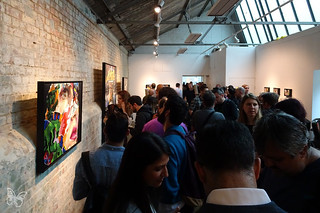
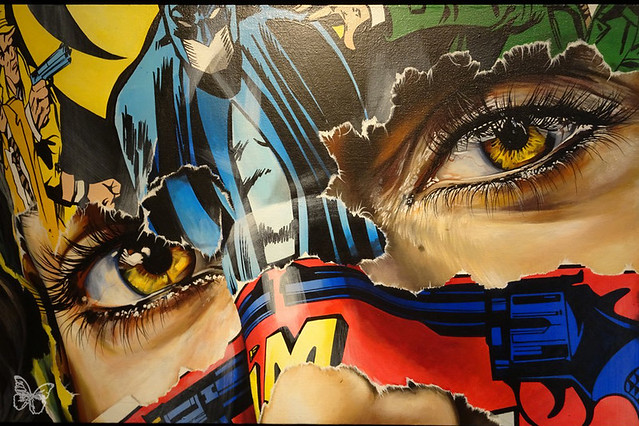
StolenSpace Gallery is currently showcasing the latest body of work by Canadian born artist, Sandra Chevrier, as she makes her long awaited return to the UK. Evocatively titled ‘Les Cages; We Can’t Be Tamed’, the exhibition features a fresh series of Chevrier’s iconic ‘Cage Paintings’ – juxtaposing feminine subjects with comic book iconography in order to explore concepts of social expectation via the female gaze.

”A man can believe until his last breath that he is different from a Caged animal in a Zoo. But through all his life until his death; he will be living in a prison without walls and will still believe he is free when in fact, everyday he will be shackled, whipped, and exist in captivity. We are all slaves of something, of someone, of an idea.”

“The Cages series as been revolving around submission, oppression, unfreedom, confinement and imprisonment. Cages are Cages, whether they were build with steel or from the fabric of the mind. We cannot be free outside the Cage unless we are able to experience the freedom within it. The freedom is inside us. Freedom within a Cage. I have a dream. A dream that freedom is not just an idea or a word. Only; I am not sure what it is… Not yet.”

Sandra Chevrier

By applying the comic book trope of the masked figure, Sandra Chevrier conceals the identity of her subjects, rendering them as simultaneously heroic, yet restricted.
Obscured by scenes of hostility and struggle, they peer from the canvas, challenging the viewer to look beyond their own preconceived notions of femininity. Often the artist applies scenes of heroic downfall to her collages – images that display the vulnerability of their super-powered subjects and remind us of their limitations. Sandra Chevrier’s intention is to make clear the often impossibly high standards that society holds women to.

Sandra ChevrierSandra Chevrier

Sandra Chevrier
Les Cages: We can’t be tamed
Until 1 July 2018

StolenSpace Gallery
London

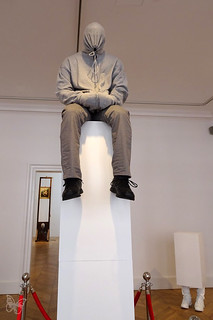
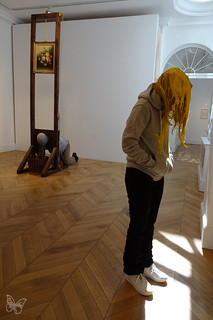
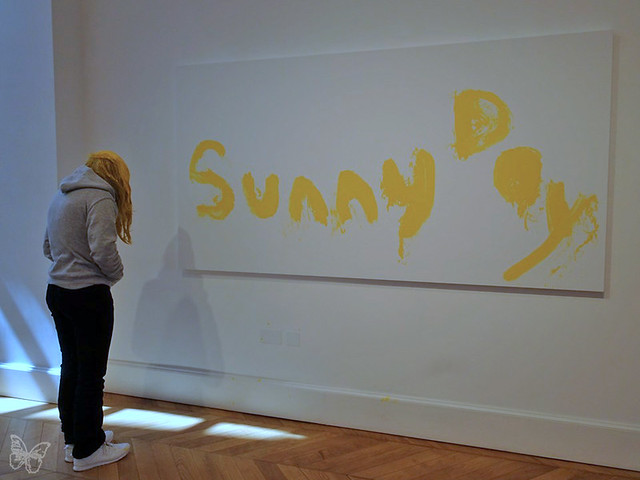
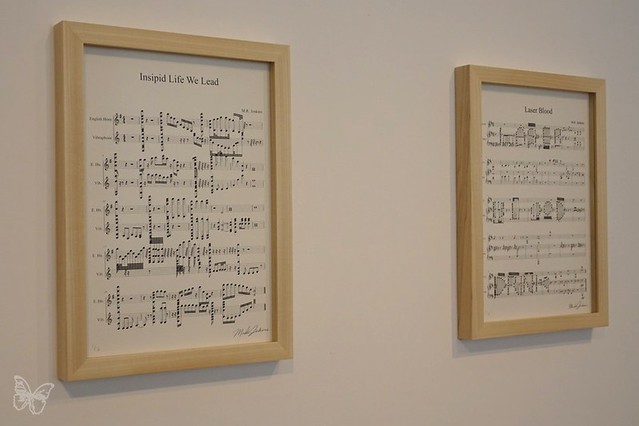
London: Mark Jenkins – BRD SHT
Mark Jenkins- BRD SHT

American artist Mark Jenkins returns to London for his third solo exhibition with Lazinc Gallery.
The show follows Jenkins’ success of his recent art installation, Project84, atop of London’s ITV building, raising awareness of male suicide.

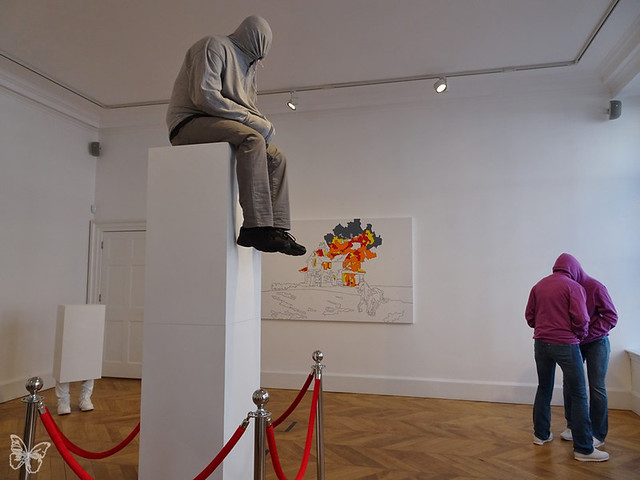
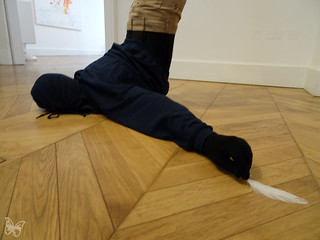
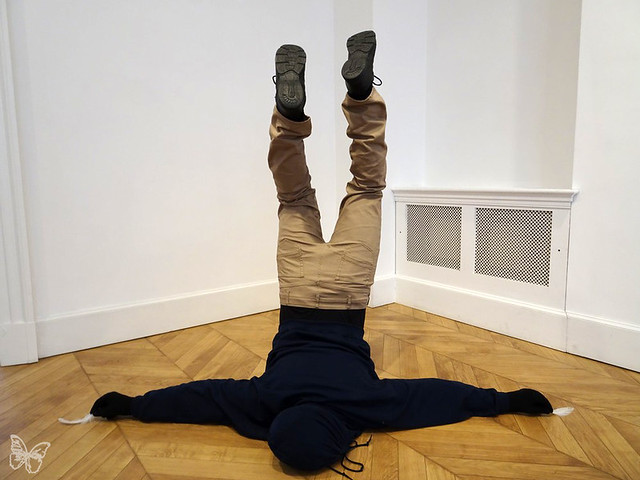
Together with his collaborator, Sandra Fernandez, Mark Jenkins creates sculptural street installations that take the form of life-sized bodies, often interacting with the surrounding environment.
The physical casting process ordinarily uses either Mark or Sandra’s own bodies, essentially cloning themselves out of many layers of sellotape to create dark humoured and often sinister sculptures and place them within the public space. The work is intended to explore the conventional process in which we experience and view artwork and the pedestrian boundaries between art and life.

“BRD SHT, the show’s title, nods to a license plate in the film Brewster McCloud. In the film, it was a murderous substance and while I understand here in the UK it’s good luck, for me I’ve always thought about the frequency birds do it as a condition for reducing weight to allow flight. It’s a useful metaphor to understand that our own ability to sustain flight mentally is a matter of reducing our own emotional baggage, or shit if you will.” – Mark Jenkins

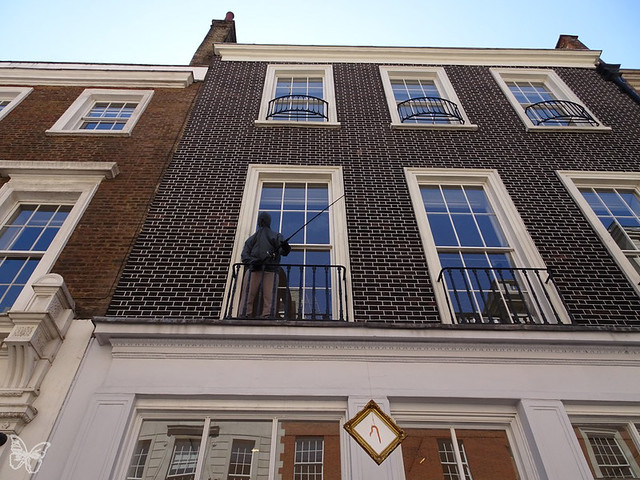
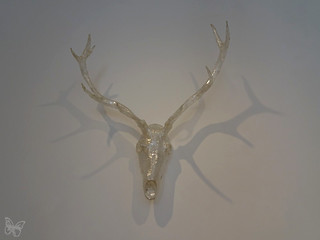
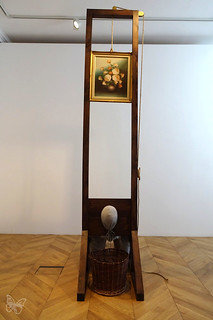
The exhibition features nine sculptures, three canvases and works on paper, as well as an installation on the gallery front of a fisherman figure hanging from the balcony.

Mark Jenkins- BRD SHTMark Jenkins- BRD SHT
Mark Jenkins- BRD SHTMark Jenkins- BRD SHTMark Jenkins- BRD SHT
Mark Jenkins- BRD SHT
Mark Jenkins- BRD SHTMark Jenkins- BRD SHT
Mark Jenkins- BRD SHT
Mark Jenkins- BRD SHTMark Jenkins- BRD SHTMark Jenkins- BRD SHTMark Jenkins- BRD SHTMark Jenkins- BRD SHT

View the full set of pics here

Mark Jenkins – BRD SHT
Until 30 June 2018
Lazinc Sackville
London

London: Mai 68 Posters from the Revolution

Lazinc - Mai 68 Posters

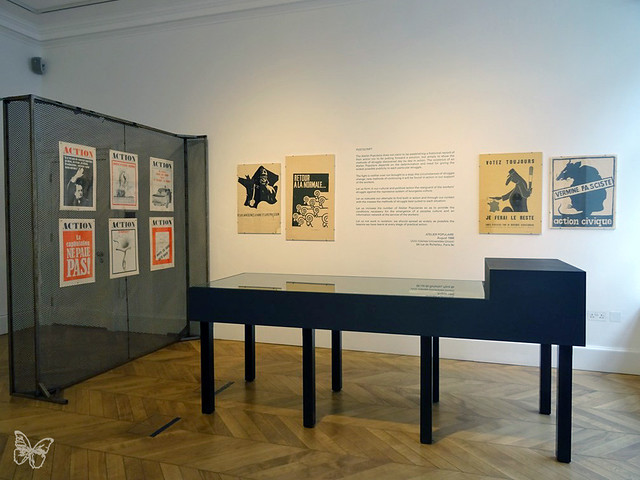
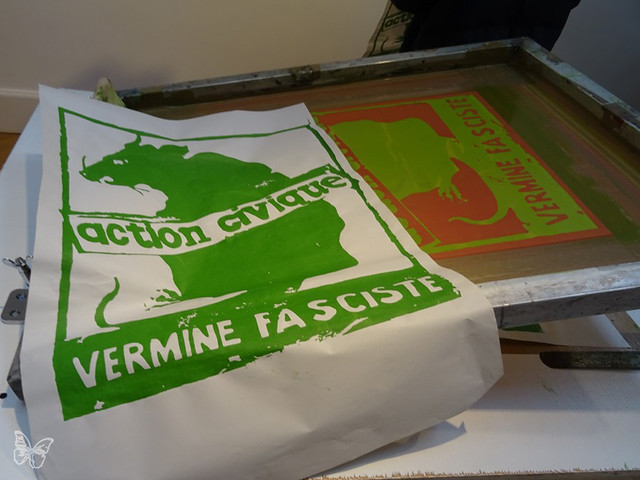
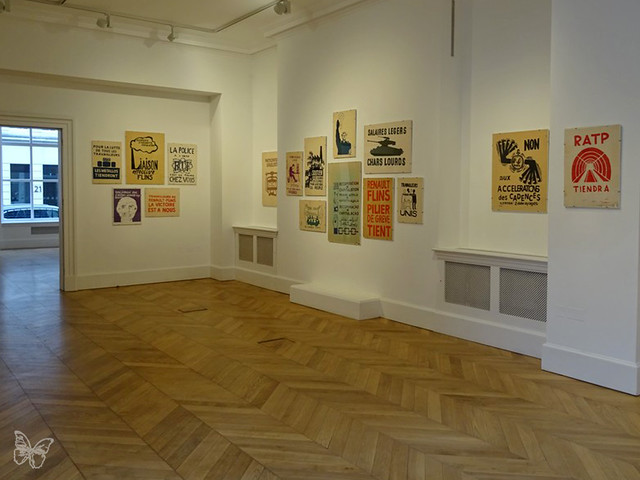
This May marks the 50th anniversary of the Mai 68 riots; a revolutionary string of student protests in Paris. Art was truly embedded in this revolution, with unique screen-printed posters being plastered along the walls of France.

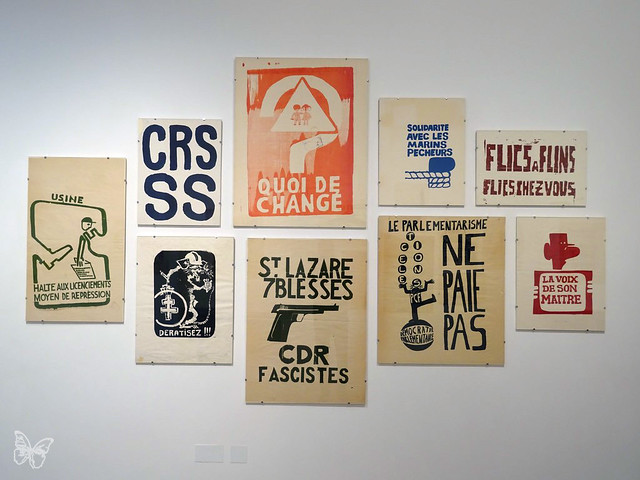
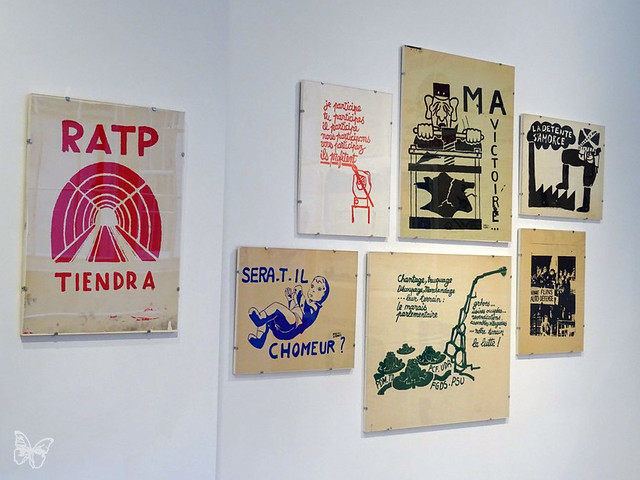
Lazinc Sackville is currently exhibiting in London its own collection of these original posters for all to see. This unique collection of posters was last exhibited at The Hayward Gallery in 2008 and now forms part of Lazinc’s permanent collection of counter culture and propaganda works.

Lazinc - Mai 68 Posters

The 50 works are original, screen-printed posters produced during May and June in 1968 and plastered over the walls of Paris. The posters became the visual symbols of the revolution and they depict solidarity between France’s students and workers; opposition to De Gaulle and parliament; and the denouncement of a fascist regime.

One of the largest collections of this nature, the Lazinc Propaganda Collection includes Chinese Maoist posters dating back to early 1900’s, Black Panther posters, Russian Communist Posters from the 1970’s & 80’s, Cuban Revolutionary posters as well as British counter-culture posters from the 1960’s – 1980’s. These iconic works have been cited as the forerunners of today’s street art movement, and have been an inspiration to many of the contemporary artists Lazinc has worked with, including Banksy, Vhils and JR.

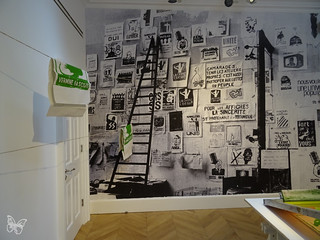
In addition films, imagery and memorabilia from the Mai 68 riots help contextualise the artworks in a historic setting, including archival photography, memorabilia and film footage captured during the riots.

Lazinc - Mai 68 PostersLazinc - Mai 68 PostersLazinc - Mai 68 Posters

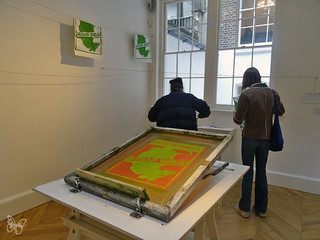
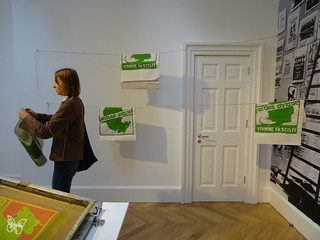
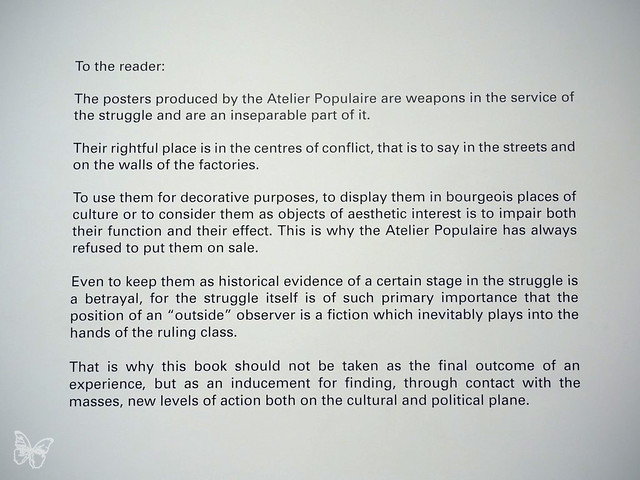
The gallery is also recreating a screen-printing room from one of the Atelier Populaire studios, the infamous workshop created in the occupied lithography studios of the École des Beaux-Arts set up by artists and students, .showing the working space in which the posters were created. Screen-printing was used due to the opportunity of mass-production and none of the posters were signed by individual artists.

Lazinc - Mai 68 PostersLazinc - Mai 68 Posters
Lazinc - Mai 68 Posters

“I love posters and their inherent power. They have been used as a tool of control or rebellion by everyone from counter-cultural groups to communist regimes, to subjugate billions of people. I still feel that they have their place in today’s society, take something like Shepard Fairey’s HOPE poster for the Obama campaign. A poster that in its own small way helped a black man to be voted as president of the USA, something no-one thought possible. The posters here were made by “Atelier Populaire”…
The whole idea was that anyone and everyone could contribute to the content of the posters, students, fishermen, postmen, factory workers etc. There would be assemblies where the poster choice would be made. These would invairably be printed through the day and night and then pasted up on the night-time, for the city of Paris to see what the issues at hand were. This was a pretty risky business due to the heavy-handed tactics of the French riot squad. This is a classic example of the disposed and dis-enfranchised using the poster to give voice to their concerns. The fact that time has not diminished them or their sentiment is a testimony to their power.” – Steve Lazarides, Co-Founder, Lazinc

Lazinc - Mai 68 PostersLazinc - Mai 68 Posters

The installation is left as if interrupted, posing the question of what the Mai 68 riots achieved and what is their contribution to art and history, the place of art within revolution?

Lazinc - Mai 68 Posters

View the full set of pics here

Lazinc Sackville
29 Sackville Street
London W1S 3DX


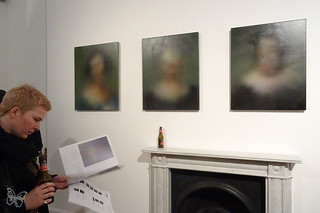
London: Miaz Brothers ‘Anonymous’ at Lazinc Sacksville

Miaz Brothers - Anonymous

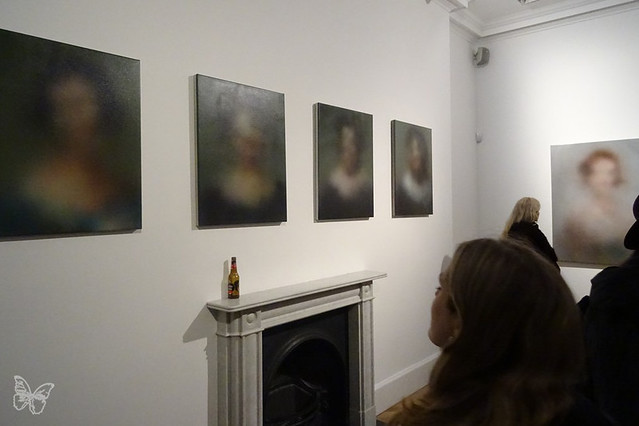
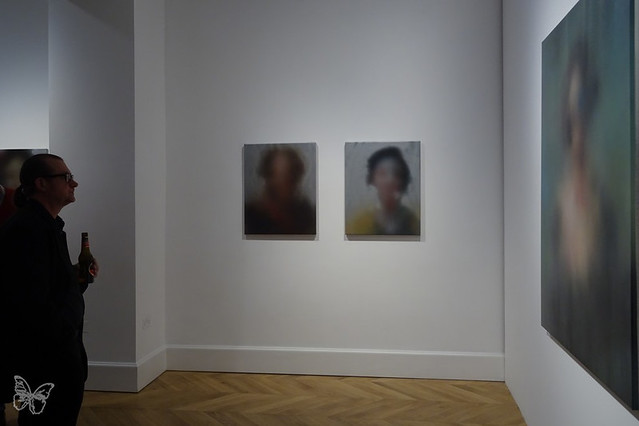
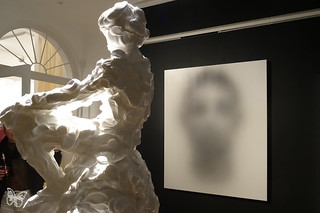
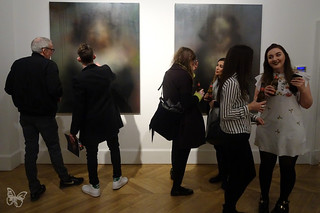
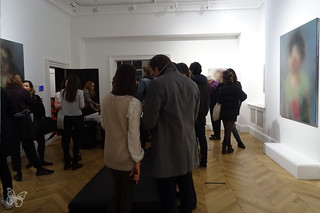
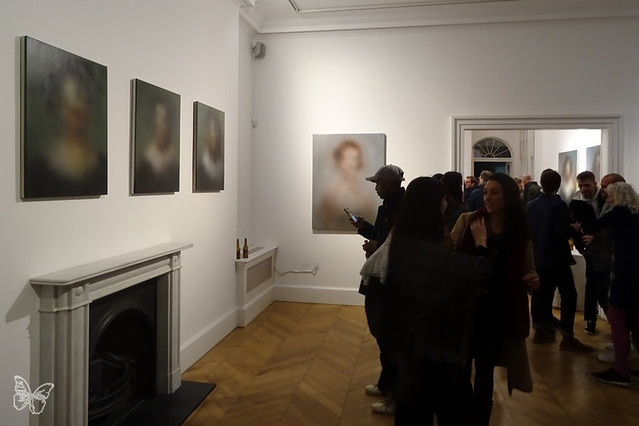
Italian duo the Miaz Brothers return to Lazinc Sacksville for their third exhibition; Anonymous, continuing their Antimatter Series.

The show explores the concepts of anonymity and the metaphor of status in our existence. While both bodies of work portray beings, symbolic of a crosssection of society that scales class, location and time, the sixteen portraits for this new exhibition aims to present some transcendent answers for our present existence.
The artists’ work intentionally looks to the future and embodies that which is yet to come, which today remains indefinable.

Miaz Brothers - Anonymous

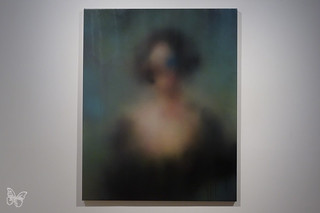
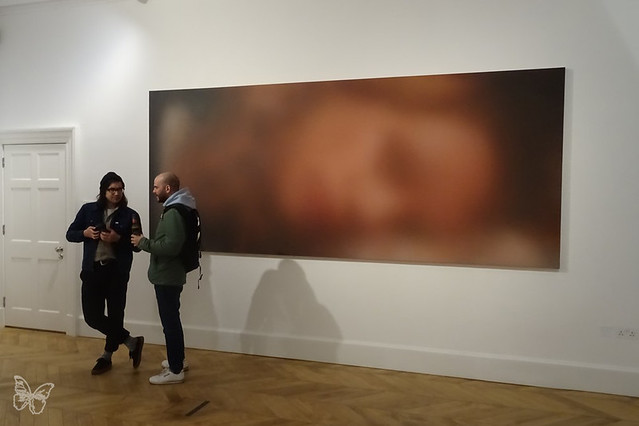
Using acrylic paint, the Miaz Brothers create enigmatic out of focus portraits, prompting the viewer to look beyond the line and to use both their own perception and imagination. Instead of explaining the meaning the meaning of their work, the artists encourage the viewer to develop their own relationship with the paintings.

Miaz Brothers - Anonymous

“It is an exercise for the inner spirit; a flexible experience of stretching the awareness of what we see and perceive; a stimulation for the consciousness and the limits of our idea of the world and its symbols. We are trying to force the viewer to interact with the image and to do so in a sensitive effort by filtering it through the perception and the process of identification to achieve something not fixed or limited but which is boundless and personal.” —The Miaz Brothers, 2018

Miaz Brothers - AnonymousMiaz Brothers - AnonymousMiaz Brothers - Anonymous
Miaz Brothers - AnonymousMiaz Brothers - Anonymous
Miaz Brothers - Anonymous

View the full set of pics here

Miaz Brothers – Anonymous
Until 21 April 2018
Lazinc Sacksville
29 Sackville Street
London W1S 3DX

London: Fourth Plinth by Michael Rakowitz

Michael Rakowitz

Following David Shrigley ‘ Really Good’ sculpture,  Iraqi-American artist Michael Rakowitz, has been selected to create the latest sculpture for the Fourth Plinth in Trafalgar Square using 9,000 tin cans of date syrup made in Iraq. The artwork is a reconstruction of the lamassu, a winged bull created around 700BC at the Nergal Gate of Ninevah, Iraq, nearMosul vandalised by Isis in 2015.

Michael Rakowitz has built an international art-world reputation over the past 15 years, fusing his autobiography as an American with an Iraqi-Jewish background with social and political observation and activism, as well as the odd absurdist link to pop culture.

During a family visit to the British Museum when he was aged 10, he recalls his first encounter with an Assyrian lamassu, like the winged bull only with a lion’s body. “Suddenly I found myself immersed in this space that was unlike any I had seen before,” Rakowitz recalls, “which was going past those lamassu and going into the throne room reconstruction from Nineveh and seeing the lion hunt of Ashurbanipal.”

Michael Rakowitz

The lamassu on the plinth is not a one-off but part of another long-term project, also called The Invisible Enemy Should Not Exist. For this, Rakowitz is reconstructing the entire database of 7,000 works looted from the National Museum of Iraq in the aftermath of the US and UK’s 2003 invasion. All of the reconstructions are made from Middle Eastern foodstuff packaging and local Arabic newspapers.

The project grew from Rakowitz’s observation that the sack of the museum was the first event of the war about which there was a consensus. “It didn’t matter if you were for the war or against the war, this was a catastrophe,” he explains. “But that outrage about lost artefacts didn’t turn into an outrage about lost lives.”

He noted that many looted artefacts were votive statues. “One of the interpretations of those artefacts is that those were statues that the ancient Babylonians, the Mesopotamians, would bring with them to the temple of the god, and the idea was that you would leave the sanctuary at a certain point but you left that statue in your stead, as a surrogate for you, to continue praying. And when I saw the artefacts being looted, I said, ‘Well, now we have another surrogate: a lost artefact for the lost bodies’. All those things loop back into the human and environmental catastrophe.”


Michael Rakowitz
Michael Rakowitz

Rakowitz was already thinking about reconstructing the lamassu after seeing the footage of it being destroyed by IS. He had discovered its measurements by referring to the sketches of Austen Henry Lanyard, the British archaeologist who discovered the lamassu and brought two others to the British Museum — the ones Rakowitz had seen as a child. He was invited by the Fourth Plinth organisers to submit a proposal and remarkably, the plinth was the same length as the lamassu — 14ft. “I was like, ‘This is it!’ What else would I do?”

Michael Rakowitz

Instead of merely recreating the sculpture, the artist wanted to recreate the DNA of Iraki people who got killed as well, so he decided to use date syrup cans.

So why date syrup cans? Rakowitz first began working with them in a New York project in 2006, Return, in which he reprised his grandfather’s import/export business but attempted to deal only in Iraqi goods. He had found the date syrup in a grocery store in Brooklyn but it was labelled “product of Lebanon”. In fact, the syrup was made in Baghdad, put into large plastic vats, driven to Syria and canned there before moving over the border into Lebanon, where it was labelled and sold globally. That way, sanctions were circumvented and, post-2003, security tariffs avoided. But for Rakowitz the journey was another metaphor, of course: the dates travelled “the same exact path as Iraqi refugees”.

Michael Rakowitz

Iraqi dates “were considered the best in the world; what the cigar is to Cuba”, he says. But their demise reflects the tragedy of Iraq’s recent history. Date palm trees disappeared, “from 30 million in the Seventies, when Iraq was the chief exporter of dates in the world, to 16 million at the end of the Iran-Iraq war [1980-88], to three million at the end of the 2003 invasion,” he says.

Michael Rakowitz

So the plinth sculpture reflects a huge sweep through Iraqi history. “It’s telling the story of a destroyed Iraqi artefact, and what it’s made from is telling the story of a destroyed land, destroyed nature, destroyed ecology,” he says. “And the destruction of a symbol that was so elemental to the Iraqi people. Dates are the harbinger of good things to come: you put a date into the mouth of a baby in some places in Iraq so its first taste of life is sweet. And when you have the erosion of that sweetness, it’s not a good omen.”

This is the genius of Rakowitz’s sculpture: it is history, art history, social history and current affairs. Rich knowledge and impassioned polemic all bundled into a single, glorious yet poignant symbol looking over Trafalgar Square.

Michael Rakowitz

View the full set of pics here

Michael Rakowitz
The Invisible Enemy Should Not Exist
from 28 March 2018
Fourth Plinth
Trafalgar Square,London