Category Archives: London

London: Fourth Plinth by Michael Rakowitz

Michael Rakowitz

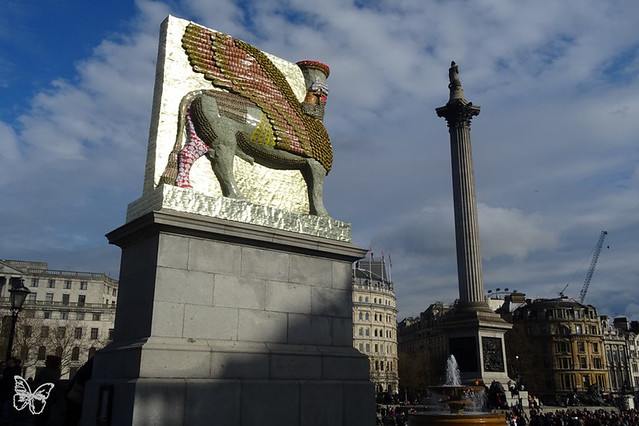
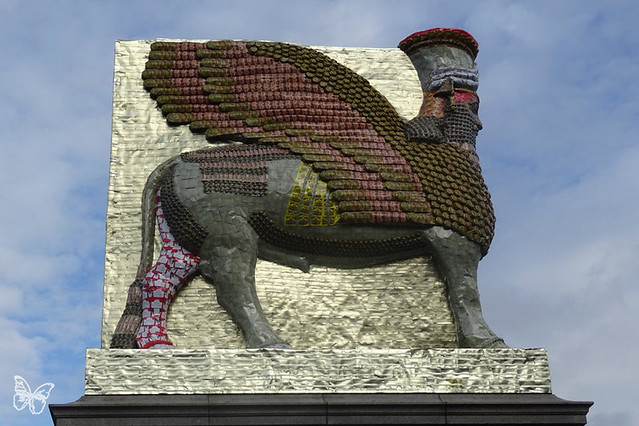
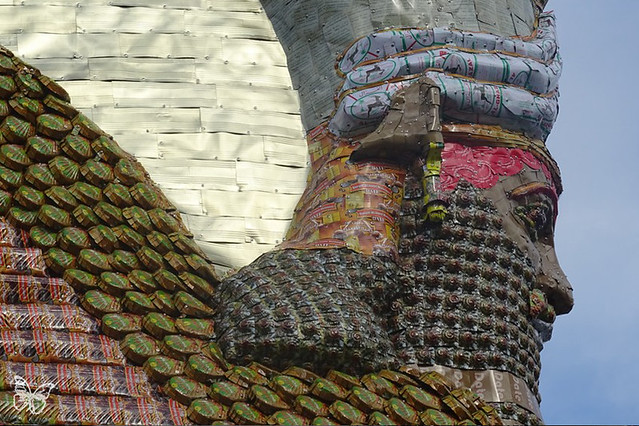
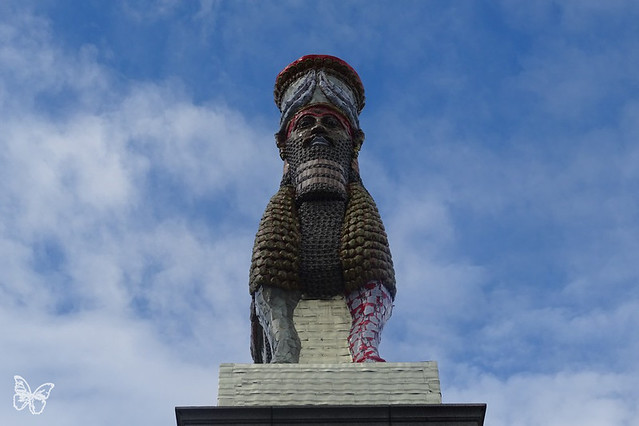
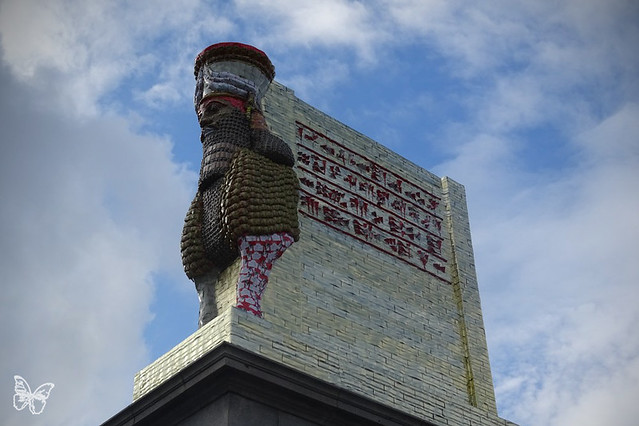
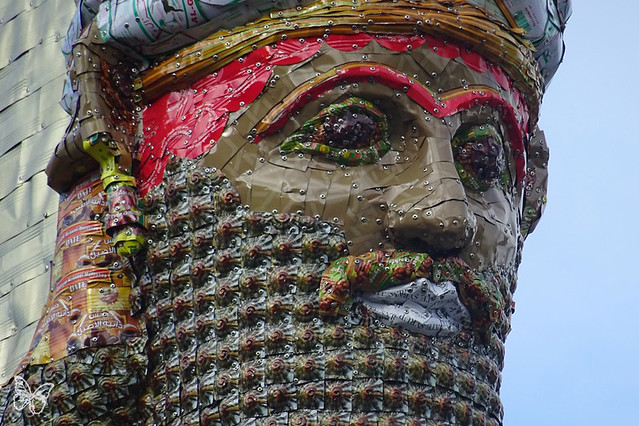
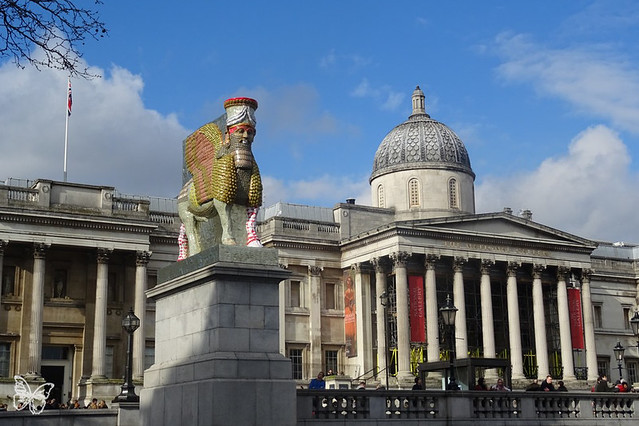
Following David Shrigley ‘ Really Good’ sculpture,  Iraqi-American artist Michael Rakowitz, has been selected to create the latest sculpture for the Fourth Plinth in Trafalgar Square using 9,000 tin cans of date syrup made in Iraq. The artwork is a reconstruction of the lamassu, a winged bull created around 700BC at the Nergal Gate of Ninevah, Iraq, nearMosul vandalised by Isis in 2015.

Michael Rakowitz has built an international art-world reputation over the past 15 years, fusing his autobiography as an American with an Iraqi-Jewish background with social and political observation and activism, as well as the odd absurdist link to pop culture.

During a family visit to the British Museum when he was aged 10, he recalls his first encounter with an Assyrian lamassu, like the winged bull only with a lion’s body. “Suddenly I found myself immersed in this space that was unlike any I had seen before,” Rakowitz recalls, “which was going past those lamassu and going into the throne room reconstruction from Nineveh and seeing the lion hunt of Ashurbanipal.”
Michael Rakowitz

The lamassu on the plinth is not a one-off but part of another long-term project, also called The Invisible Enemy Should Not Exist. For this, Rakowitz is reconstructing the entire database of 7,000 works looted from the National Museum of Iraq in the aftermath of the US and UK’s 2003 invasion. All of the reconstructions are made from Middle Eastern foodstuff packaging and local Arabic newspapers.

The project grew from Rakowitz’s observation that the sack of the museum was the first event of the war about which there was a consensus. “It didn’t matter if you were for the war or against the war, this was a catastrophe,” he explains. “But that outrage about lost artefacts didn’t turn into an outrage about lost lives.”

He noted that many looted artefacts were votive statues. “One of the interpretations of those artefacts is that those were statues that the ancient Babylonians, the Mesopotamians, would bring with them to the temple of the god, and the idea was that you would leave the sanctuary at a certain point but you left that statue in your stead, as a surrogate for you, to continue praying. And when I saw the artefacts being looted, I said, ‘Well, now we have another surrogate: a lost artefact for the lost bodies’. All those things loop back into the human and environmental catastrophe.”
Michael Rakowitz
Michael Rakowitz

Rakowitz was already thinking about reconstructing the lamassu after seeing the footage of it being destroyed by IS. He had discovered its measurements by referring to the sketches of Austen Henry Lanyard, the British archaeologist who discovered the lamassu and brought two others to the British Museum — the ones Rakowitz had seen as a child. He was invited by the Fourth Plinth organisers to submit a proposal and remarkably, the plinth was the same length as the lamassu — 14ft. “I was like, ‘This is it!’ What else would I do?”
Michael Rakowitz

Instead of merely recreating the sculpture, the artist wanted to recreate the DNA of Iraki people who got killed as well, so he decided to use date syrup cans.

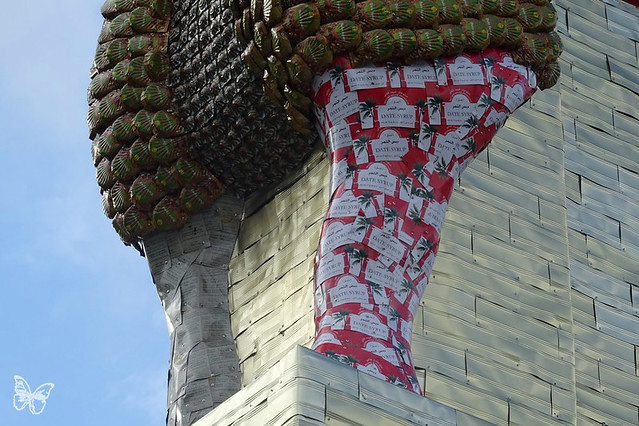
So why date syrup cans? Rakowitz first began working with them in a New York project in 2006, Return, in which he reprised his grandfather’s import/export business but attempted to deal only in Iraqi goods. He had found the date syrup in a grocery store in Brooklyn but it was labelled “product of Lebanon”. In fact, the syrup was made in Baghdad, put into large plastic vats, driven to Syria and canned there before moving over the border into Lebanon, where it was labelled and sold globally. That way, sanctions were circumvented and, post-2003, security tariffs avoided. But for Rakowitz the journey was another metaphor, of course: the dates travelled “the same exact path as Iraqi refugees”.
Michael Rakowitz

Iraqi dates “were considered the best in the world; what the cigar is to Cuba”, he says. But their demise reflects the tragedy of Iraq’s recent history. Date palm trees disappeared, “from 30 million in the Seventies, when Iraq was the chief exporter of dates in the world, to 16 million at the end of the Iran-Iraq war [1980-88], to three million at the end of the 2003 invasion,” he says.
Michael Rakowitz

So the plinth sculpture reflects a huge sweep through Iraqi history. “It’s telling the story of a destroyed Iraqi artefact, and what it’s made from is telling the story of a destroyed land, destroyed nature, destroyed ecology,” he says. “And the destruction of a symbol that was so elemental to the Iraqi people. Dates are the harbinger of good things to come: you put a date into the mouth of a baby in some places in Iraq so its first taste of life is sweet. And when you have the erosion of that sweetness, it’s not a good omen.”

This is the genius of Rakowitz’s sculpture: it is history, art history, social history and current affairs. Rich knowledge and impassioned polemic all bundled into a single, glorious yet poignant symbol looking over Trafalgar Square.
Michael Rakowitz

View the full set of pics here

Michael Rakowitz
The Invisible Enemy Should Not Exist
from 28 March 2018
Fourth Plinth
Trafalgar Square,London

The Other Art Fair London: Hisham Echafaki

The Other Art Fair - Hisham Echafaki

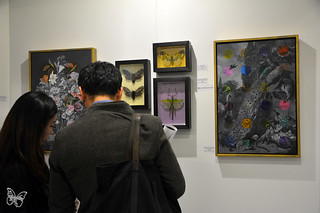
The new edition of the Other Art Fair London curated by Saatchi Art features 130 international emerging and established artists from 22-25 March 2018 at Victoria House London WC1. Here is a selection of our highlights from the Fair.
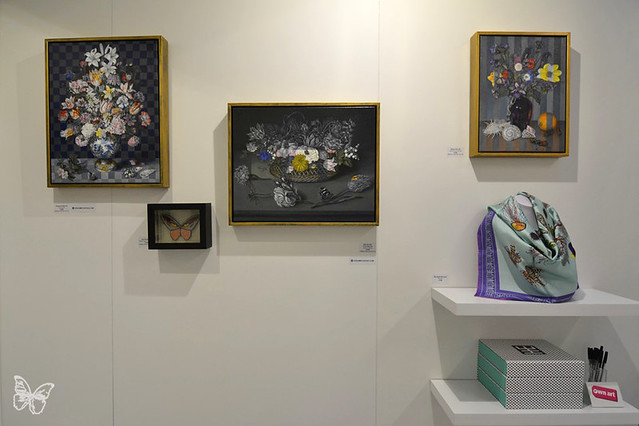
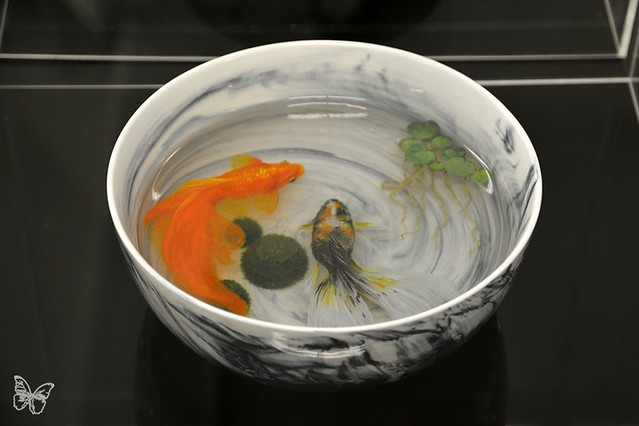
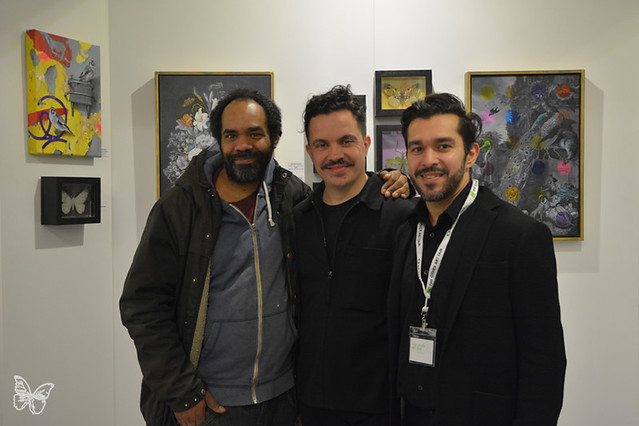
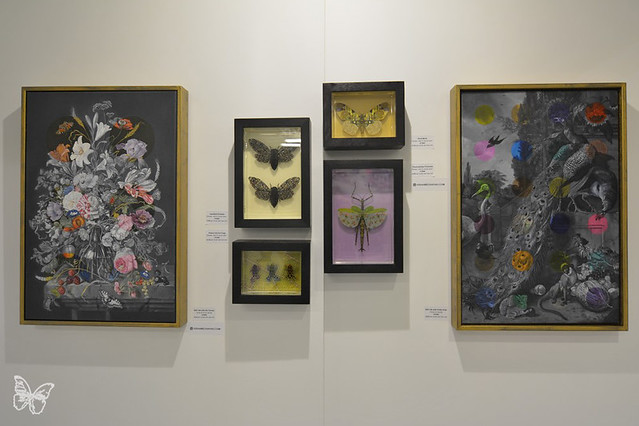
French artist Hisham Echafaki(covered) returns to London with a new solo exhibition.  Presenting a new body of works including his signature three dimensional paintings that look like real animals, insects and fishes.
The Other Art Fair - Hisham Echafaki

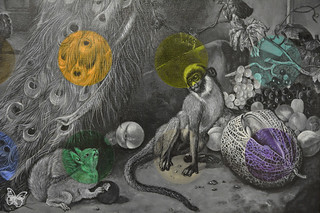
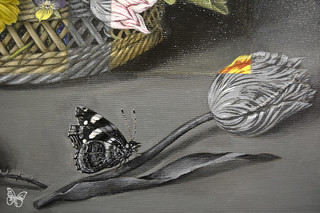
In parallel Hisham Echafaki also created new paintings inspired by Dutch masters and gave them a modern twist using optical black and white and colourful effects, from circles, squares and stripes.

The Other Art Fair - Hisham Echafaki
The Other Art Fair - Hisham EchafakiThe Other Art Fair - Hisham Echafaki
The Other Art Fair - Hisham EchafakiThe Other Art Fair - Hisham EchafakiThe Other Art Fair - Hisham Echafaki
The Other Art Fair - Hisham Echafaki

View the full set of pics here

This slideshow requires JavaScript.

The Other Art Fair
London 22-25 March 2018 
Victoria House
London WC1
London: Glenn Brown – ‘Come to Dust’ at Gagosian Gallery
 

Glenn Brown - Come to dust

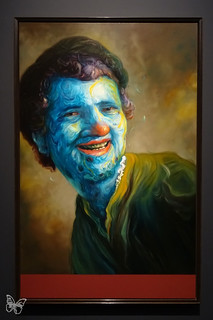
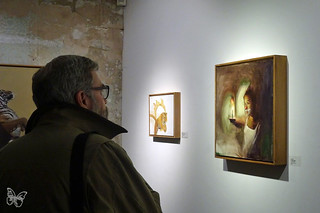
The Gagosian Gallery is currently showing “Come to Dust,” the first major exhibition by British contemporary artist Glenn Brown in London since 2009.

For Brown, the past and present are treasuries of raw material, offering countless images, titles, and techniques to be combined, appropriated, and deconstructed. Based on art history, as well as of literature, music, and popular culture, Brown creates complex and sensuous works of art that are resolutely of our time.

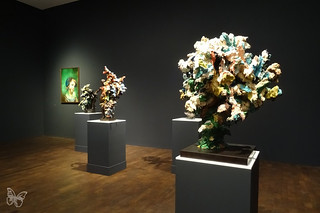
The title of exhibition, is inspired by a song in Shakespeare’s play Cymbeline, which evokes the ineluctability of death. Multidisciplinary artist, the exhibition features oil paintings, drawings in period frames, grisaille panel works, etchings, and sculptures.

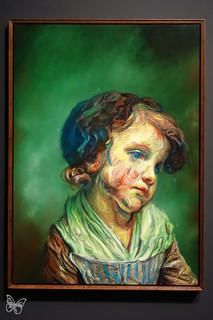
Sources include Rembrandt, Delacroix, Greuze, and Raphael, as well as Abraham Bloemaert, Francesco Mancini, Gaetano Gandolfi, Elisabeth Le Brun, and Bernardo Cavallino.

Glenn Brown - Come to dust

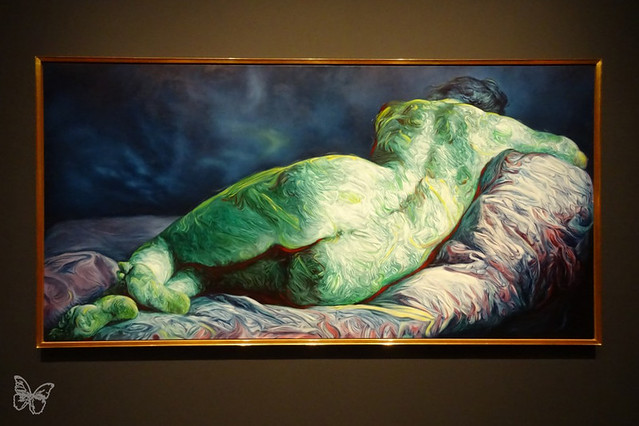
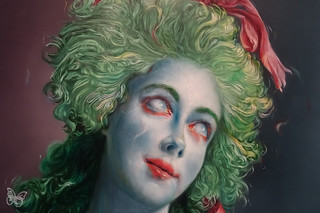
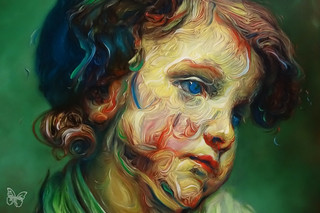
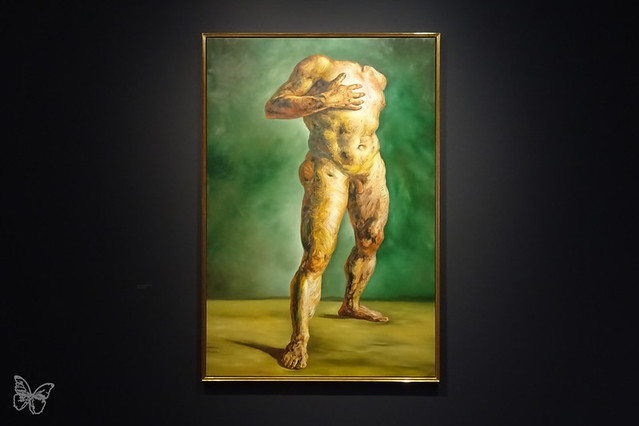
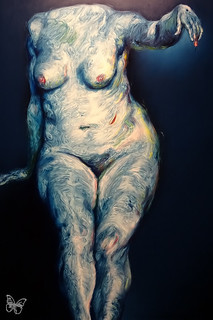
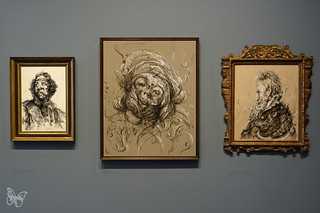
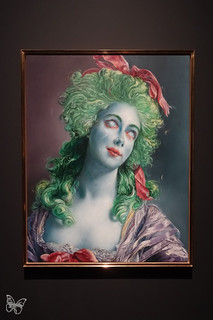
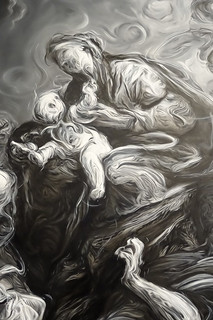
In Brown’s oil paintings, hybrid figures painted in intricate swirls reveal the sumptuous potential of oil paint. While these paintings give the illusion of corporeal volume and fullness, closer scrutiny reveals the surfaces to be smooth and flat.

Rather than using paint to depict skin with observational exactitude, Brown presents translucent brushstrokes revealing the flesh and muscles  beneath the surface.

Glenn Brown - Come to dustGlenn Brown - Come to dust Glenn Brown - Come to dustGlenn Brown - Come to dustGlenn Brown - Come to dustGlenn Brown - Come to dustGlenn Brown - Come to dustGlenn Brown - Come to dust

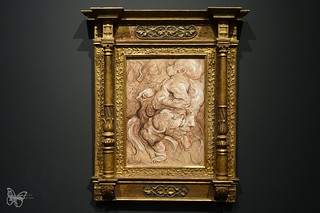
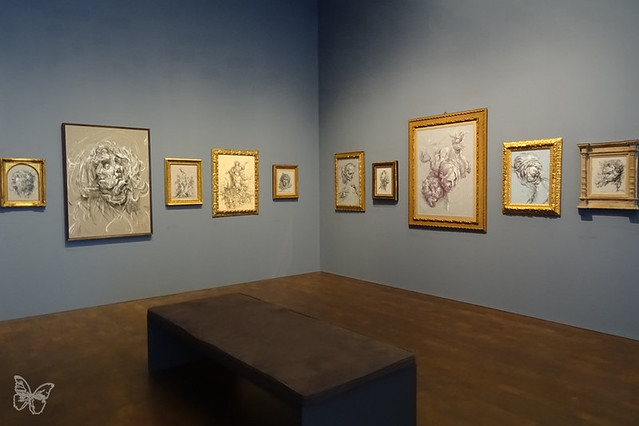
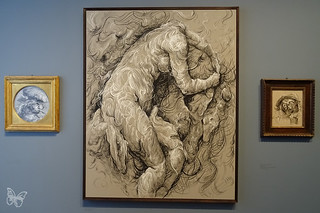
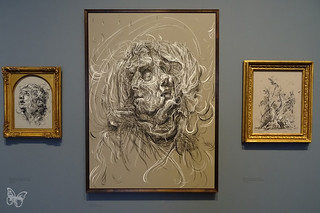
The choice of picture frames adds an additional layer to the richly layered visual anachronism. Inverting the normal order of image-making and framing, Brown treats the frames as readymades, creating drawings in response to the particular colour, size, design, and narrative detail of each. Thus, the drawings and the frames are integral to each other.

In the exhibition, an entire room of recent drawings is hung salon-style, some mounted in elaborate Renaissance gilt and carved wooden frames.

Glenn Brown - Come to dust
Glenn Brown - Come to dustGlenn Brown - Come to dust

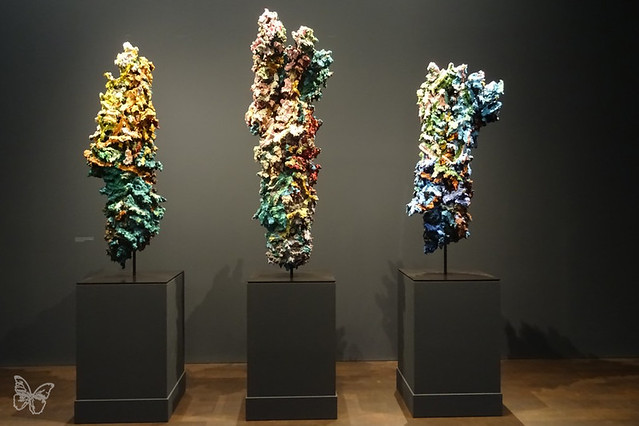
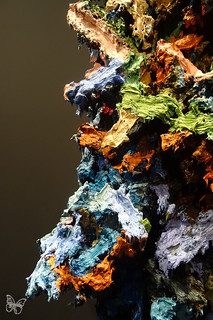
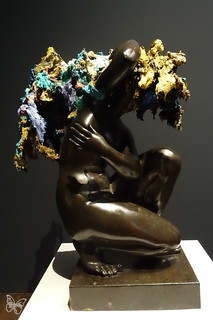
The sculptures are very impressive, elaborate masses built from precisely placed strokes of very thick oil paint. In some of them, the cold, sensuous curves of nineteenth-century bronze statues are still visible but engulfed by growths of pulsating, gravity-defying oil paint. The contrast between the cold, hard metal with  the soft, luscious paint is highly captivating.

Glenn Brown - Come to dust
Glenn Brown - Come to dustGlenn Brown - Come to dustGlenn Brown - Come to dust Glenn Brown - Come to dustGlenn Brown - Come to dust

“Come to Dust” immerses the viewer in Brown’s enigmatic world. The figures and forms of history mutate, overtaken by hypnotic  colours and light. Transforming the allure of Old Master paintings and drawings, bordering on profanity, Brown tells a much darker and more complicated story, fit for our times.

Glenn Brown - Come to dustGlenn Brown - Come to dustGlenn Brown - Come to dust

View the full set of pics here

Glenn Brown – Come to Dust
Until 17 March 2018
Gagosian Gallery
20 Grosvenor Hill
London W1K 3QD

London: Evoca1 ‘Caroline and the world on a stage’

Evoca 1 - Stolenspace

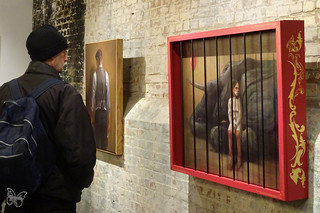
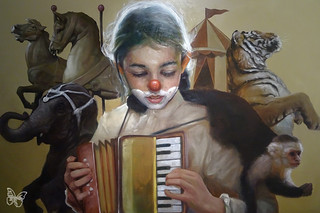
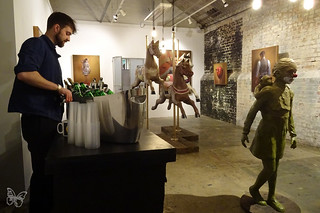
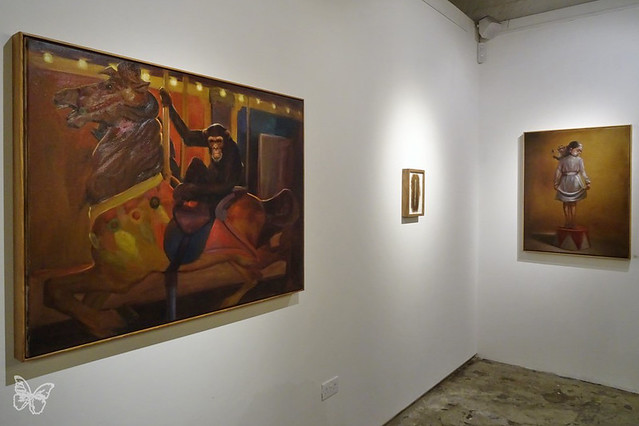
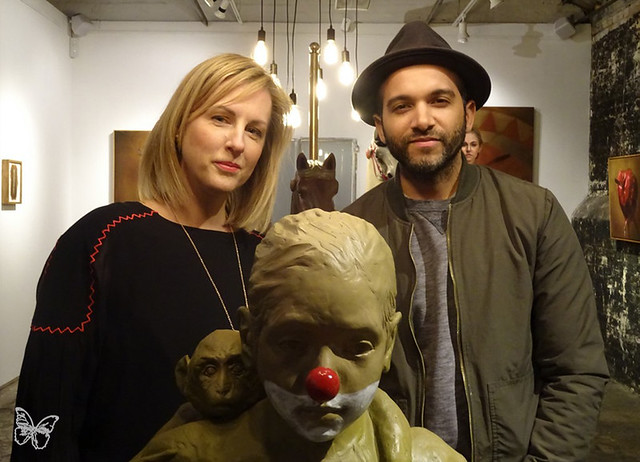
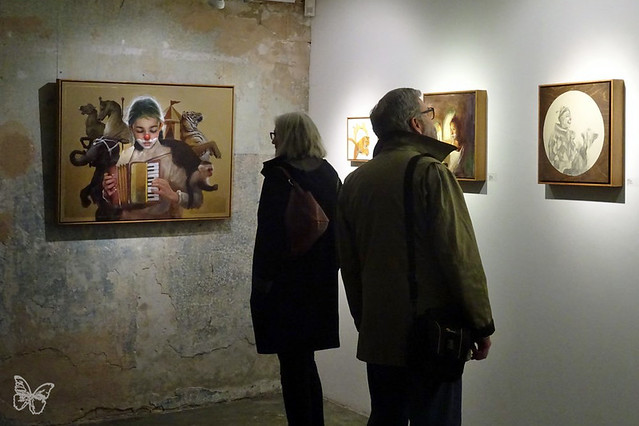
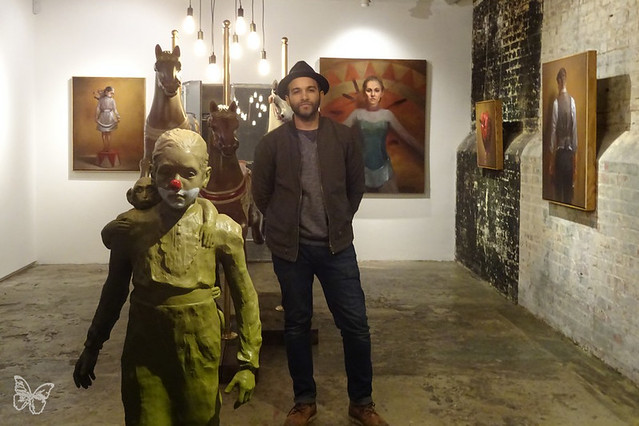
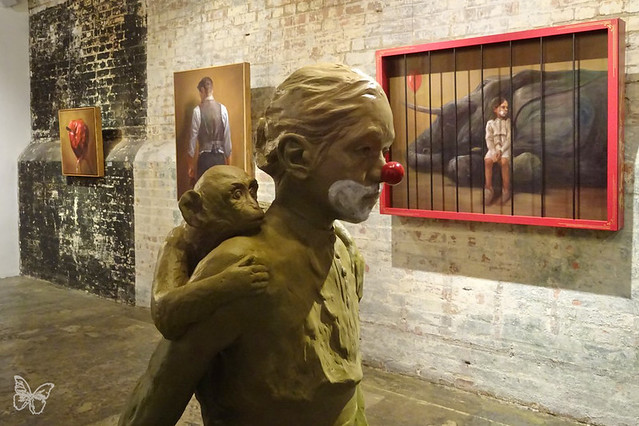
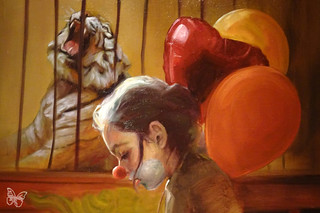
Dominican born street artist, Evoca1 (Elio Mercado) is currently presenting his first solo show in London at Stolenspace. ‘Caroline, and The World on a Stage’ explores the many conditions of human existence and the various misuses of power between people through the lens of a young fictional girl.

Evoca 1 - Stolenspace

Growing up in challenging social and economic conditions in the Dominican Republic, Evoca1 is acutely aware of these difficulties that arise through social division, as well as the power that art has to alleviate such adversity. Despite not attending art school due to his family’s financial situation, Evoca1 learned and developed his style as a n autodidact.

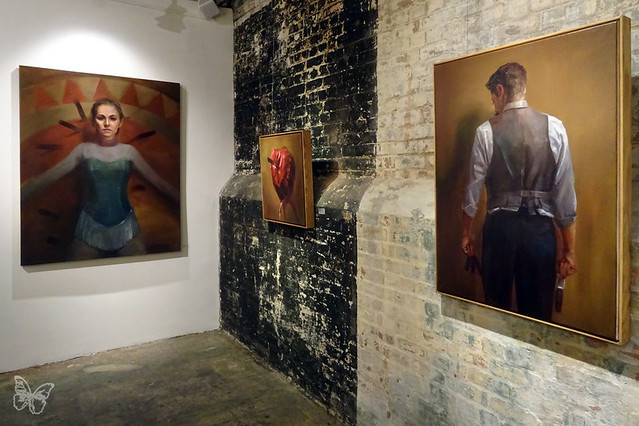
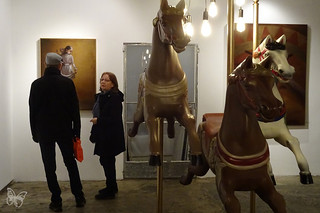
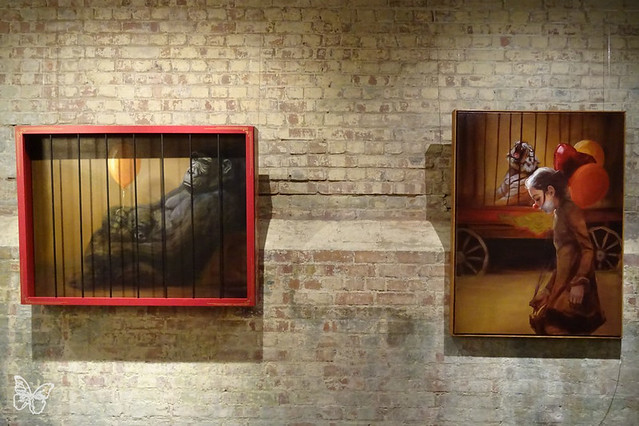
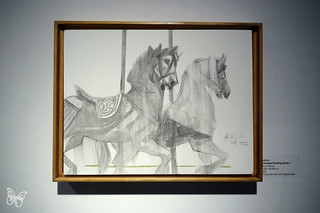
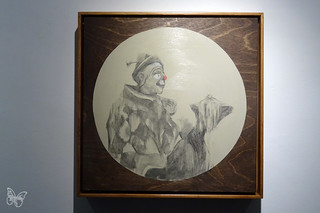
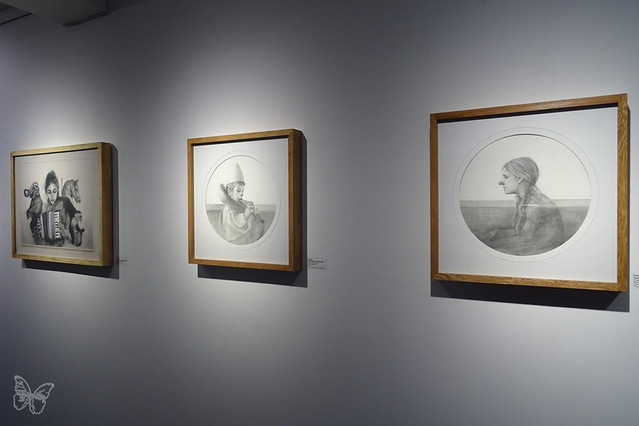
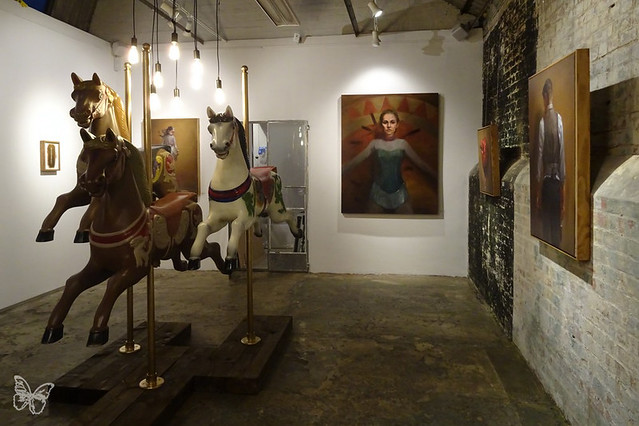
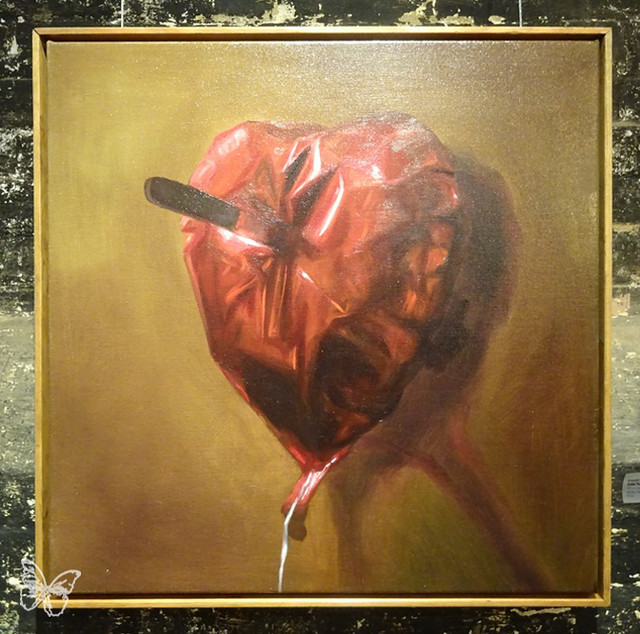
Multidisciplinary artist, Evoca1 is showcasing his most comprehensive body of work, from graphite drawings oil paintings, wooden sculptures and videos. He magically combines the childhood innocence and dreams looking at a circus with the darkness of abuse of power by society.

Evoca 1 - Stolenspace

Specifically about this show, Evoca1 has stated: “The oil paintings, drawings, sculptures and video performance in this show, serve as metaphors for our primitive world – a world which can sometimes resemble a ‘circus’. Through the eyes of a child, the puppet masters of our society are put on display and tried for their misuse of power and the calamity they create amongst us. The work mirrors our divided world in which people roll over all obstacles in their path in an attempt to gain popularity and experience “happiness” which is solely gained through the praise of others.”

Evoca 1 - Stolenspace
Evoca 1 - StolenspaceEvoca 1 - Stolenspace Evoca 1 - StolenspaceEvoca 1 - Stolenspace
Evoca 1 - Stolenspace
Evoca 1 - StolenspaceEvoca 1 - Stolenspace
Evoca 1 - Stolenspace
Evoca 1 - StolenspaceEvoca 1 - StolenspaceEvoca 1 - Stolenspace
Evoca 1 - Stolenspace

View the full set of pics here

EVOCA1 – Caroline & the Wolrd on a stage
Until 8 April 2018
StolenSpace Gallery
17 Osborn Street
London E1 6TD

London: Studio Visit with Aida Wilde

Aida Wilde Studio Visit

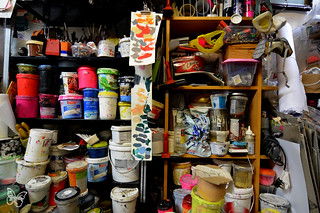
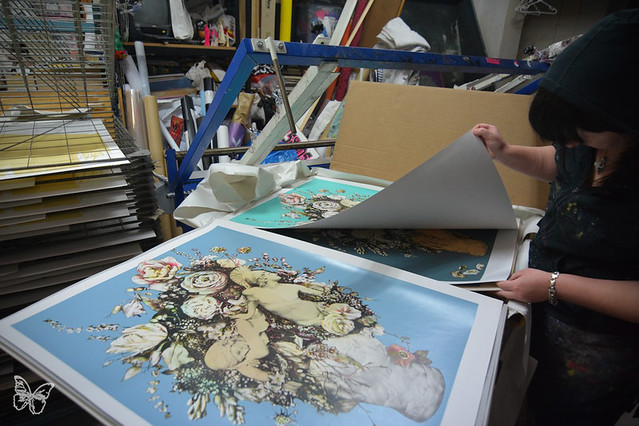
We are happy to have a look inside the London studio of Queen printmaker and artivist Aida Wilde

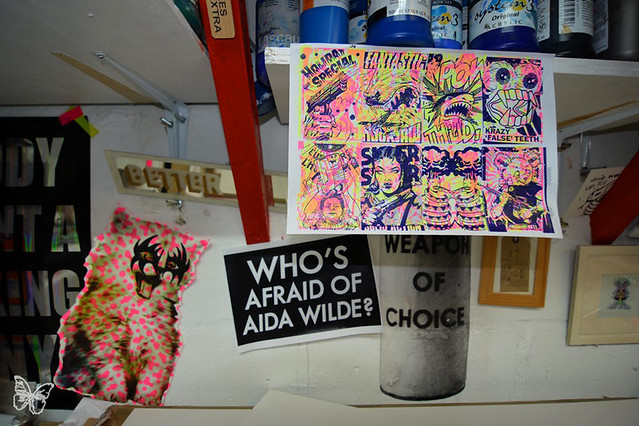
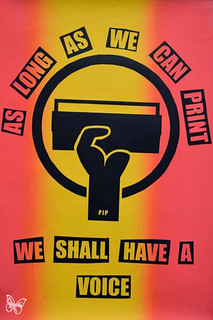
‘Who’s afraid of Aida Wilde?’ says one of the signs in the studio, surrounded by a screaming cute neon pink dotted kitty with dark kiss make up. Screenprinting is her ‘Weapon of Choice‘, as ‘Print is Power’.

Aida Wilde Studio Visit

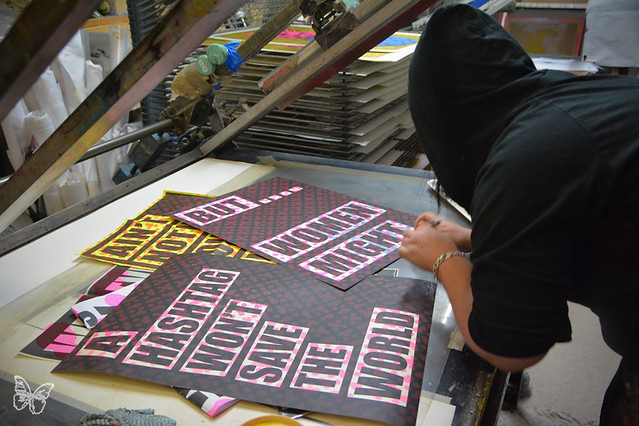
Born in Iran, Aida arrived in the UK in the mid 80’s as a political refugee. She has been a professional screen printer for the last twenty years and has been pushing boundaries of the screenprinting techniques and transforming this traditional art form into fine art.

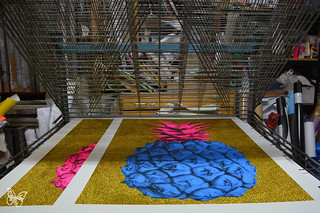
Hailed by many as a screen-printing genius, her unique style expresses her ongoing battle to bring alternative elements together, the graphic and the classical, whether this is through neon pop colours ( pink preferably), texture (glitter, velvet…) or through image. Some examples include a flocking velvet effect on a leapoard print to make it feel and look like a fur rug, or the use of the screen as a mono-printing tool to develop her ‘Life: Still’ edition.

Aida Wilde Studio VisitAida Wilde Studio Visit
Aida Wilde Studio VisitRowdy & Wilde Aida Wilde Studio Visit

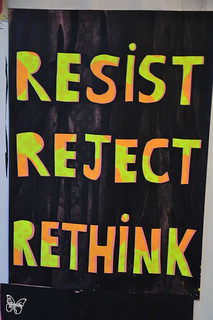
Her most famous works are her colourful slogan paste-ups that can be found in the streets of London, Berlin, New York, Malaga or Aberdeen, featuring light hearted topics as well as raising awareness on sensitive subjects like gentrification, education and women’s rights.

Aida Wilde Studio Visit

This slideshow requires JavaScript.

In 2009 in response to the financial and economic crisis Aida created a pink, black and white spotty slogan ‘There’s A Credit Crunch Not A Creative Crunch’, which is being featured at the Victoria & Albert Museum since 2011.

Strong advocate of women’s rights, her work has been featured at The Women’s Art Library (see our coverage here).  Her HASHTAG series of works was used for the Brandalism  project (covered) and the global project Subvert The City, which saw the world’s first coordinated international ad takeover & over 60 creative actions in 38 cities in 18 countries around the world. Aida still continues with her facilitating role with various workshops and community projects through Print Is Power – Reclamation Nation & more currently, Sisters In Print (All female international print collective).

Empowered Printwork - Women Art LibraryEmpowered Printwork - Women Art LibraryEmpowered Printwork - Women Art Library
Aida Wilde Studio Visit

So to celebrate the 8th March 2018, Aida is releasing a special screenprint from her famous Hashtag series ‘ A HASHTAG MIGHT NOT SAVE THE WORLD BUT … WOMEN MIGHT’ for one day only.

Initially before the craze of social media, this print was also part of the Brandalism campaign in Paris in 2015 and the statement is more valid than ever.

So grab yours here

Pictures courtesy of the artist and by Butterfly Art News